Does Florida Full Coverage Pay for OEM Parts After an Accident? (2026)
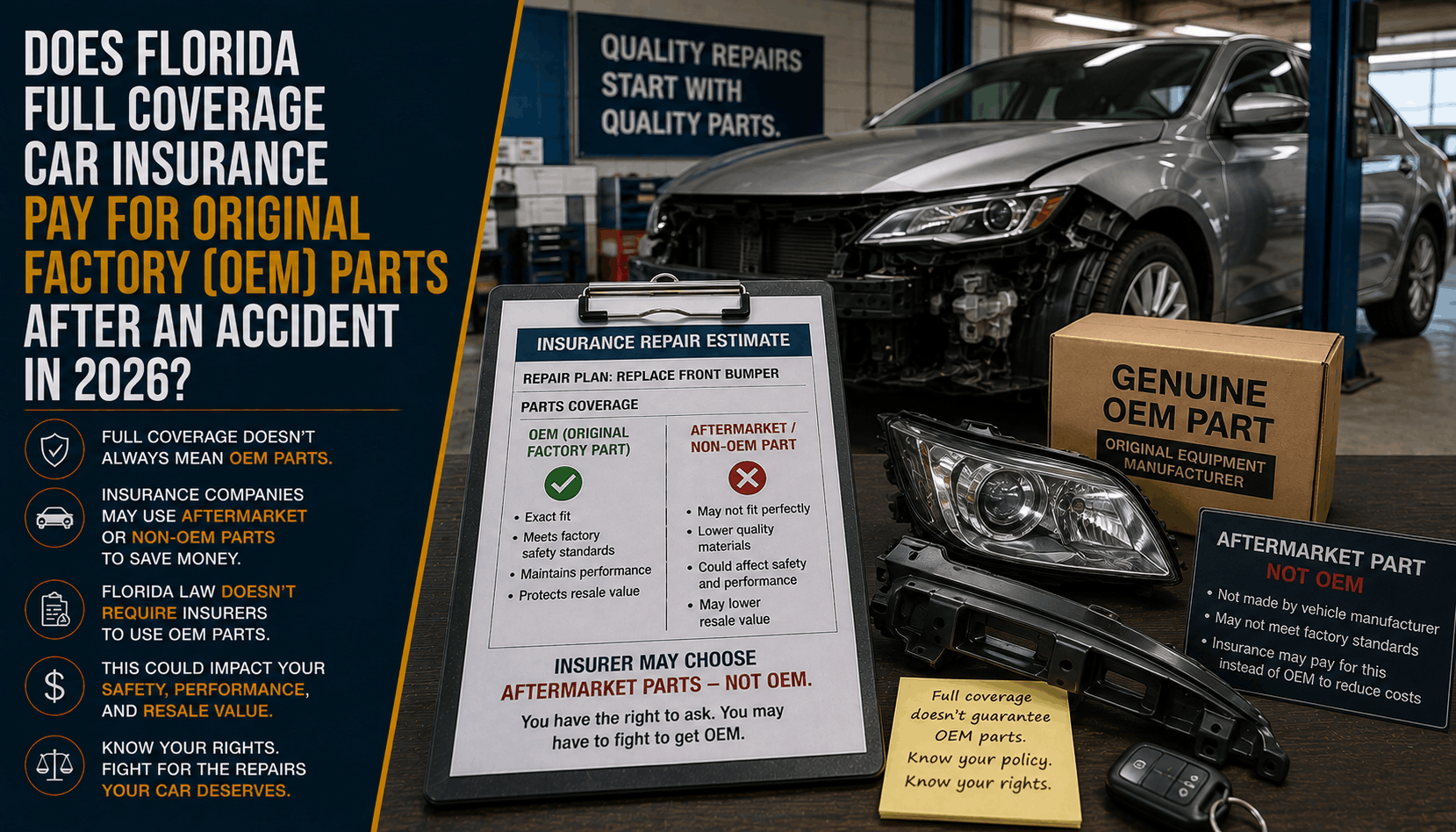
Does Florida Full Coverage Car Insurance Pay for Original Factory (OEM) Parts After an Accident in 2026?
The Direct Answer
The short answer is no, "full coverage" auto insurance in Florida does not automatically guarantee brand-new Original Equipment Manufacturer (OEM) factory parts after a crash. Even if you carry comprehensive and collision coverage—what most drivers call "full coverage"—standard Florida policy contracts only obligate your insurer to pay for repairs that restore your vehicle to its "pre-loss condition" using parts of like kind and quality (LKQ). Under Florida Statute § 626.9743, insurance carriers are legally permitted to specify aftermarket, recycled, or reconditioned crash parts on repair estimates, provided those components meet basic standards for fit, appearance, and performance. Unless your policy includes a specific OEM Parts Endorsement or your car is a current-year lease with mandatory factory repair requirements, full coverage simply means your insurance pays for damages to your vehicle—it does not dictate that those repairs must be executed using fresh, factory-stamped parts directly from the automaker.
Many drivers assume that paying for comprehensive and collision coverage means their insurer will write a check for original factory parts after a collision. Understanding how Florida insurance laws define repair obligations—and how to ensure your vehicle receives factory components—is essential for protecting your vehicle's safety and value.
1. What "Full Coverage" Actually Pays For Under Florida Law
In the insurance industry, "full coverage" is an informal term used to describe a policy that includes collision and comprehensive coverage alongside state-mandated liability protections. Here is how your policy handles repair parts:
- Comprehensive & Collision Coverage Mechanics: Collision pays for physical damage caused by crashes with other vehicles or stationary objects, while comprehensive covers non-collision events like hurricane damage, flooding, vandalism, or fallen trees. However, both coverages pay out based on the cost to repair or replace damaged property, limited by policy language—not vehicle enthusiasm.
- The "Like Kind and Quality" (LKQ) Rule: Insurance contracts specify that carriers can fulfill their obligation by using parts that match the age and condition of the damaged vehicle prior to the crash. For a 3-year-old car, insurers routinely specify recycled original parts from salvage vehicles or brand-new generic aftermarket parts.
- Florida Statute § 626.9743 Protections: While Florida law allows insurers to write estimates based on aftermarket parts, it prohibits insurance carriers from forcing you to use a specific repair shop (a practice known as "steering"). You retain the absolute legal right to choose any licensed body shop in Florida to perform your repairs.
2. The Dangers of Non-OEM Parts on 2026 Vehicles
In 2026, modern vehicles are essentially computers on wheels, outfitted with intricate safety grids and delicate sensors. Relying on generic aftermarket components carries distinct risks:
Advanced Driver Assistance Systems (ADAS)—such as adaptive cruise control, lane-keep assist, and forward collision warning—rely on millimeter-wave radar and cameras embedded directly behind bumpers, grilles, and windshield glass. Generic aftermarket body panels often feature subtle variations in thickness or material density that can cause safety sensors to miscalibrate or fail altogether.
Furthermore, using non-OEM structural metal or crash panels can void remaining factory corrosion or structural warranties from the vehicle manufacturer. Generic components may also fit poorly, leaving wider panel gaps that accelerate rust development in Florida's humid, salty coastal air.
Crucial Distinction: If an insurer specifies a generic aftermarket part on your estimate, but your certified body shop proves during test-fitting that the non-OEM part does not fit correctly, compromises ADAS calibration, or fails safety standards, the insurance carrier must pay to upgrade to a proper factory OEM replacement.
3. How to Ensure Your Vehicle Gets Original OEM Parts
If you want guaranteed factory replacement parts after a crash in Florida, follow these three steps:
- Step 1: Add an OEM Parts Endorsement to Your Policy. Contact your insurance agent to attach an optional OEM endorsement to your auto policy. This add-on binds the insurance carrier to pay for new, genuine factory parts for all covered collision and comprehensive repairs.
- Step 2: Choose an OEM-Certified Collision Repair Center. Select an independent repair facility certified by your vehicle's manufacturer (e.g., Toyota, GM, Ford, or Honda certified). Certified body shops follow strict automaker repair procedures and will advocate directly with insurance adjusters to justify factory parts.
- Step 3: Pay the Part Difference Out-of-Pocket. If you do not have an OEM endorsement and your carrier refuses to cover factory parts, you can ask your repair shop to order original parts and pay the price difference between the aftermarket estimate allowance and the OEM part cost out of pocket.
Why Working with an Independent Agency Is Vital
Navigating auto policy language, coverage add-ons, and collision repair rights requires expert guidance. At Walker Insurance Agency, we help Florida drivers structure auto coverage that protects both their vehicle's safety and its long-term resale value.
The Walker Advantage:
- Customized Coverage Structuring: We offer auto policies with optional OEM parts endorsements and total replacement coverage for new vehicles.
- Independent Claims Advocacy: If you're involved in a crash, our team helps you understand your rights under Florida insurance law and guides you through the estimate review process.
- Local Florida Expertise: Based in Stuart, FL, we understand regional driving risks, local repair standards, and state regulatory rules inside and out.
FAQ
1. Does my auto insurance have to use OEM parts if my car is brand new?
Not automatically. Unless your policy contains an OEM endorsement or new car replacement rider, Florida law allows insurers to write estimates using aftermarket or LKQ parts even on vehicles from the current model year. However, newer vehicles often have limited aftermarket part availability, which frequently forces carriers to approve OEM parts by default.
2. Can I claim Diminished Value if my car is repaired with aftermarket parts?
Yes. Florida law allows drivers involved in accidents caused by another party to file a Diminished Value claim against the at-fault driver's property damage liability insurance. A vehicle repaired with aftermarket or generic parts often suffers higher market value depreciation, strengthening your diminished value claim.
3. Will my insurance company increase my rates if I insist on OEM parts?
Insisting on OEM parts does not directly cause a rate increase, but paying out-of-pocket for the price difference between aftermarket and OEM parts is your personal choice. However, filing a claim—regardless of part type—may affect your policy premium depending on fault determination and your carrier's guidelines.
Protect Your Vehicle's Safety and Resale Value Today
Don't wait until after a collision to find out what kind of parts your insurance company will pay for. Reviewing your policy terms and adding an OEM parts endorsement ensures your vehicle is rebuilt to true factory standards.
Take control of your auto insurance protection today. Contact Walker Insurance Agency for a comprehensive policy audit. We provide the expert guidance you need to eliminate coverage surprises and keep your family safe on the road.
[GET A FREE QUOTE TODAY]
Call our personal lines division at +1-407-977-7100 or visit our office in Stuart, FL. Let us safeguard your drive today.
Related Articles

Cobertura de Ley y Ordenanza en Florida (Ordinance or Law) 2026
¿Cubre el seguro de casa en Florida las actualizaciones obligatorias del código de construcción? Descubre cómo la Regla del 50% te afecta en 2026.
Read More →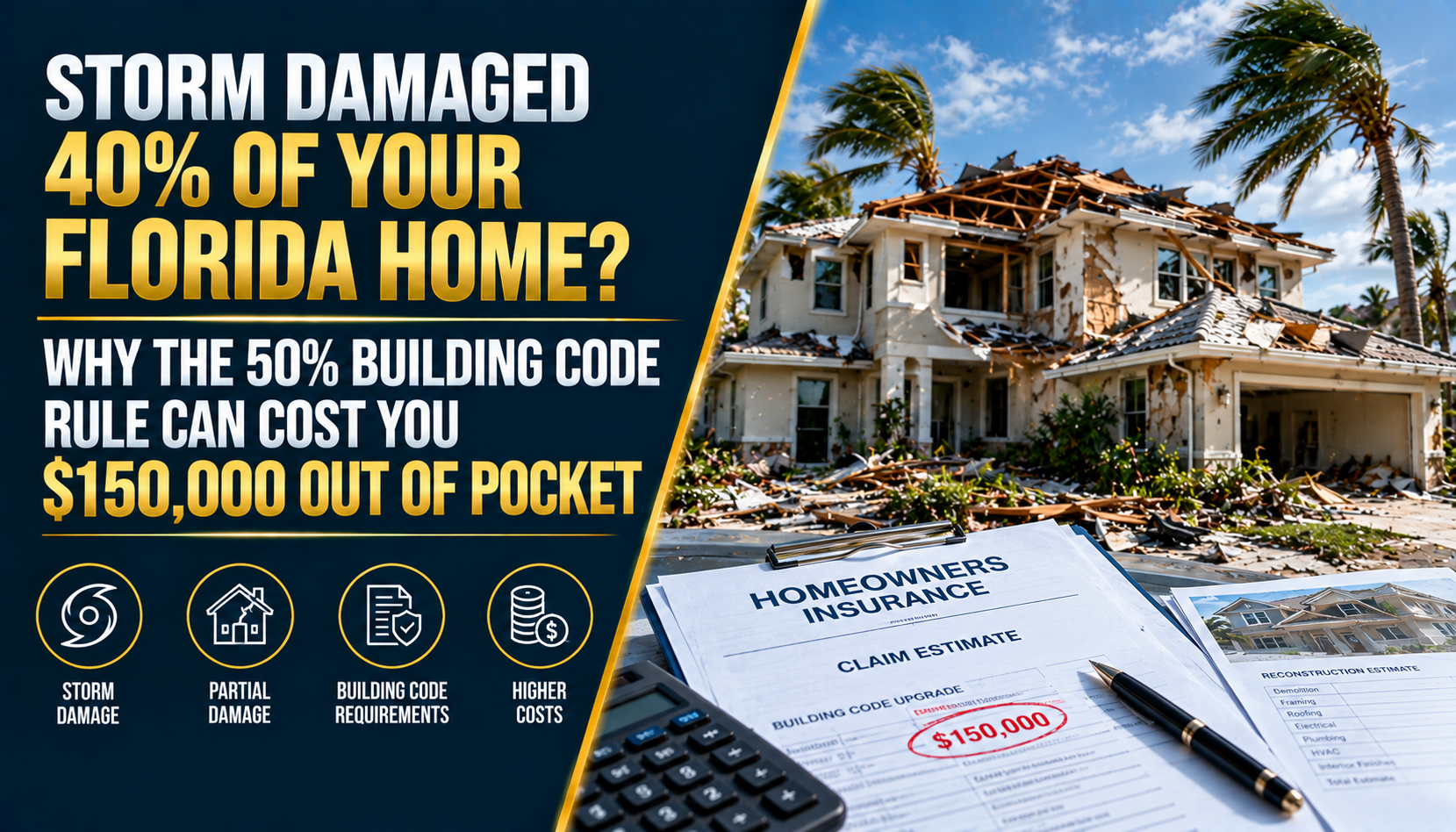
The 50% Rule in Florida: Storm Damage & Building Codes 2026
Did a storm damage 40% or more of your Florida home? Learn how the 50% Rule can force total code upgrades and cost you over $150,000 out of pocket.
Read More →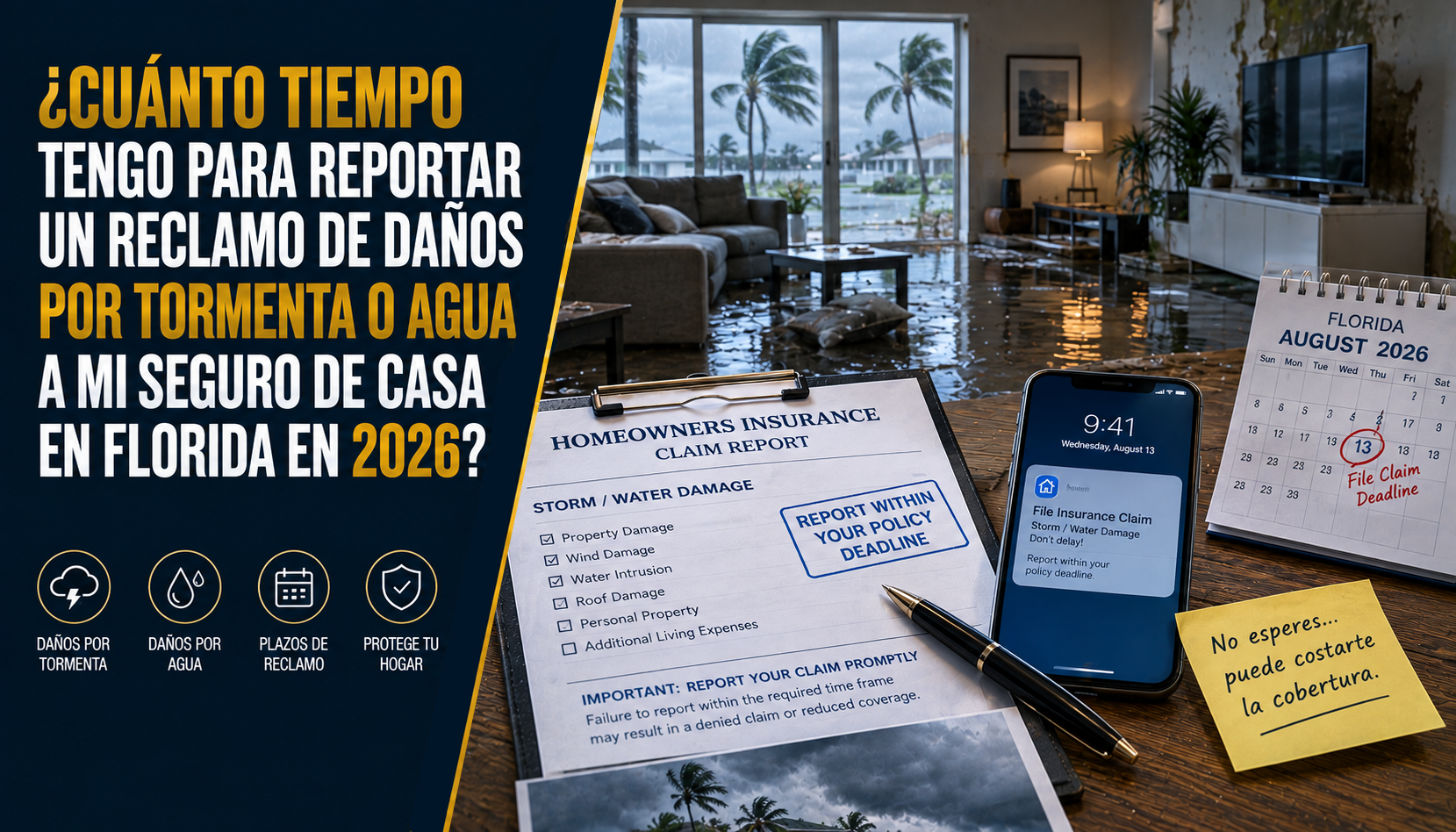
¿Cuánto Tiempo Tengo para Reclamar Daños por Tormenta en Florida? (2026)
¿Tuviste daños por agua o tormenta en Florida? Conoce la regla estricta de 1 año para reportar tu reclamo al seguro en 2026 y evita que sea denegado.
Read More →