Flooded Basement, No Hotel Payout: Loss of Use Trap in Water Backup Policies
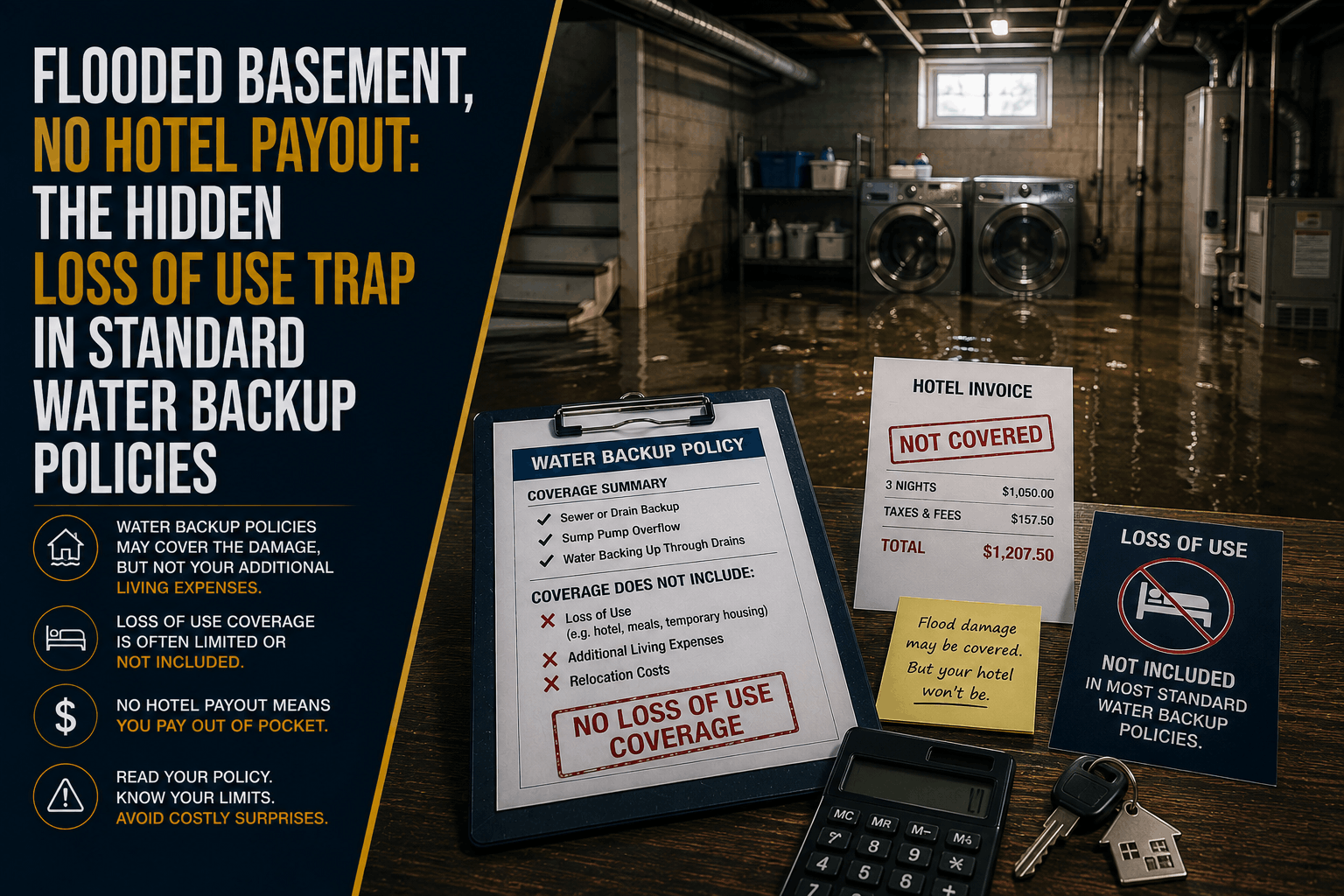
Flooded Basement, No Hotel Payout: The Hidden Loss of Use Trap in Standard Water Backup Policies
The Direct Answer
The short answer is no—a standard Water Backup endorsement does not automatically trigger your homeowners policy’s Loss of Use (Additional Living Expense) coverage, leaving you to pay for hotel stays out of pocket. Under standard homeowners insurance policies (HO-3 and HO-6), sewer backup and sump pump failures are strictly excluded perils. To get coverage for water that backs up through drains, sewers, or overflows from a sump pit, homeowners must purchase an optional Water Backup and Sump Discharge Endorsement. However, most basic water backup endorsements only cover direct physical property damage (such as drywall, flooring, and personal belongings) up to a sub-limit—usually $5,000 or $10,000. Because water backup is not a named peril under your primary policy's Coverage D (Loss of Use), standard policies will not reimburse hotel bills, temporary rentals, or restaurant meals while contractors sanitize your toxic, flooded basement—unless your endorsement specifically includes a Loss of Use extension.
Waking up to a flooded basement filled with murky water, sewage, or sump pump overflow is a homeowner’s nightmare. Finding out that your insurance company will pay to replace ruined carpet but refuses to pay for a clean hotel room while the toxic fumes are remediated is an even harsher surprise.
1. Why Standard Loss of Use (Coverage D) Fails During Water Backups
Most homeowners assume that if their home becomes unlivable for health or safety reasons, Loss of Use (Additional Living Expenses) automatically steps in to cover temporary housing. In reality, insurance contracts follow strict trigger mechanics:
- The Covered Peril Prerequisite: Loss of Use benefits are only triggered when the displacement is caused by a peril explicitly covered in Section I of your main policy (such as a burst clean water pipe, fire, or severe storm damage).
- The Sewer Backup Exclusion: Standard home insurance policy contracts explicitly exclude all damage caused by water backing up through sewers, drains, or overflowing from sump pumps.
- The Endorsement Sub-Limit Trap: When you add a standard Water Backup rider, it typically provides a fixed dollar bucket (e.g., $5,000 or $10,000 total) designed solely for cleanup and structural repairs. Basic endorsements specifically state that they do not extend Coverage D (Loss of Use) to water backup events, or they force temporary living costs to come directly out of that small $5,000 property repair limit.
2. Uninhabitable Conditions vs. Policy Coverage
When raw sewage or bacteria-laden wastewater floods a basement or lower living area, industrial air scrubbers, tear-out crews, and chemical sanitizers make staying in the home unpleasant and potentially hazardous—especially for children, seniors, or people with respiratory conditions:
Despite the clear health risks, insurance adjusters evaluate claims based on contractual language rather than physical discomfort. If your water backup rider lacks an explicit Loss of Use provision, the insurer is legally obligated to reimburse only the remediation contractors and destroyed items—leaving you to foot the bill for temporary accommodations, pet boarding, and extra dining costs.
Even when an endorsement does permit Loss of Use expenses, if the total coverage limit is capped at $5,000, professional water extraction and structural drying can easily consume $4,500 on day one—leaving virtually nothing for hotel stays.
Crucial Distinction: A sudden burst pipe inside your walls is a primary policy peril that triggers full Loss of Use coverage. Water that backs up from a drain, municipal sewer line, or failing sump pump is an excluded event that requires a specialized endorsement to cover both property damage and living expenses.
3. How to Properly Endorse Your Policy for Full Protection
Protecting your family from unexpected displacement costs during a basement flood requires a proactive audit of your endorsement language:
- Step 1: Increase Your Water Backup Limit. Raise your total water backup endorsement limit from the standard $5,000 to at least $25,000 or $50,000. Modern mitigation, biohazard cleanup, and finished basement repairs quickly exhaust low sub-limits.
- Step 2: Verify Loss of Use Extension Language. Ensure your water backup rider includes explicit language extending Coverage D (Loss of Use) to water backup claims.
- Step 3: Separate Living Expenses from Property Limits. Work with your agent to select an endorsement format where Loss of Use benefits do not cannibalize the money needed for physical cleanup and property repairs.
Why Working with an Independent Agency Is Vital
Navigating fine-print exclusions and sub-limit structures requires experienced guidance. At Walker Insurance Agency, we review home insurance policies to ensure you aren't caught off guard by hidden endorsement limitations when disaster strikes.
The Walker Advantage:
- Detailed Policy Audits: We evaluate your current homeowners policy to spot fine-print sub-limits and missing living expense extensions before a loss occurs.
- Access to Top-Tier Carriers: As an independent agency, we partner with multiple insurance carriers offering comprehensive water backup endorsements with dedicated Loss of Use protection.
- Local Florida Expertise: Based in Stuart, FL, we understand regional water risks, heavy storm impacts, and local drainage challenges.
FAQ
1. What expenses does Loss of Use cover if my water backup policy includes it?
If your endorsement explicitly includes Loss of Use, it can reimburse temporary hotel or rental costs, restaurant meals above your normal grocery budget, laundry fees, and pet boarding expenses while your home is being sanitized and dried.
2. Is water backup damage the same as flood insurance coverage?
No. Water backup covers water that originates below ground or inside drains and backs up into your home through pipes, drains, or sump pits. Flood insurance (via NFIP or private carriers) covers surface water that enters your home from the outside due to rising lakes, heavy rainfall accumulation, or coastal storm surges.
3. How much does it cost to add comprehensive Water Backup coverage?
Increasing your water backup coverage limit from $5,000 to $25,000 or $50,000 with Loss of Use inclusion typically costs between $30 and $75 per year—a small price compared to out-of-pocket hotel and restoration bills.
Protect Your Family and Finances from Hidden Backup Traps
Don't wait until standing water fills your basement to discover what your policy actually covers. Reviewing your endorsement limits and securing Loss of Use protection ensures your family stays comfortable and protected during emergency repairs.
Take control of your home insurance protection today. Contact Walker Insurance Agency for a thorough coverage review. We provide the expert guidance you need to close policy gaps, optimize endorsement limits, and keep your hard-earned savings secure.
[GET A FREE QUOTE TODAY]
Call our personal lines division at +1-407-977-7100 or visit our office in Stuart, FL. Let us safeguard your home today.
Related Articles

Cobertura de Ley y Ordenanza en Florida (Ordinance or Law) 2026
¿Cubre el seguro de casa en Florida las actualizaciones obligatorias del código de construcción? Descubre cómo la Regla del 50% te afecta en 2026.
Read More →
The 50% Rule in Florida: Storm Damage & Building Codes 2026
Did a storm damage 40% or more of your Florida home? Learn how the 50% Rule can force total code upgrades and cost you over $150,000 out of pocket.
Read More →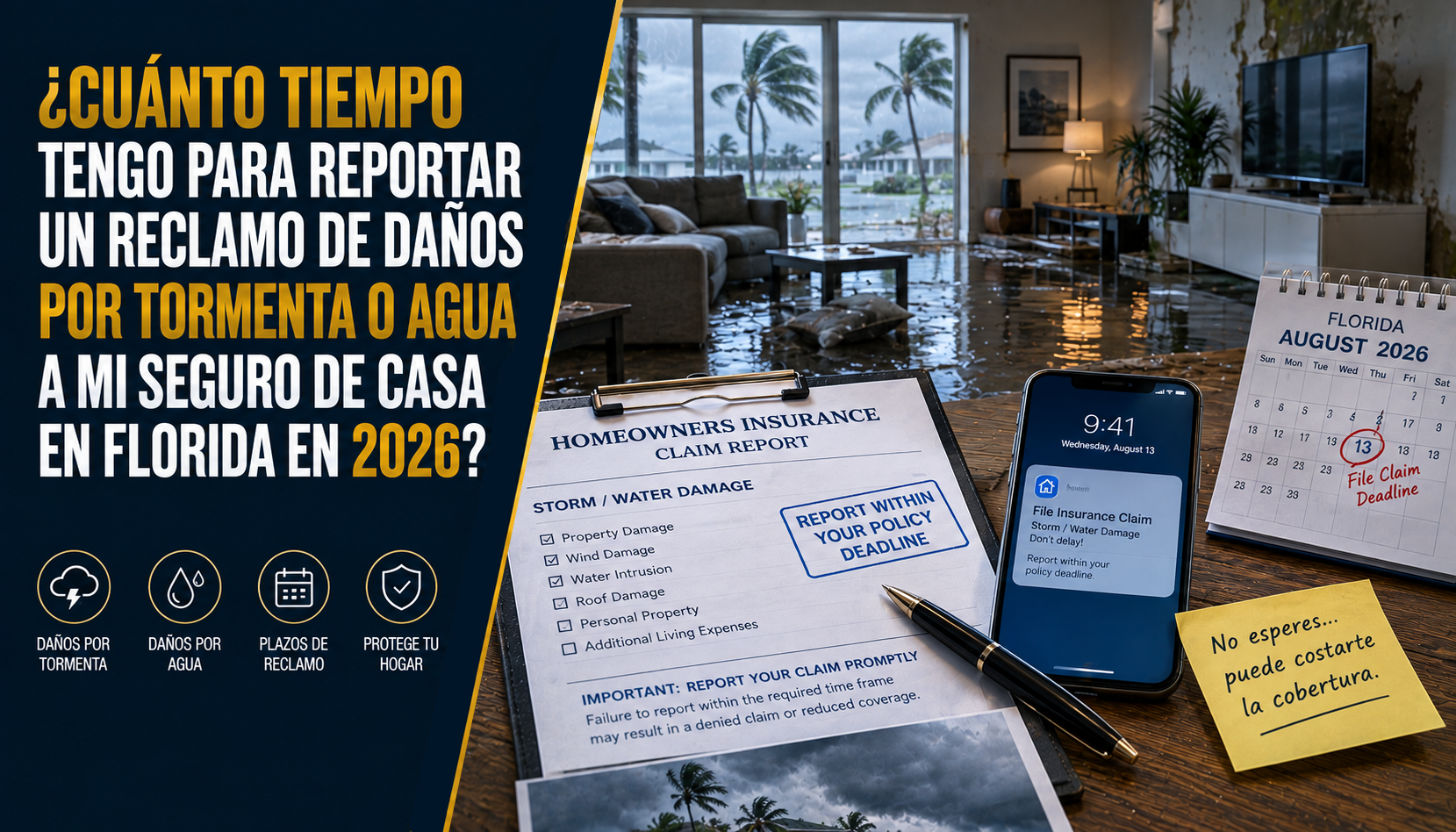
¿Cuánto Tiempo Tengo para Reclamar Daños por Tormenta en Florida? (2026)
¿Tuviste daños por agua o tormenta en Florida? Conoce la regla estricta de 1 año para reportar tu reclamo al seguro en 2026 y evita que sea denegado.
Read More →