Forced to Evacuate in Florida? Additional Living Expenses 2026
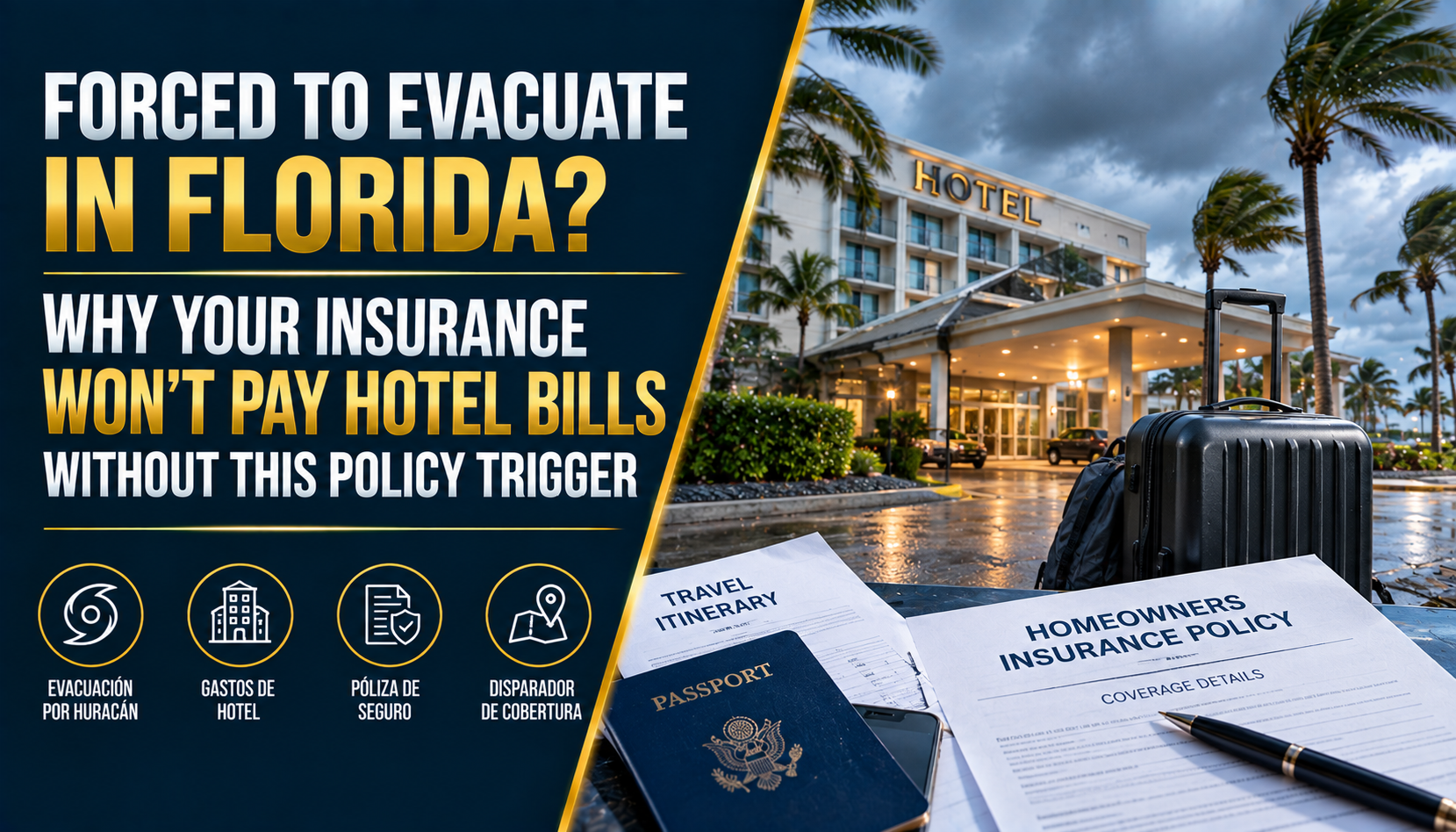
Forced to Evacuate in Florida? Why Your Insurance Won't Pay Hotel Bills Without This Policy Trigger
The Direct Answer
Here is a frustrating truth facing Florida residents during hurricane evacuations in 2026: if you voluntarily pack up and leave your home before a storm hits, your homeowners or renters insurance policy will NOT reimburse your hotel bills, meals, or travel expenses.
Insurance policies provide coverage for evacuation expenses under a provision known as Additional Living Expenses (ALE) or Loss of Use (Coverage D).
However, ALE benefits are not automatically activated simply because a severe hurricane is approaching or because staying feels unsafe.
To receive reimbursement for emergency housing, meals, and temporary living costs, your policy requires a specific contractual trigger: either a civil authority must issue a mandatory evacuation order for your specific zone, or your home must sustain direct, covered physical damage that renders it uninhabitable.
Evacuating ahead of a major hurricane in Florida means dealing with jammed highways, inflated hotel rates, and high out-of-pocket expenses for food and gas. Discovering after the storm that your insurance carrier has denied your ALE reimbursement claim because you left too early or evacuated voluntarily can turn a stressful emergency into an unexpected financial loss.
1. What Is Additional Living Expenses (ALE) Coverage?
Additional Living Expenses (ALE)—also listed as Coverage D (Loss of Use) on standard property policies—is designed to help you maintain your normal standard of living if a covered disaster forces you out of your primary residence.
ALE coverage typically pays for:
- Temporary Housing: Hotel rooms, short-term rental properties, or temporary apartment leases.
- Increased Food Costs: The difference between your normal grocery expenses and the higher cost of eating out at restaurants while displaced.
- Storage & Moving Fees: Costs associated with storing personal property or moving essential items to temporary quarters.
- Pet Boarding & Extra Commuting Costs: Additional gas or public transportation costs incurred due to living farther from work or school.
2. The Two Primary Triggers for ALE Reimbursement
Insurance carriers in Florida strictly enforce the conditions required to approve Loss of Use payouts. Your hotel expenses will only be covered if one of two legal triggers occurs:
Trigger A: Civil Authority Order (Mandatory Evacuation)
If a government entity—such as a city mayor, county commission, or emergency management official—issues a mandatory evacuation order due to an approaching hurricane or flood, your policy's Civil Authority provision activates.
- The Time Limit Rule: Civil Authority coverage usually pays for temporary living expenses for a limited window (typically 14 to 30 days, depending on policy language).
- Voluntary vs. Mandatory: If officials issue a "recommended" or "voluntary" evacuation notice, insurance companies will deny ALE claims. The official declaration must explicitly state that evacuation is mandatory for your specific zone.
Trigger B: Direct Covered Physical Damage
If your home suffers actual physical damage from a covered peril (such as hurricane-force winds tearing off part of your roof or a fallen tree puncturing the ceiling) that makes the dwelling unfit to live in, ALE coverage activates immediately.
- Inhabitability Requirement: Minor cosmetic damage (like missing fence boards or torn screens) does not make a home uninhabitable. The damage must compromise basic livability, such as loss of roof integrity, major structural failure, or persistent lack of running water and electricity resulting from physical property destruction.
3. How to Avoid Out-of-Pocket Evacuation Claim Denials
To ensure your temporary displacement expenses are eligible for reimbursement under Florida insurance guidelines, follow these steps during a storm emergency:
- Keep Every Itemized Receipt: Save detailed receipts for hotel stays, restaurant dining, grocery purchases, pet boarding, and fuel during the displacement period. Credit card statements alone are often rejected; itemized invoices showing specific purchases are required.
- Document Official Government Notices: Save copies, news alerts, or screenshot official county press releases confirming the exact date and time a mandatory evacuation order was issued for your zone.
- Establish Your Baseline Living Expenses: ALE only pays for costs above your normal baseline expenses. Keep records of your average monthly grocery bills so the adjuster can calculate the reimbursable difference.
Why Working with an Independent Agency Matters
Navigating policy triggers, Civil Authority clauses, and Loss of Use limits can be confusing during a evacuation emergency. At Walker Insurance Agency, we help Florida homeowners structure their policies correctly and understand their exact rights when disaster strikes.
- Coverage D & ALE Policy Audits: We review your Loss of Use limits to ensure you have adequate financial protection if you are displaced for several weeks or months.
- Clear Pre-Storm Guidance: We help you understand the exact conditions, deductibles, and documentation required by your carrier before hurricane season begins.
- Independent Advocacy: Located in Stuart, Florida, our team works directly for you—not the insurance company—to guide you through claims and secure the payouts you deserve.
Frequently Asked Questions
1. Does insurance pay for my hotel if the power goes out, but my home suffered no structural damage?
Generally, no. Power outages alone typically do not trigger ALE coverage unless your specific policy includes an endorsement for off-premises utility service interruptions or a mandatory Civil Authority evacuation order remains in effect for your area.
2. Is there a deductible applied to Additional Living Expenses (ALE) claims?
In most Florida homeowners policies, ALE payouts are not subject to your standard hurricane or property deductible. Reimbursable Loss of Use expenses are typically paid starting from dollar one, up to your policy's Coverage D dollar limit or time limit.
3. What if I stay with family or friends during a mandatory evacuation instead of a hotel?
If you stay with family or friends, insurance will not pay for the "market value" of a hotel room. However, some carriers may reimburse you for additional expenses incurred, such as increased grocery bills or compensation paid to your hosts if properly documented and approved by the adjuster.
Protect Your Emergency Financial Plan Today
Don't wait for a mandatory evacuation order to figure out whether your insurance policy will cover your temporary hotel stay. Reviewing your Loss of Use coverage today guarantees total financial readiness when tropical storms threaten your area.
Keep your family, your temporary shelter, and your savings fully protected. Contact Walker Insurance Agency today for a fast, zero-pressure Florida home insurance review.
[GET A FREE FLORIDA HOME INSURANCE QUOTE TODAY]
Call our home insurance team at +1-407-977-7100 or visit our office at 789 SW Federal Hwy, Ste 201, Stuart, FL 34994. We are always ready to help you navigate Florida insurance options and protect your property.
Related Articles
Cobertura de Ley y Ordenanza en Florida (Ordinance or Law) 2026
¿Cubre el seguro de casa en Florida las actualizaciones obligatorias del código de construcción? Descubre cómo la Regla del 50% te afecta en 2026.
Read More →
The 50% Rule in Florida: Storm Damage & Building Codes 2026
Did a storm damage 40% or more of your Florida home? Learn how the 50% Rule can force total code upgrades and cost you over $150,000 out of pocket.
Read More →
¿Cuánto Tiempo Tengo para Reclamar Daños por Tormenta en Florida? (2026)
¿Tuviste daños por agua o tormenta en Florida? Conoce la regla estricta de 1 año para reportar tu reclamo al seguro en 2026 y evita que sea denegado.
Read More →