Generic Parts on Your Brand-New Car? Why Florida Auto Insurance Doesn't Require Factory OEM Repairs (2026)
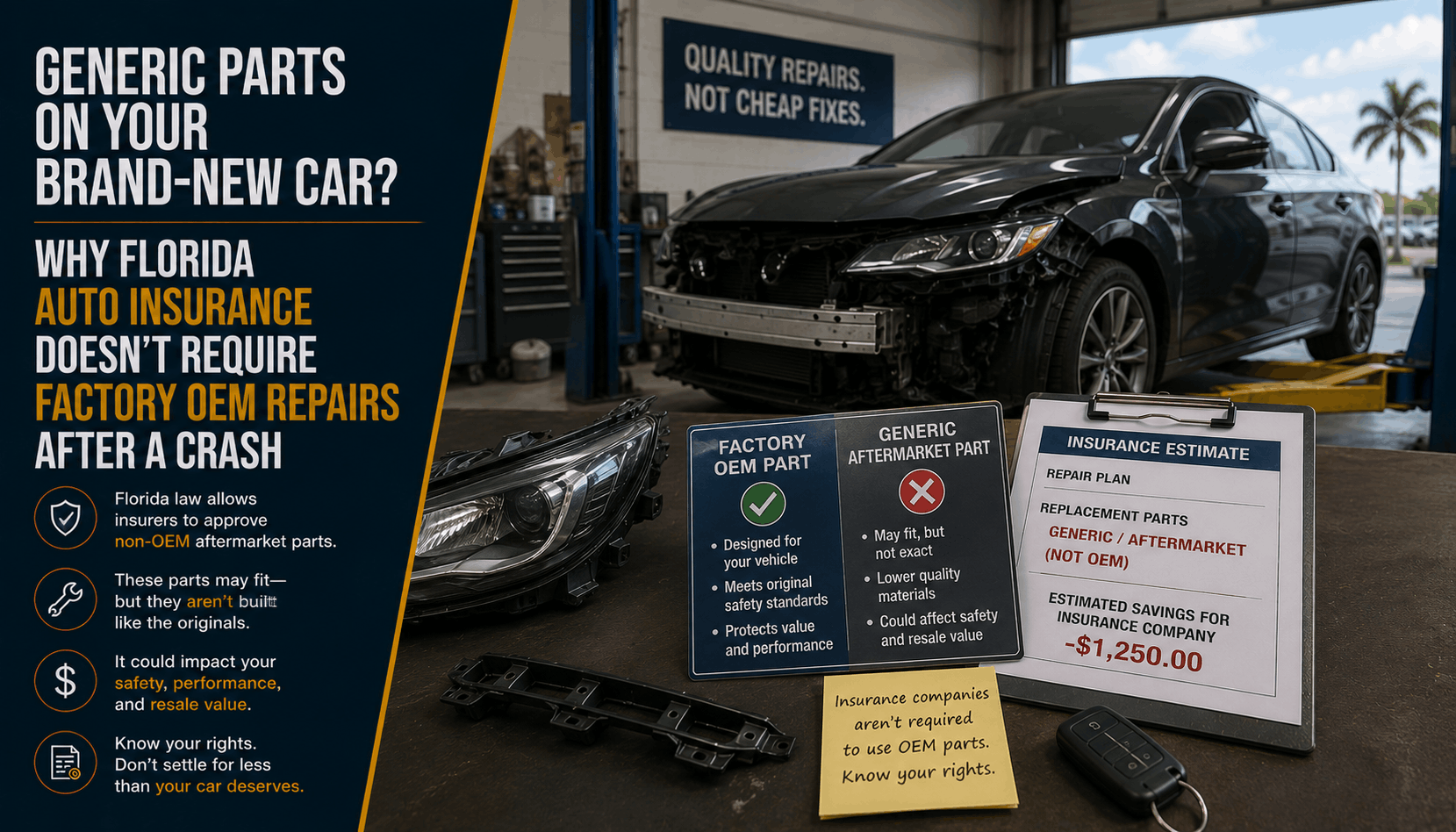
Generic Parts on Your Brand-New Car? Why Florida Auto Insurance Doesn't Require Factory OEM Repairs After a Crash
The Direct Answer
The short answer is no—Florida law does not require auto insurance companies to pay for brand-new Original Equipment Manufacturer (OEM) parts after an accident, even if your vehicle is brand new. Under Florida Statute § 626.9743, insurers are legally permitted to write repair estimates using aftermarket, recycled, or reconditioned crash parts, as long as those parts are deemed "at least equivalent in kind and quality in terms of fit, appearance, and performance". Unless your policy includes a specific OEM Parts Endorsement or your vehicle is a current-year lease with manufacturer-mandated repair terms, standard Florida auto policies only obligate insurers to restore your car to its "pre-loss condition"—not to replace damaged original factory parts with fresh ones directly from the automaker. In 2026, with advanced driver-assistance systems (ADAS) and delicate structural sensors built into modern vehicle bumpers and windshields, using generic non-OEM parts can create fitment issues, void factory warranties, or complicate safety recalibrations.
Collision Center+ 1
Discovering that your insurance company plans to rebuild your new or late-model vehicle using generic, non-factory components can be frustrating. Understanding how Florida insurance regulations govern crash parts—and how you can fight for OEM quality—is vital for every driver in the Sunshine State.
1. How Florida Insurance Law Defines "Like Kind and Quality"
Florida insurance statutes strike a balance between keeping auto insurance rates manageable and ensuring crash repairs meet basic quality standards:
- Florida Statute § 626.9743(4) (The Equivalency Standard): The law mandates that non-OEM aftermarket parts used in a repair estimate must be equivalent in fit, appearance, and performance to the damaged part prior to the crash. However, the law does not state that parts must be manufactured by the original vehicle maker.
Collision Center - Mandatory Aftermarket Disclosure (Florida Statute § 501.33): If an insurer or repair shop prepares an estimate using generic aftermarket crash parts (such as non-OEM fenders, grilles, or bumpers), Florida law requires a bold written disclosure in at least 10-point type notifying you that the parts are warranted by the aftermarket distributor—not your vehicle's manufacturer.
Florida Senate - Your Right to Choose Your Body Shop: Under Florida Statute § 626.9641, your insurance company cannot force you to use their "preferred" or direct repair program (DRP) network shop. You have the absolute right to select any licensed body shop in Florida.
Luxury Custom Garage - Auto Body Shop+ 1
2. The Risks of Aftermarket Parts on Modern 2026 Vehicles
While generic aftermarket body panels may look fine on older vehicles, 2026 model-year cars rely heavily on integrated technology that can be compromised by non-factory components:
Non-OEM bumper covers, side mirrors, and windshields often lack the precise sensor cutouts or material tolerances required for Advanced Driver Assistance Systems (ADAS) like automatic emergency braking and lane-keeping assistance. Installing generic sheet metal or structural parts can void the remaining manufacturer rust-through or structural warranty on those specific areas of your car.
In addition, crash-test safety standards for aftermarket sheet metal do not always undergo the same rigorous structural testing as factory OEM metals. Independent collision centers frequently report that generic body panels require additional labor to fit properly, occasionally creating uneven panel gaps.
Crucial Reality: If your insurer specifies aftermarket parts but your chosen body shop proves the generic component does not fit correctly or breaks ADAS safety calibration standards, the insurer must pay for a proper replacement—which often forces a switch to an OEM part.
3. Essential Checklist: How to Demand Factory OEM Parts in Florida
If you want original factory parts on your vehicle after an accident, use this strategy to protect your car's value and safety:
- Step 1: Purchase an OEM Parts Endorsement. The easiest way to guarantee factory parts is to add an OEM endorsement to your auto policy before an accident occurs. This coverage ensures your carrier pays for genuine manufacturer parts during claims.
- Step 2: Partner with an OEM-Certified Body Shop. Choose an independent collision center that holds official certifications from your car's manufacturer (e.g., Ford, Honda, BMW certified). Certified shops follow strict OEM repair guidelines and will advocate directly with your insurance adjuster to justify factory parts.
db Orlando Collision - Step 3: Pay the Price Difference ("Out-of-Pocket Option"). If your insurer refuses to cover OEM parts and you don't have an endorsement, you can request that the body shop order OEM parts and simply pay the dollar difference between the aftermarket estimate and the factory part price yourself.
Why Working with an Independent Agency Is Vital
Navigating auto policy language, coverage add-ons, and collision repair rights requires expert guidance. At Walker Insurance Agency, we help Florida drivers structure auto coverage that protects both their vehicle's safety and its long-term resale value.
The Walker Advantage:
- Tailored Policy Structuring: We offer auto policies with optional OEM parts endorsements and total replacement coverage for new vehicles.
- Independent Claims Support: If you're involved in a crash, our team helps you understand your rights under Florida insurance law and guides you through the estimate review process.
- Local Florida Expertise: Based in Stuart, FL, we understand regional driving risks, local repair standards, and state regulatory rules inside and out.
FAQ
1. Does my insurance have to use OEM parts if my car is leased?
Many leasing companies (like BMW Financial, Audi Financial, or Mercedes-Benz Financial) mandate in their lease agreements that all collision repairs must use genuine OEM parts. While your insurer's baseline obligation is governed by your policy terms, showing your adjuster the strict lease agreement requirements often helps secure approval for OEM parts.
2. What is the difference between Aftermarket, Recycled, and OEM parts?
- OEM (Original Equipment Manufacturer): Brand-new parts made directly by or for your vehicle's original manufacturer.
- Aftermarket: Brand-new parts built by third-party companies designed to copy the factory design.
- Recycled / LKQ (Like Kind and Quality): Original factory parts salvaged from undamaged areas of donor vehicles in salvage yards.
3. Can my insurer force me to go to their preferred body shop to get repairs done?
No. Florida law explicitly prohibits insurance companies from steering or forcing policyholders to use specific repair shops. You have the legal right to choose any licensed body shop you trust.
db Orlando Collision+ 1
Protect Your Car's Value and Safety Today
Don't wait until after a collision to find out what kind of parts your insurance company will pay for. Reviewing your policy terms and adding an OEM parts endorsement ensures your vehicle is rebuilt to true factory standards.
Take control of your auto insurance protection today. Contact Walker Insurance Agency for a comprehensive policy audit. We provide the expert guidance you need to eliminate coverage surprises and keep your family safe on the road.
[GET A FREE QUOTE TODAY]
Call our personal lines division at +1-407-977-7100 or visit our office in Stuart, FL. Let us safeguard your drive today.
Related Articles
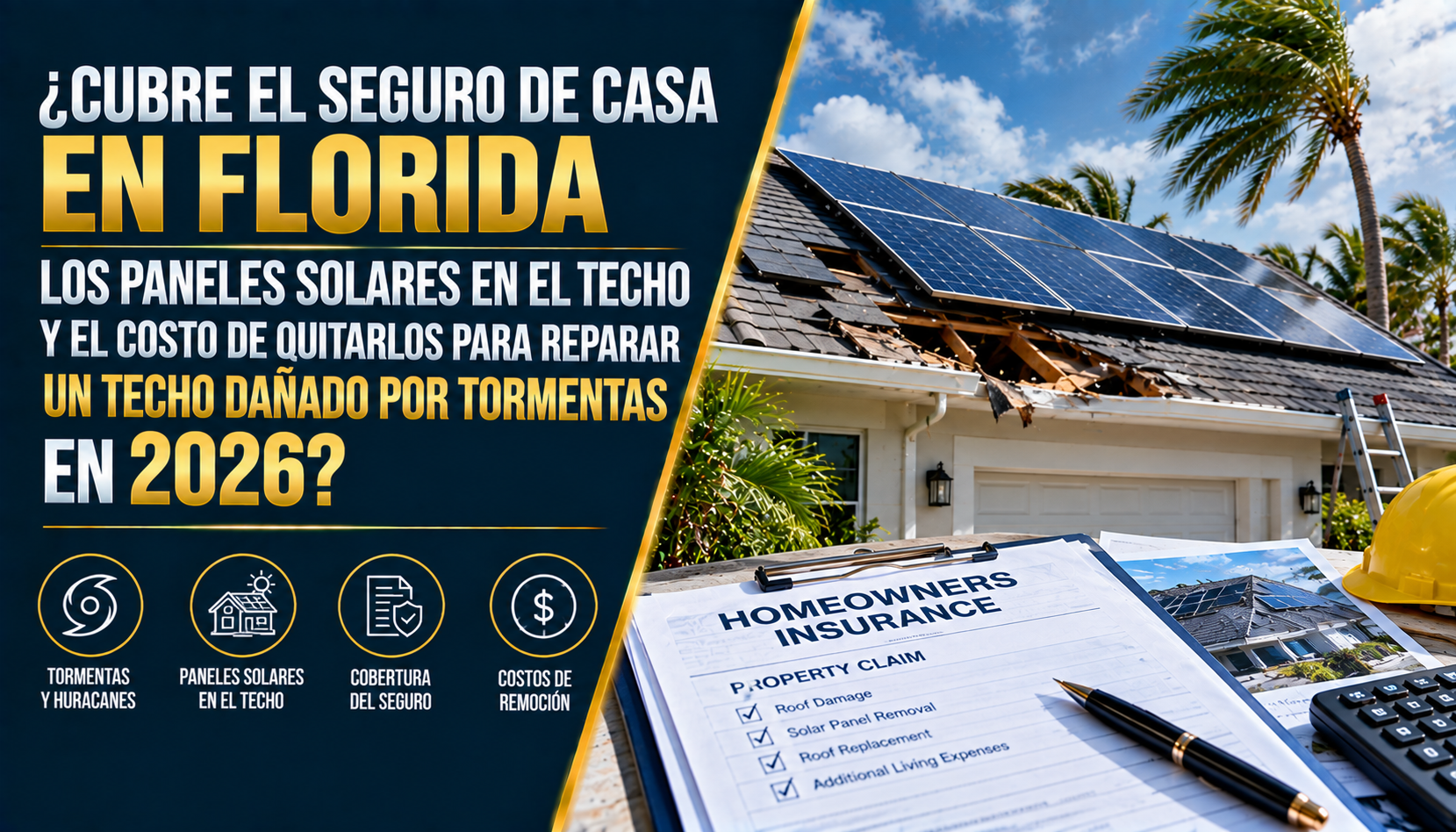
Paneles Solares y Seguro de Casa en Florida (2026): Cobertura y Gastos
¿Cubre el seguro en Florida quitar los paneles solares para reparar el techo tras una tormenta en 2026? Conoce las brechas de cobertura y evita gastos inesperados.
Read More →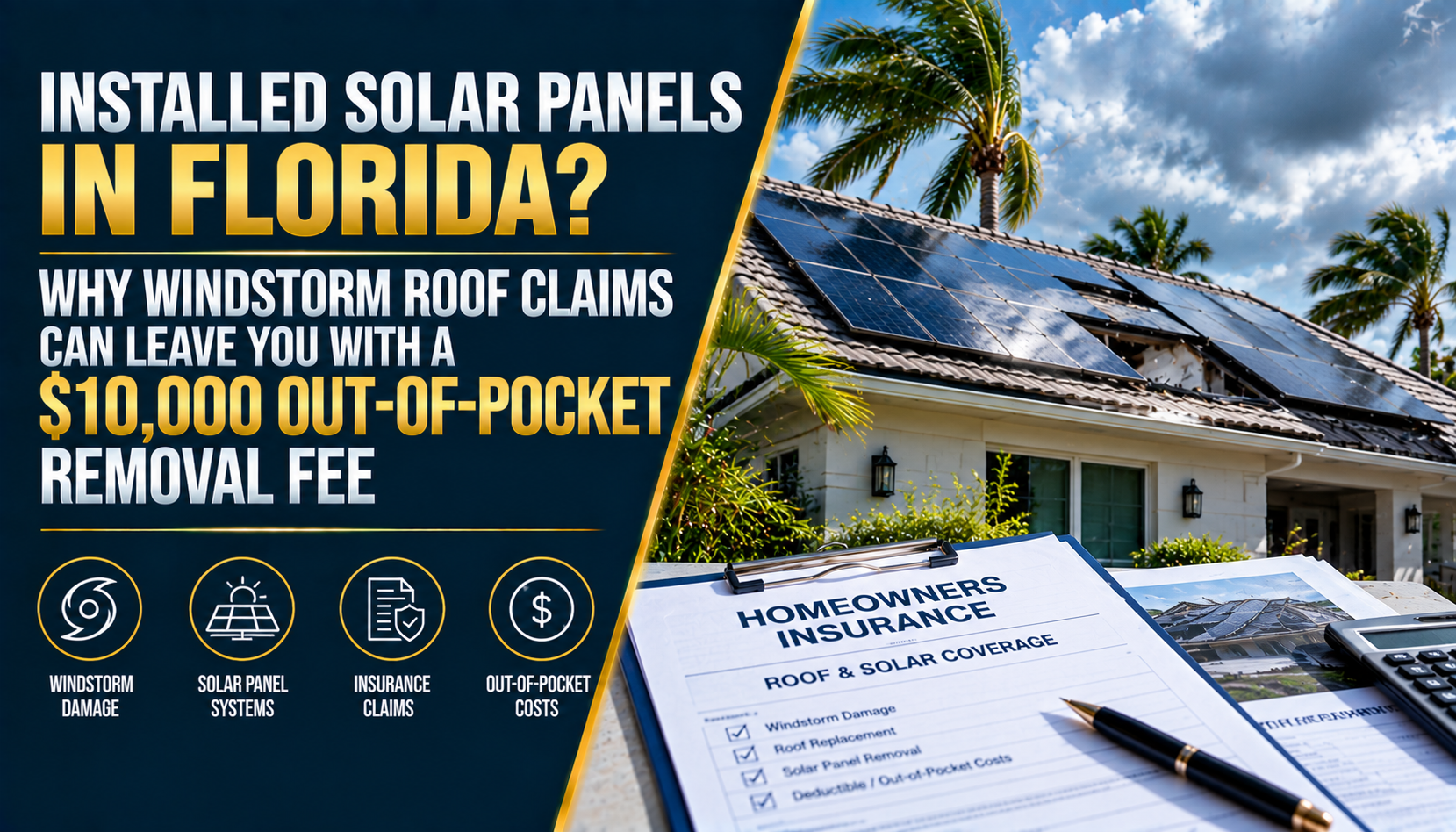
Florida Solar Panels & Windstorm Claims: The $10,000 Detach Fee
Installed solar panels on your Florida home? Learn why windstorm roof claims can trigger a $10,000 out-of-pocket panel removal fee and how to cover it.
Read More →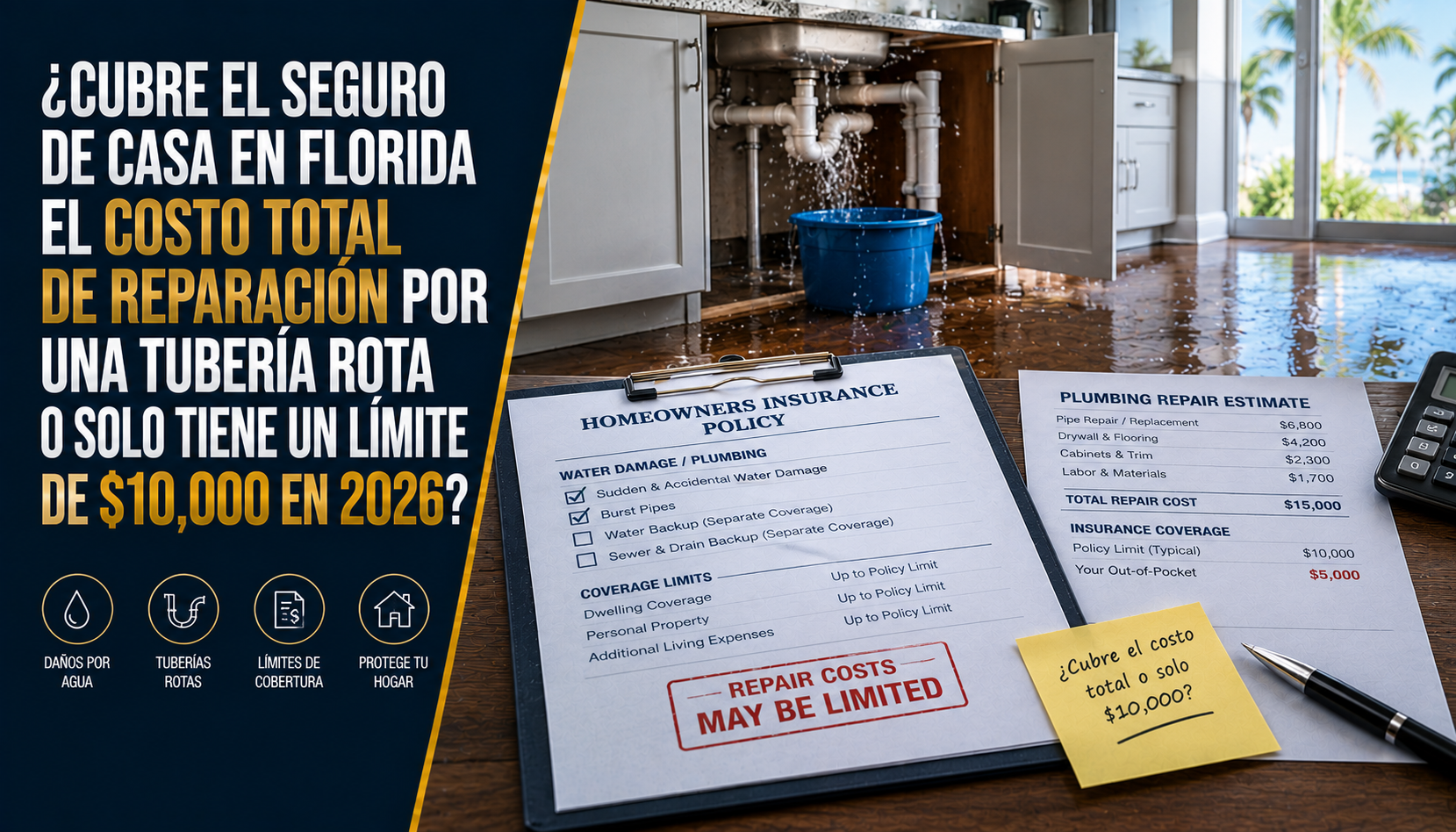
¿Cubre el Seguro el Costo Total de una Tubería Rota en Florida? (2026)
¿Se rompió una tubería en tu casa en Florida? Descubre si tu seguro cubre la reparación completa o si aplica el tope estricto de $10,000 en 2026.
Read More →