How to Lower Your Car Insurance in Florida in 2026

How to Lower Your Car Insurance in Florida in 2026
Car insurance costs have been a major concern for Florida drivers in recent years. While some insurers are beginning to lower rates in 2026, many drivers are still paying higher premiums than expected.
The good news is that there are several practical ways drivers can reduce their car insurance costs while still maintaining the protection they need.
Review Your Current Coverage
One of the easiest ways to potentially lower your premium is by reviewing your existing coverage. Many drivers renew their policies every year without checking whether their coverage still fits their needs.
Why Reviewing Your Policy Matters
Reviewing your policy allows you to:
-
Verify that your coverage limits are appropriate
-
Remove unnecessary add-ons
-
Adjust deductibles if needed
-
Make sure your vehicle information is accurate
Ask About Available Discounts
Insurance companies offer a variety of discounts, but many drivers don’t realize they may qualify.
Common Auto Insurance Discounts
Some of the most common discounts include:
-
Safe driver discounts
-
Multi-policy discounts (home and auto)
-
Multi-vehicle discounts
-
Good student discounts
-
Defensive driving course discounts
-
Low mileage discounts
Asking about available discounts can sometimes significantly reduce your premium.
Maintain a Clean Driving Record
Your driving history is one of the biggest factors affecting your car insurance premium.
Drivers with fewer accidents, tickets, and claims typically receive significantly lower rates than drivers with multiple violations.
Practicing safe driving habits not only keeps you safe on the road — it can also help keep your insurance costs lower.
Consider Increasing Your Deductible
Your deductible is the amount you pay out of pocket before your insurance coverage begins after a claim.
Choosing a higher deductible often results in a lower monthly premium.
However, it’s important to make sure you can comfortably afford the deductible amount if an accident occurs.
Compare Insurance Options Regularly
Insurance companies frequently adjust their pricing models.
That means the company that offered the best price a few years ago may not necessarily be the most competitive today.
Reviewing and comparing policies periodically can help ensure you are receiving the best value for your coverage.
Keep Your Vehicle Information Updated
Updating policy details such as:
-
Annual mileage
-
Vehicle usage
-
Parking location
-
Installed safety features
can sometimes impact your insurance rate.
Keeping this information accurate helps ensure your premium reflects your actual risk profile.
Frequently Asked Questions About Lowering Car Insurance in Florida
What is the fastest way to lower car insurance in Florida?
Reviewing your current policy and asking about available discounts are often the quickest ways to potentially reduce premiums.
Does a higher deductible lower insurance costs?
Yes. Increasing your deductible often lowers your monthly premium, but you would pay more out of pocket if a claim occurs.
How often should I review my car insurance policy?
Most experts recommend reviewing your auto insurance at least once per year or whenever your policy renews.
Do safe drivers really pay less for car insurance?
Yes. Drivers with clean driving records typically receive lower premiums compared to drivers with accidents or violations.
Related Articles

Seguro Comercial en Florida: Pérdida de Ingresos sin Daños (2026)
¿Negocio cerrado por apagones o evacuación tras un huracán en Florida? Descubre por qué el seguro estándar deniega la pérdida de ingresos y cómo protegerte en 2026.
Read More →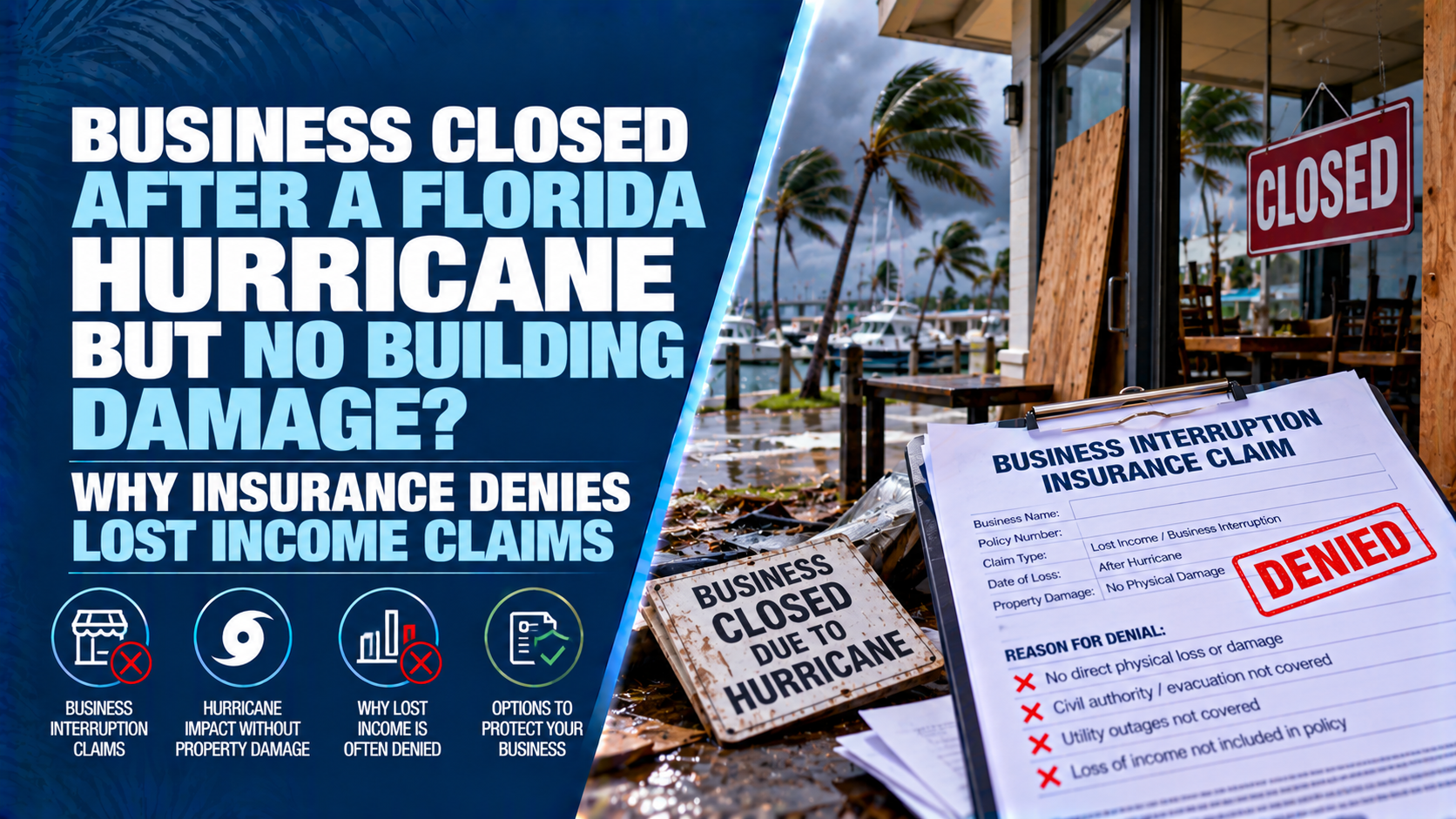
Florida Business Interruption Insurance: Lost Income Claims (2026)
Business forced to close after a Florida hurricane despite no building damage? Learn why insurance denies lost income claims and how to secure protection.
Read More →
Cobertura ALE en Florida (2026): Gastos tras un Huracán
¿Desplazado por un huracán en Florida? Descubre qué cubre la cobertura ALE (Pérdida de Uso), reglas de recibos y límites de reembolso en 2026.
Read More →