In the Shop for a Week? Why Auto Insurance Won't Cover Your Rental
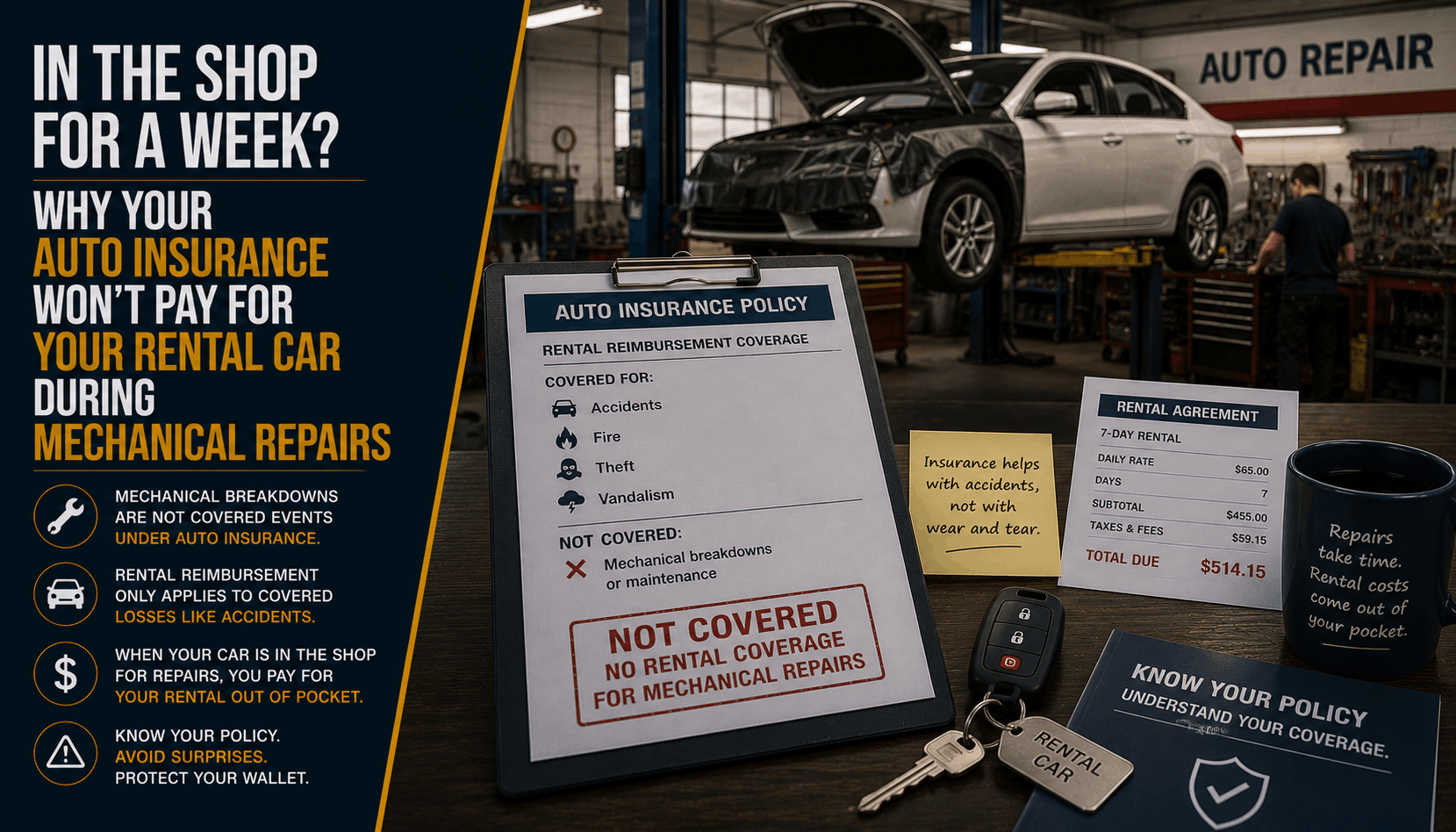
In the Shop for a Week? Why Your Auto Insurance Won't Pay for Your Rental Car During Mechanical Repairs
The Direct Answer
The short answer is absolutely not—carrying auto insurance with rental reimbursement coverage will not pay for a rental vehicle when your car is stranded in the shop for a week undergoing mechanical or electrical repairs. One of the most frustrating surprises drivers face is discovering that even if they pay every month for "Rental Reimbursement" or "Transportation Expense" coverage on their auto policy, that benefit remains completely locked during routine mechanical failures. Auto insurance policies are indemnity contracts written specifically to protect against sudden, direct physical damage caused by external perils—such as highway collisions, severe hail storms, fires, or vandalism. When your transmission slips, your alternator fails, or your AC compressor dies due to normal wear and tear or mechanical breakdown, your auto insurance policy treats the situation as maintenance—meaning both the repair bill and any substitute transportation costs fall 100% on your shoulders out of pocket.
Leaving your vehicle at a repair facility for a week-long mechanical overhaul creates an immediate transportation crisis. Understanding why auto insurance contracts exclude mechanical downtime—and how to secure alternative protections—ensures you aren't caught off guard.
1. The Peril Contract: Why Insurance Leaves Mechanical Repairs Behind
To understand why your insurer denies rental coverage while your car sits at a mechanic's shop, you must examine how rental reimbursement endorsements are triggered:
- The Covered Loss Prerequisite: Rental reimbursement is strictly a secondary endorsement tied directly to your primary Comprehensive or Collision coverage. It only activates when your primary vehicle is rendered un-drivable or placed in a shop due to an insured physical loss—like a multi-vehicle accident, tree branch strike, or theft recovery.
- The Mechanical Exclusion Clause: Auto insurance standard contracts explicitly exclude mechanical failure, electrical breakdown, engine wear, and component degradation. Because the underlying mechanical breakdown is an excluded event, any secondary claim—such as a rental vehicle allowance—is automatically excluded as well.
- Maintenance vs. Sudden Damage: Insurers classify mechanical breakdowns as predictable operational costs of owning a vehicle rather than unexpected physical accidents. Because routine maintenance and mechanical repairs are the owner's responsibility, insurance contracts do not subsidize downtime for these services.
2. Alternatives: How to Get Rental Car Protection During Mechanical Failures
Since standard auto insurance won't foot the bill for temporary transportation during mechanical downtime, smart drivers build alternative safety nets:
- Mechanical Breakdown Insurance (MBI): Offered by select insurance carriers for qualifying vehicles, MBI acts as a comprehensive alternative to dealership extended warranties. MBI covers mechanical component failures and frequently includes daily rental car reimbursement while your car is in the shop.
- Vehicle Service Contracts (Extended Warranties): Third-party and manufacturer extended warranties often build in substitute transportation allowances (typically $35 to $50 per day up to a designated cap) when a covered engine, transmission, or drive axle component requires extended shop time.
- Dealership Service Loaner Fleets: Many brand service centers provide complimentary loaner vehicles or corporate rental discounts when major covered warranty work or technical recalls take several days to complete.
3. Essential Checklist: What to Do When Your Car Needs a Week in the Shop
If your mechanic informs you that your car requires several days or a week of extensive repairs, take these immediate steps to mitigate transportation expenses:
- Step 1: Verify the Root Cause of the Failure. Ask your technician whether the mechanical breakdown was caused by wear and tear or by external physical damage (such as striking road debris that ruptured a fluid line or cracked an engine housing). External impacts can turn a mechanical issue into a covered collision claim.
- Step 2: Audit Your Active Warranties. Check your vehicle purchase agreement, credit card roadside perks, or active service contracts to see if rental car allowances are built into your warranty terms.
- Step 3: Negotiate Rental Discounts. Ask the repair facility if they partner with local rental car agencies to provide preferred commercial daily rates while your car is serviced.
Why Working with an Independent Agency Is Vital
Navigating the strict boundary lines between auto insurance, mechanical warranties, and policy endorsements requires expert guidance. At Walker Insurance Agency, we ensure you have complete clarity on how your policy works so you never suffer unexpected financial surprises.
The Walker Advantage:
- Policy Structure Audits: We review your auto declarations to ensure you carry adequate coverage limits and fully understand what triggers your rental reimbursement benefits.
- Mechanical Protection Guidance: We help you explore Mechanical Breakdown Insurance (MBI) options and policy endorsements to fill dangerous coverage gaps left by standard auto contracts.
- Dedicated Claims Advocacy: When physical accidents occur, our local team coordinates directly with adjusters to ensure your rental benefits are activated seamlessly from day one.
FAQ
1. Does standard rental reimbursement cover my rental car if my vehicle is in the shop for routine maintenance?
No. Routine maintenance tasks—such as oil changes, brake pad replacements, tire rotations, or scheduled tune-ups—are non-accident events. Rental reimbursement benefits only apply following a covered comprehensive or collision loss.
2. How much does rental reimbursement coverage usually cost on an auto policy?
Rental reimbursement is one of the most affordable endorsements you can add to an auto policy, typically costing between $2 to $15 per month per vehicle. It usually provides daily allowances (such as $30 to $50 per day up to a 30-day maximum) when triggered by a covered loss.
3. Can I add Mechanical Breakdown Insurance (MBI) to any car?
MBI availability depends on vehicle age and mileage. Most carriers require the vehicle to be relatively new (typically under 15,000 miles and less than 15 months old) when the endorsement is added. Consulting your independent agent early ensures you lock in coverage before eligibility expires.
Protect Your Daily Transportation Today
Finding out your car will be stranded in the shop for a week is frustrating, but facing an unexpected $350+ out-of-pocket rental car bill adds serious financial strain. Understanding the boundaries of your auto policy ensures you aren't caught unprepared when mechanical repairs strike.
Take control of your auto insurance strategy today. Contact Walker Insurance Agency for a comprehensive coverage review. We provide the expertise you need to evaluate policy endorsements, close coverage gaps, and keep your daily commute protected.
[GET A FREE QUOTE TODAY]
Call our personal lines division at +1-407-977-7100 or visit our office in Stuart, FL. Let us safeguard your property boundaries today.
Related Articles

¿Cubre el Seguro Hundimientos de Tierra o Grietas en Florida? (2026)
¿Aparecieron grietas en tus paredes o cimientos tras las lluvias en Florida? Descubre la diferencia entre Sinkholes y Catastrophic Ground Collapse en 2026.
Read More →
Found Cracks After Heavy Florida Rains? Sinkhole Coverage Rider 2026
Found cracks in your walls or foundation after Florida storms? Learn why standard home insurance denies sinkhole claims and why you need a sinkhole rider.
Read More →
¿Cubre el Seguro los Códigos de Construcción en Florida en 2026?
¿Vas a reconstruir tu casa tras un huracán en Florida? Descubre por qué los códigos de construcción pueden costarte $50,000 y cómo la cobertura Ordinance or Law te salva.
Read More →