Out of Your House for a Year? Why Home Insurance Stops Paying Rent (2026)
Out of Your House for a Year? Why Your Home Insurance Might Stop Paying Your Rent Mid-Rebuild
The Direct Answer
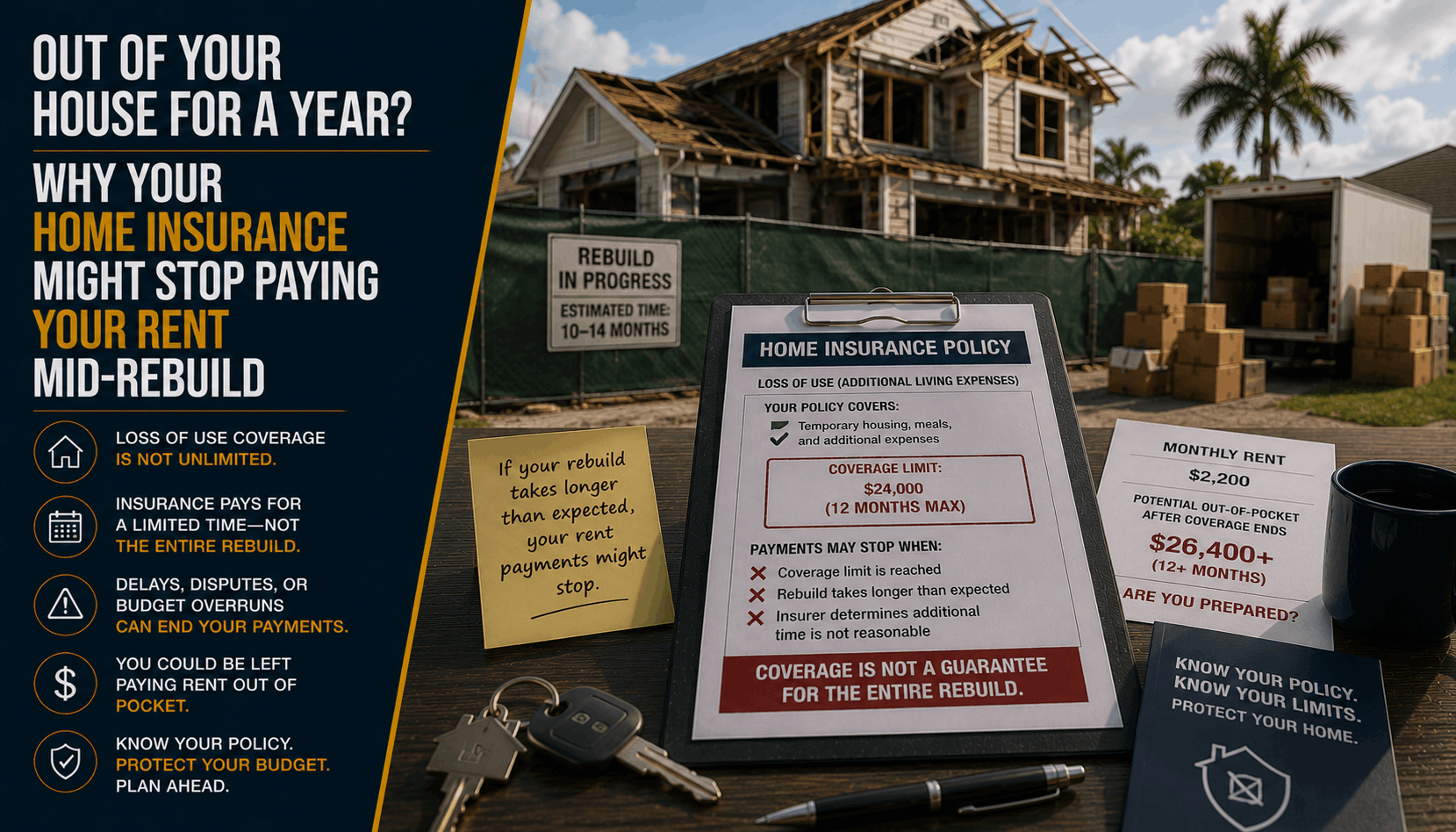
The short answer is yes—your home insurance can absolutely stop paying your temporary rent and living expenses mid-rebuild if you hit your policy's time cap or financial limit. When a major fire, storm, or disaster leaves your home uninhabitable, your policy's Loss of Use (also known as Coverage D or Additional Living Expenses / ALE) kicks in to pay for temporary housing, rental homes, and hotel stays. However, standard homeowners policies place strict double caps on these benefits. First, ALE is usually capped at a financial maximum—typically 10% to 30% of your Dwelling Coverage limit. Second, most insurance contracts impose a hard time limitation, often 12 to 24 months. In 2026, widespread contractor shortages, permitting backlogs, material supply delays, and post-disaster demand surges routinely push major rebuilds past the 18-to-24-month mark. Once your policy's financial limit or time cap is reached, your insurer's legal obligation ends immediately—forcing you to pay rent out of pocket while continuing to pay your regular monthly mortgage.
Facing a catastrophic home repair is stressful enough on its own, but finding out mid-construction that your temporary rental allowance has suddenly dried up creates a severe financial emergency. Understanding how Loss of Use caps work—and how to extend your protection—is vital for every homeowner.
1. The Two Hidden Triggers That Cut Off Your Rent Payments
Insurance companies do not cover temporary relocation indefinitely. Your Loss of Use benefits will immediately cease when you hit either of these contract boundaries:
- The Financial Cap (Percentage of Dwelling Limit): Most standard policies set your Maximum Additional Living Expense limit at 20% of your total Dwelling Coverage (Coverage A). For example, if your house is insured to rebuild for $400,000, your total Loss of Use budget is capped at $80,000. In high-cost rental markets or long-term displacement scenarios, high monthly rents and living expenses can drain this budget long before the build is complete.
- The Time Limitation (The 12-to-24 Month Wall): Even if you have plenty of money remaining in your Coverage D limit, many policy contracts state that ALE benefits terminate after 12 months (or up to 24 months in select endorsements). On the exact anniversary date of the loss, rent checks stop—regardless of whether your home has a roof or dry-wall installed.
- The "Actual Loss Sustained" Standard: Insurers only reimburse the difference between your normal living expenses and your temporary living expenses. If you do not track and submit proper documentation, payments can be delayed or reduced.
2. Why Home Rebuilds Routinely Take Longer Than 12 Months
While standard insurance policies were drafted assuming a typical home reconstruction finishes within a year, modern building conditions in 2026 frequently shatter that timeline:
- Permitting & Inspection Backlogs: Municipal building departments often take months to review structural plans, issue rebuild permits, and conduct required code inspections before crews can even break ground.
- Contractor & Labor Scarcity: Skilled tradespeople are in high demand across the region. Securing reliable general contractors and specialized sub-contractors often causes multi-month project stalls.
- Ordinance & Law Compliance: Updating an older or damaged home to meet modern building codes (such as elevated foundations or hurricane-resistant roofing) requires specialized architectural revisions and extra construction time.
- Regional Disaster Demand Surges: Following widespread weather events like severe storms or hurricanes, regional demand for materials and labor skyrockets, easily pushing local rebuild timelines past 18 to 24 months.
Crucial Reminder: You remain legally obligated to pay your existing monthly mortgage, property taxes, and home equity lines on the damaged house while simultaneously paying rent for your temporary shelter if insurance benefits run out.
3. Essential Checklist: How to Protect Your Housing Allowance
To prevent your housing payments from running dry while your home is under construction, follow this proactive strategy:
- Step 1: Audit Your Coverage D Limits Today. Check your home insurance declarations page to identify your exact Loss of Use limit and time cap. If your ALE is capped at 10% or 12 months, ask your agent about increasing the limit or adding extended time endorsements.
- Step 2: Maintain a Strict Reconstruction Schedule. Require your contractor to provide a detailed project timeline with clear milestones. Regularly share these updates with your insurance adjuster so they see that construction delays are due to market realities, not owner negligence.
- Step 3: Track Every Baseline Living Expense. Keep meticulous records of your historical spending versus your temporary expenses. Insurers require itemized receipts to reimburse temporary rent, storage, pet boarding, and extra commuting costs.
Why Working with an Independent Agency Is Vital
Navigating structural rebuilding claims, property limits, and strict policy exclusions requires expert advisory. At Walker Insurance Agency, we help you design a homeowners insurance strategy that shields your family from unexpected gaps during major recovery efforts.
The Walker Advantage:
- Comprehensive Policy Audits: We evaluate your policy's Loss of Use limits, dwelling replacement cost parameters, and time caps to eliminate hidden disaster coverage gaps.
- Tailored Endorsement Strategy: We help you secure extended displacement protection and Ordinance & Law coverage to ensure long construction delays don't destroy your budget.
- Dedicated Local Advocacy: When disaster strikes, our team stands by your side to help coordinate claims, communicate with adjusters, and keep your living expense payments moving smoothly.
FAQ
1. Does my Loss of Use coverage pay my regular mortgage payment while I am displaced?
No. You are still responsible for paying your regular baseline expenses, including your primary mortgage, property taxes, and standard utility baseline. Loss of Use only reimburses expenses that exceed your normal baseline costs (such as the second rent payment or hotel bill).
2. Can I extend my Loss of Use time limit after a disaster occurs?
In most cases, policy terms cannot be changed after a loss has occurred. However, if construction delays are directly caused by insurance adjuster inaction or unreasonable processing holds on the carrier's side, your claim representative or attorney may negotiate a time extension.
3. What living expenses qualify under Additional Living Expenses (ALE)?
Qualifying expenses include temporary apartment rent, hotel fees, furniture rentals, laundry expenses, extra fuel costs incurred due to a longer commute, pet boarding, and excess food costs if you lack kitchen facilities.
Protect Your Housing Allowance Before Disaster Strikes
Rebuilding your family home after a severe loss is a long journey. Finding yourself forced to pay double housing costs mid-construction can turn a temporary disruption into a financial crisis.
Take control of your home insurance strategy today. Contact Walker Insurance Agency for a comprehensive coverage review. We provide the expertise you need to evaluate policy limits, eliminate hidden gaps, and protect your home and family.
[GET A FREE QUOTE TODAY]
Call our personal lines division at +1-407-977-7100 or visit our office in Stuart, FL. Let us safeguard your property boundaries today.
Related Articles

¿Cubre el Seguro Hundimientos de Tierra o Grietas en Florida? (2026)
¿Aparecieron grietas en tus paredes o cimientos tras las lluvias en Florida? Descubre la diferencia entre Sinkholes y Catastrophic Ground Collapse en 2026.
Read More →
Found Cracks After Heavy Florida Rains? Sinkhole Coverage Rider 2026
Found cracks in your walls or foundation after Florida storms? Learn why standard home insurance denies sinkhole claims and why you need a sinkhole rider.
Read More →
¿Cubre el Seguro los Códigos de Construcción en Florida en 2026?
¿Vas a reconstruir tu casa tras un huracán en Florida? Descubre por qué los códigos de construcción pueden costarte $50,000 y cómo la cobertura Ordinance or Law te salva.
Read More →