Power Surge Destroyed Your Solar Battery? Why Home Insurance Caps Energy Limits (2026)
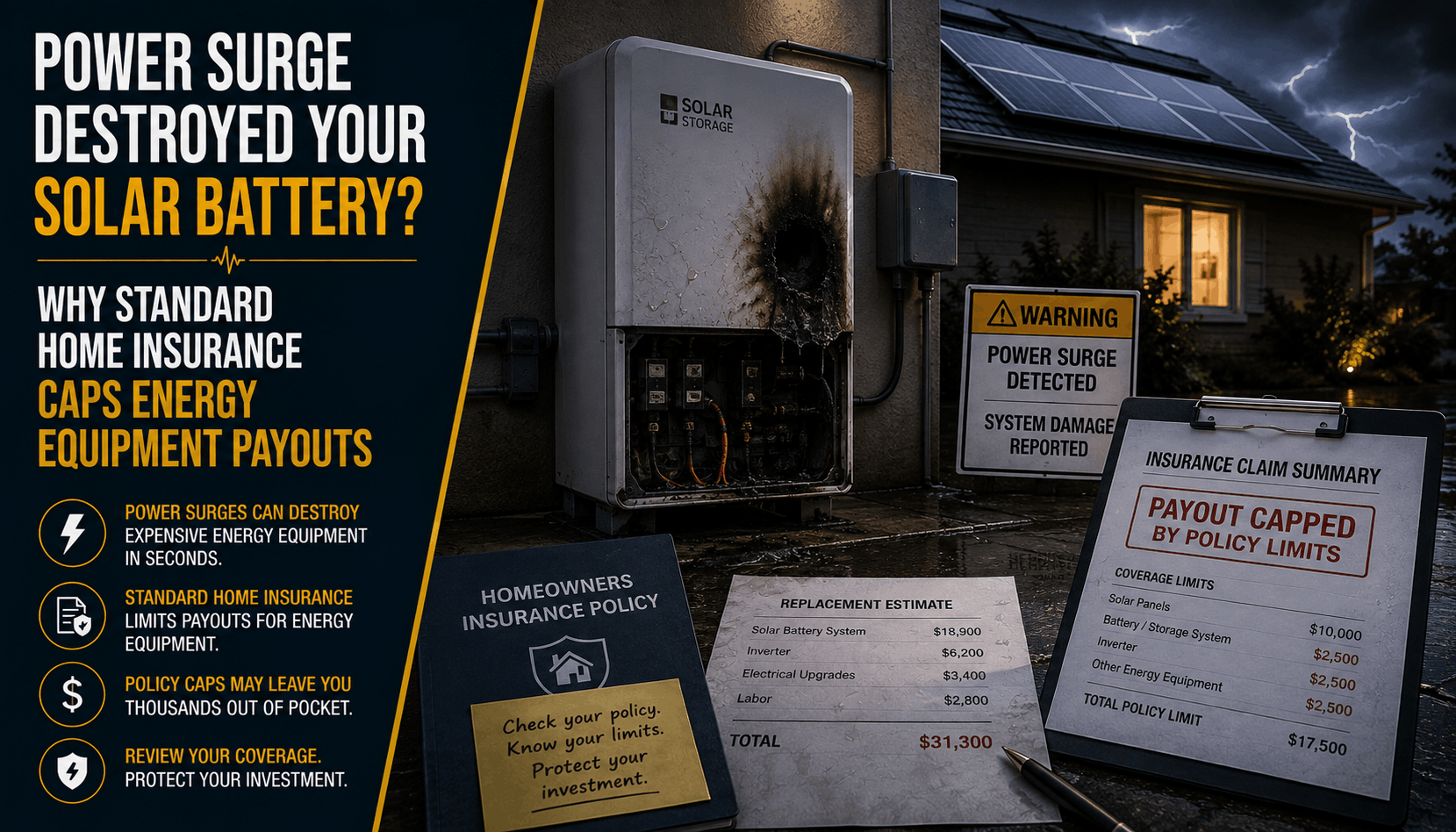
Power Surge Destroyed Your Solar Battery? Why Standard Home Insurance Caps Energy Equipment Payouts
The Direct Answer
Here is the harsh financial reality facing homeowners with renewable energy setups: if a grid-side power surge or electrical spike fries your $10,000–$15,000 solar battery backup or inverter, your standard homeowners policy may cover only a fraction of the replacement cost—or reject the claim completely.
While standard policies (like HO-3) typically classify rooftop solar panels as part of your dwelling structure, high-tech energy storage systems and smart inverters fall into an insurance gray area.
Unless you have updated your policy's replacement limits or added an Equipment Breakdown Endorsement, standard insurers often apply strict sub-limits on "artificially generated electrical currents" or categorize unattached storage units under low personal property caps. That leaves you footing the bill for thousands of dollars in delicate microcircuitry repairs out of pocket.
As summer heatwaves overload power grids and trigger rolling blackouts, grid instability and voltage spikes spike drastically. Finding out your solar battery protected your home during an outage—only to be destroyed by a post-blackout voltage spike—is frustrating enough; discovering your insurer will only pay $1,000 toward a $12,000 replacement makes a bad situation far worse.
1. Why Standard Policies Cap Energy Equipment Payouts
Insurance contracts treat sudden weather destruction very differently from electrical grid fluctuations:
- The "Artificial Current" Exclusion: Standard home insurance policies routinely distinguish between direct lightning strikes (which are generally covered) and "artificially generated electrical currents" caused by utility grid switching or line restores. Grid surges often face capped payouts or strict policy exclusions.
- Outdated Coverage A (Dwelling) Limits: Adding a $20,000–$30,000 solar-plus-storage system increases your home's total replacement cost. If you installed your battery without raising your policy's total dwelling limit, your claim payout will cap out at your old policy limit.
- Personal Property Sub-Limit Traps: If your solar battery or monitoring hub is installed in a detached shed or classified as personal property rather than hardwired dwelling equipment, insurers may cap payouts under Coverage B or C sub-limits (frequently capped at 10% of total dwelling value or subject to severe electronics sub-limits).
2. The Vulnerability of Modern Energy Storage
Solar batteries (such as Lithium-ion storage walls) and hybrid string inverters are not simple mechanical appliances; they are complex computer systems.
- Sensitive Micro-Inverters & BMS: A high-voltage surge can instantly burn out the internal Battery Management System (BMS) or micro-inverter circuit boards without leaving visible exterior fire damage.
- Warranty Exclusions: Solar manufacturers explicitly exclude grid-side power surges, lightning spikes, and "acts of God" from standard 10-year product warranties, leaving insurance as your only financial line of defense.
- Grid Re-Energization Risks: When power is restored after a blackout, voltage spikes frequently travel down service lines directly into home storage hubs, instantly blowing out internal transistors.
The Costly Catch: Replacing a single burned-out 10 kWh solar battery wall averages $9,000 to $13,000+ installed. If your policy treats the battery under a standard $1,500 electrical sub-limit, you are left paying over 85% of the replacement cost yourself.
3. How to Fully Protect Your Solar Investment
You don't have to leave your clean energy system unprotected against electrical damage. You can secure full coverage by taking three key steps:
- Add an Equipment Breakdown Endorsement: This low-cost rider (usually $25 to $50 per year) specifically covers mechanical failure, electrical arcing, and artificially generated power surge damage to home systems—including solar inverters and battery banks.
- Update Your Dwelling Replacement Limit: Notify your insurance agent immediately after installing solar or battery storage so your primary Dwelling Coverage (Coverage A) is increased to reflect the full replacement value of the equipment.
- Verify Hardwired Classification in Writing: Ask your carrier to confirm in writing that your energy storage wall is classified as a hardwired permanent fixture under Coverage A rather than personal property.
Why Working with an Independent Agency Matters
Navigating complex policy language, sub-limits, and specialized equipment riders requires expert guidance. At Walker Insurance Agency, we help homeowners protect their green energy investments against unexpected grid disasters.
- Comprehensive Solar Policy Audits: We inspect your current homeowners policy, identify hidden electrical sub-limits, and make sure your system value is properly scheduled.
- Tailored Equipment Riders: As an independent shop, we shop across top carriers to find affordable equipment breakdown and surge riders tailored to clean energy technology.
- Local, Dedicated Service: Based right here in Stuart, Florida, we understand how severe weather and grid strain impact local homeowners year-round.
FAQ
1. Does standard home insurance cover solar panels damaged by lightning?
Yes. Direct lightning strikes are considered a covered peril under standard HO-3 home insurance policies. However, indirect surges coming from utility lines after a storm are where coverage gaps and sub-limits frequently apply.
2. How much does it cost to add Equipment Breakdown coverage for solar systems?
Equipment Breakdown Endorsements are extremely affordable, typically adding just $25 to $50 a year to your standard homeowners policy while providing tens of thousands in surge and electrical breakdown protection.
3. Will installing a solar battery increase my home insurance premium?
Updating your policy to reflect a $10,000–$15,000 battery system may increase your annual premium slightly (typically by $30 to $80 a year) because it raises your home’s total replacement value—a small price to pay to avoid a multi-thousand-dollar out-of-pocket loss.
Protect Your Clean Energy Investment Today
Your solar battery represents a massive investment in your home's energy independence. Taking ten minutes to verify your power surge sub-limits today ensures your investment stays protected when grid spikes occur.
Don't wait for a blown inverter to review your policy. Contact Walker Insurance Agency today for a fast, zero-pressure coverage checkup. We'll help you lock down the right equipment protection so you can power your home worry-free.
[GET A FREE QUOTE TODAY]
Give our team a call at +1-407-977-7100 or drop by our office at 789 SW Federal Hwy, Ste 201, Stuart, FL 34994. We're here to keep your home, energy systems, and wallet safe.
Related Articles
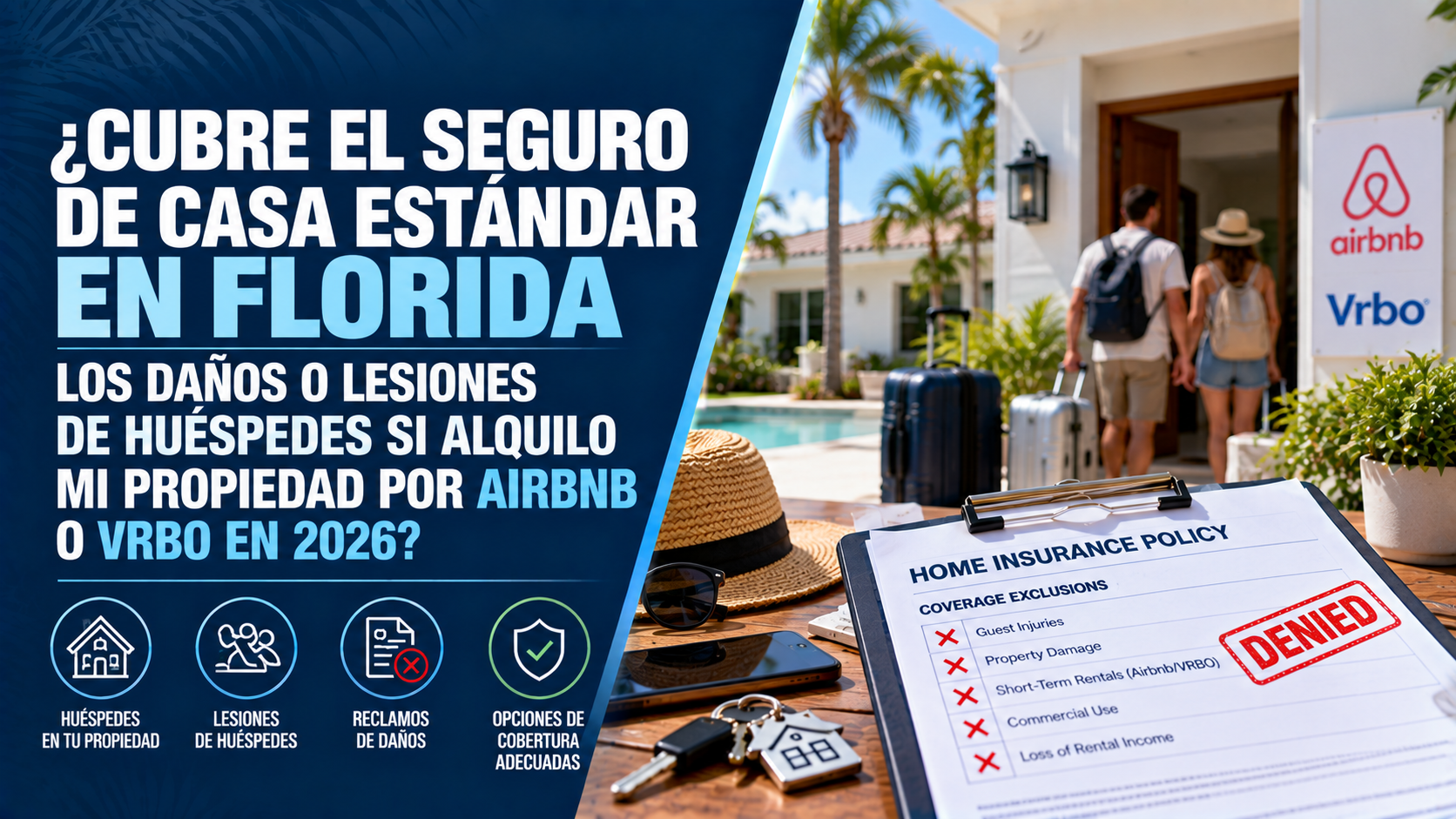
Seguro Airbnb y Vrbo en Florida (2026): Cobertura de Huéspedes
¿Alquilas tu casa en Florida por Airbnb o Vrbo? Descubre por qué el seguro tradicional deniega reclamos por lesiones y daños en 2026 y cómo protegerte.
Read More →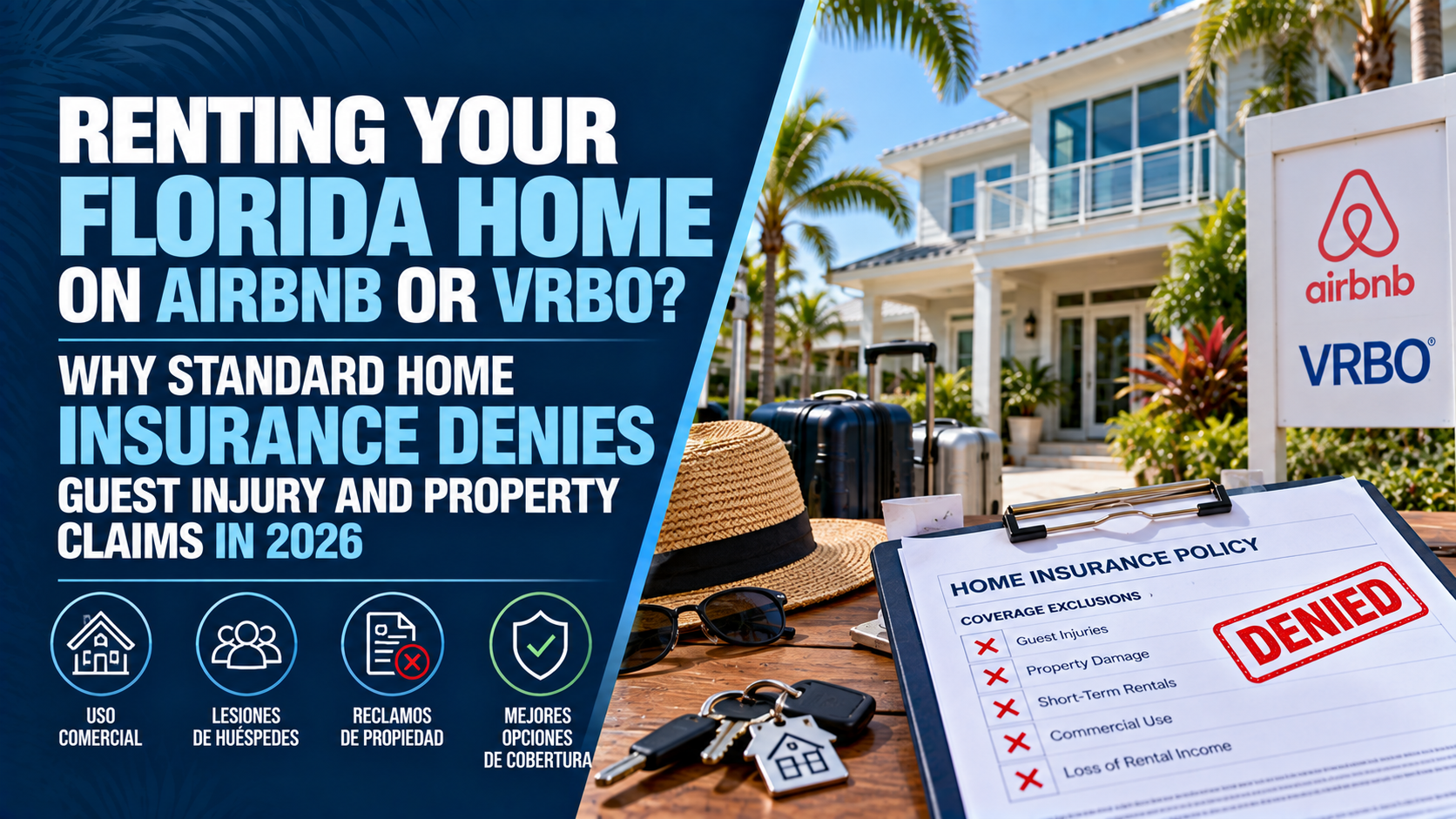
Florida Airbnb & Vrbo Insurance (2026): Guest Injury & Claims
Renting your Florida home on Airbnb or Vrbo? Discover why standard homeowners policies deny guest injury and property claims, and how to stay protected in 2026.
Read More →
Seguro de Casa Histórica en Florida (2026): Cobertura Artesanal
¿Tienes una casa histórica en Florida? Descubre por qué el seguro estándar no paga materiales de época ni mano de obra artesanal en 2026 y cómo protegerla.
Read More →