Boat Trailer Insurance in Florida: Check Before Towing
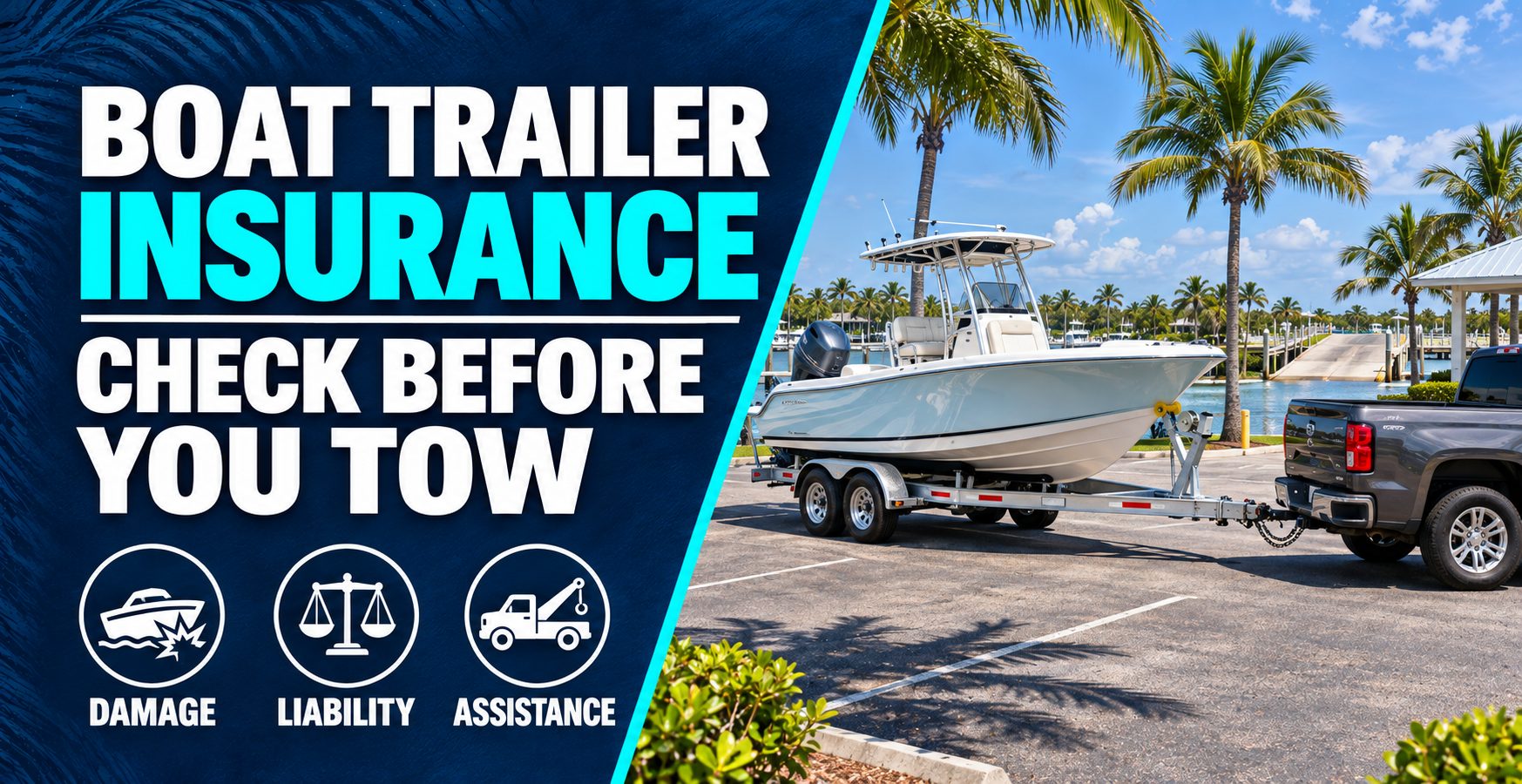
Towing Your Boat in Florida? Review the Trailer, Liability and Assistance Before You Leave
The Direct Answer
Do not assume that hitching a boat trailer to an insured truck protects everything in the combination. Review damage to your own equipment, liability for harm to others on the road, and breakdown assistance as separate questions. Ask the relevant insurers to confirm how your boat, trailer and tow vehicle are treated. A towing service or membership also needs its own review; its name does not establish what an accident claim would pay.
For a Stuart boat owner, the trip begins before reaching the ramp. Perhaps you are collecting the boat from storage, replacing a trailer or taking a longer drive to another launch site. Use that change in plans to check the documents while there is time to resolve questions. Start with the actual equipment and route, then identify which contract answers each concern.
1. Identify Damage to Your Own Boat, Trailer and Tow Vehicle
Make an equipment list with the boat, trailer and tow vehicle described separately. Include identifying numbers, ownership information and any recent replacements. Ask where each item appears in the insurance documents and what protection has actually been selected. A receipt or registration helps identify property; it does not establish an insurance benefit.
Progressive’s boat-trailer guidance distinguishes damage to the trailer from auto liability while towing. It describes adding a trailer to a boat policy for physical-damage protection. That is a provider example, not confirmation that your trailer is already insured or that your auto policy covers every item behind the truck.
Illustrative scenario: You replace an older trailer but keep the same boat and truck. Before the next outing, send the new trailer’s details to the agency and ask what documentation is needed. Confirm whether an accepted change appears on the relevant policy and when it takes effect. Keeping the boat unchanged is not a substitute for checking the replacement trailer.
Review the boat’s own protection during road transport, too. Ask about limits, deductibles, valuation and exclusions that apply to the proposed trip. Keep receipts and photographs of the hull, motor and trailer together so your questions describe the equipment clearly. The insurer must assess any actual loss under the issued contract; this checklist does not predict a claim outcome.
2. Separate Road Liability from Damage to Your Equipment
The cost of repairing your trailer is a different question from responsibility for damage to another vehicle. A BoatUS insurance guide also distinguishes trailer physical damage from third-party harm while trailering and directs readers to check their auto insurer. Ask your own insurer to explain the applicable liability terms, limits and exclusions.
Describe how the combination will be used. Tell the agency which vehicle will tow, who expects to drive, and whether the boat or trailer is borrowed. Ask whether any change in ownership, driver or use needs attention before departure. Do not infer an answer from a friend’s policy or from a general statement that the boat is insured.
Illustrative scenario: A relative offers to tow your boat with their truck. Before accepting, identify which insurers need the facts and ask each to explain the arrangement. Separate the questions about the boat, trailer and truck from those about injury or damage to others. This example is a reason to seek contract-specific answers, not a rule assigning responsibility to one person’s insurer.
Keep the written responses with the corresponding policy. If a response is incomplete, ask a focused follow-up: which item, which coverage and which limit does the explanation address? Avoid treating a policy number as a complete coverage map. The useful result is a clear account of what each insurer has confirmed and what remains unresolved.
3. Read Breakdown Assistance Separately from Accident Coverage
A disabled trailer can raise practical questions even when there has been no collision. Ask whether your selected assistance addresses the tow vehicle, the loaded trailer and an empty trailer. Confirm the destination rules, required contact procedure and any expenses you must pay. Do not assume an on-water towing benefit describes the entire road trip.
Provider terms show why this matters. Progressive describes roadside assistance associated with a trailer listed on its boat policy. BoatUS separately explains that its TRAILER ASSIST service is not insurance and does not pay for highway-accident service. Neither description establishes which benefit you bought; use them as prompts to locate your own terms.
Illustrative scenario: You have just delivered the boat to a launch facility and the empty trailer becomes disabled on the return drive. Before relying on a plan, ask whether that circumstance qualifies, how assistance is requested and whether a particular destination is required. Save the answer with the service contact details rather than relying on a generic towing advertisement.
Before arranging help yourself, check the provider’s authorization and reimbursement instructions. Ask about repairs, replacement parts and transport of the boat as distinct expenses. Keep any required records and itemized receipts. A service being dispatched does not, by itself, answer who pays every charge on the final invoice.
Why an Independent Agency Conversation Helps
A useful comparison follows one real combination of boat, trailer, vehicle and drivers. Give each option the same facts, then compare its selected protection, limits, deductibles and service conditions. Price alone cannot show whether two proposals address the same concerns.
Walker Insurance Agency lists boat and auto insurance among its services. Its auto service page explains that it works with multiple Florida carriers to compare coverage choices. Ask the team to review the insurance questions for your planned trip and identify any answer that must come from the insurer or a separate assistance provider. Availability depends on the particular risk and provider.
Questions to Bring to Walker
Bring the boat and auto policies, trailer details and any towing membership. Ask: Is the current trailer identified? What addresses transport damage? Which auto liability terms apply? Is assistance selected, and does it address this combination? What confirms an accepted change and its effective date? These questions create a practical review without assuming every optional benefit is included.
Frequently Asked Questions
Does my truck’s insurance automatically pay for a damaged boat trailer?
Ask your insurer to identify the protection for each item rather than relying on the truck’s insurance card. Describe the boat and trailer, how they are used and the damage you want to discuss. Request the selected coverage, applicable deductible and conditions in writing before depending on that explanation.
Does a towing membership pay for collision damage?
Read the agreement. For example, BoatUS distinguishes its TRAILER ASSIST service from insurance and excludes payment for highway-accident service under that program. A membership benefit and an accident claim are separate matters. Ask your own provider which situations qualify and refer damage questions to the relevant insurer.
What should I check after buying a different trailer?
Provide the replacement’s details and ask whether the policy needs updating. Review the equipment description, selected protection, limits and assistance conditions. Request confirmation of any accepted change and its start date. Sending a request does not establish that it has been approved or that the equipment is covered.
Check the Road Trip Before You Reach the Ramp
A clear review connects each item and each question to the right contract. Gather the documents now so the next launch begins with an informed insurance conversation.
Contact Walker Insurance Agency to review your options or request a free quote. Call +1 407-977-7100 or visit 789 SW Federal Highway, Suite 201, Stuart, FL 34994. Coverage remains subject to the issued policy, selected options, exclusions, limits and deductibles.
Sources
Progressive — Does insurance cover boat trailers?
Progressive — On-water towing and off-water assistance
BoatUS — Boat Towing FAQ and TRAILER ASSIST terms
Walker Insurance Agency — Auto Insurance
Related Articles
Renting Out Your RV in Florida? Check Insurance First
Before listing your Florida RV for rent, review personal-use insurance, rental protection, delivery periods and driver approval with the right providers.
Read More →
Seguro de Remolque de Bote en Florida: Qué Revisar
¿Transportas un bote en Florida? Distingue daños al remolque, responsabilidad vial y asistencia por avería. Revisa las pólizas antes de salir.
Read More →
¿Refinancias tu auto? Revisa el seguro y GAP en Florida
¿Vas a refinanciar tu auto en Florida? Revisa el acreedor, los requisitos del seguro y tu contrato GAP antes de dar por terminado el trámite.
Read More →