Renting Out Your RV in Florida? Check Insurance First
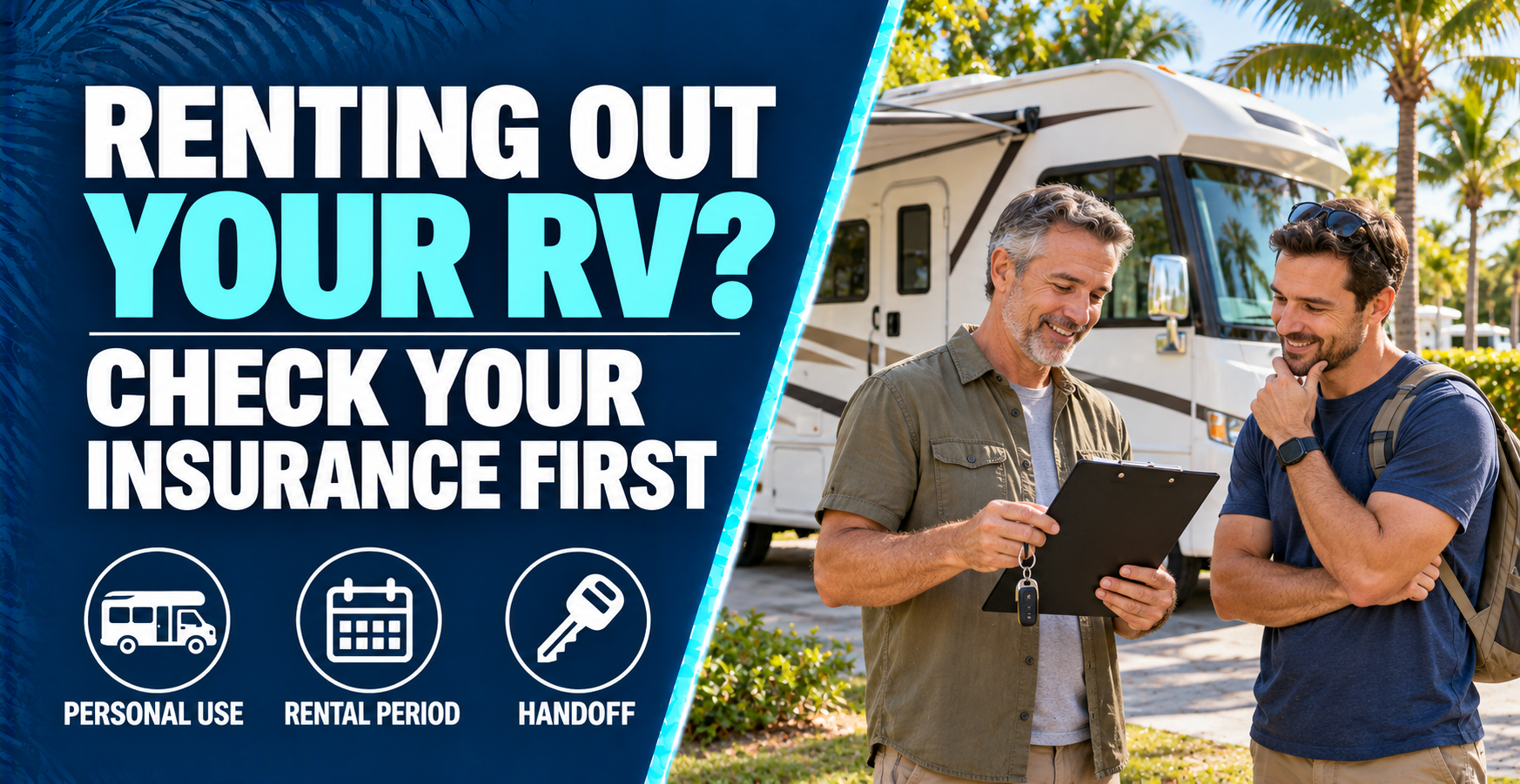
Renting Out Your RV in Florida? Review the Insurance Before You List It
The Direct Answer
Before offering your RV for paid rentals, tell your insurer exactly how you plan to use it and ask whether the existing policy permits that activity. Separately review any rental platform’s protection, eligibility rules and start-and-end conditions. Confirm what applies between bookings, during delivery, while the renter has possession and after return. A platform listing or reservation is not proof that every part of your ownership and rental activity is insured.
Perhaps your motorhome sits unused between family trips, or you are considering delivering a travel trailer to campsites near Stuart. Before advertising availability, build an insurance plan around that arrangement. Renting to another person introduces questions that a review of ordinary vacation use may not have answered. Put the actual proposal in writing so the insurer and rental provider are discussing the same facts.
1. Confirm That Your Own Policy Allows the Rental Activity
Start with the policy you maintain as the owner. Explain whether renters would drive the RV, tow it themselves or use it only while parked. Identify the vehicle, expected rental frequency, booking method and who would deliver it. Ask which proposed activities, if any, require a different policy or insurer approval before you proceed.
Outdoorsy’s owner guidance warns that some personal RV policies do not permit renting the vehicle, even when a platform supplies protection during a booking. Treat that as a reason to obtain an answer from your own insurer, not as a statement that every policy excludes rentals or that a particular replacement is right for you.
Illustrative scenario: A motorhome owner plans to accept one paid weekend booking and then use the RV for a family trip. Before listing it, the owner should describe both uses to the insurer and ask what documentation confirms an acceptable arrangement. The small number of bookings does not, by itself, answer that contract question.
If the RV is financed or kept at a facility, review the relevant agreements for restrictions or insurance conditions. Ask the lender or facility about unclear wording rather than assuming insurer approval also satisfies those separate contracts. Keep their answers with the insurance documents. This is a document checklist, not a conclusion about what your loan permits.
2. Separate Rental Protection from Your Ongoing Owner Coverage
Obtain the actual rental protection documents before relying on a platform’s summary. Identify the insurer, any separate contractual benefits, the protected parties and the required steps for activation. RVshare’s terms, for example, distinguish liability insurance from a contractual physical-damage reimbursement benefit. Those labels matter when deciding whom to contact and which conditions to read.
Do not assume that a renter’s personal auto or RV policy resolves the issue. Progressive’s rental guidance says its personal auto or RV policy does not cover a rented motorhome. That is a carrier example, not a universal finding about every renter. Ask what evidence the chosen rental arrangement requires and who verifies it.
Map the timeline on paper: time at home before departure, owner delivery, handoff, renter possession, return and the trip back to storage. Ask the provider to identify the exact beginning and end of each selected benefit. For example, RVshare’s protection terms define a rental period by possession and check-in and distinguish it from owner delivery or pickup. Another program may use different terms.
Illustrative scenario: You agree to deliver a trailer to a campsite before the guest arrives. Ask what addresses the owner’s delivery and the parked interval before possession changes. Then ask about collection after checkout. A reservation showing several nights is not a complete explanation of those transitions. Resolve the timeline before agreeing to deliver.
Review liability, damage to the RV and any additional services separately. Ask about deductibles, exclusions, limits and coordination with other insurance. Do not add limits from different documents together without an explanation from the relevant provider. Keep the written response with the selected protection plan and your own policy.
3. Complete Approval and Handoff Records Before the Booking
Ask how the vehicle and drivers become eligible and what proof confirms approval. Check what must be completed before departure, how an additional driver is handled and what changes require another review. If the arrangement is stationary, ask whether the renter may move the RV at all. Follow the selected program’s actual rules rather than another owner’s recollection.
RVshare’s published terms describe approval, checkout and payment steps for activating protection under its program. Its protection amendment also requires departure and return documentation for physical-damage claims. These are examples of why a completed reservation should not replace reading the conditions. Confirm the requirements and deadlines that apply to your particular booking.
Illustrative scenario: The person who made the reservation says a friend will also drive. Ask the provider how to document that change before handing over keys. Separately record condition, equipment and the handoff according to the program’s instructions. Photographs can document an inspection, but they do not expand the insurance contract.
Save the claims contact, assistance contact and reporting instructions before departure. Ask which provider handles an accident, an equipment problem or an invoice dispute. If plans change, confirm how the booking and protection records must be updated. Keep the applicable documents accessible without posting private customer or policy information in a public listing.
Why an Independent Agency Review Helps
An owner policy and a rental program answer different questions. An agency conversation can help organize the ongoing insurance review, while the platform or its insurer must explain its own protection. Compare options using the same vehicle, rental activity and delivery plan; otherwise, differences in price may reflect different arrangements.
Walker Insurance Agency lists RV insurance among its services, and its auto service page describes access to multiple Florida carriers. Ask the team what insurance options, if any, are available for your proposed RV use. The public service listing does not establish that Walker offers a particular platform policy or rental endorsement. Confirm availability and eligibility before relying on a proposal.
Questions to Bring to Walker
Bring your current policy, a written description of the rental plan and the provider’s terms. Ask whether your owner coverage permits the activity, what changes need insurer confirmation, and which questions belong with the platform. Request the effective date of any accepted change. A quote or request alone does not activate insurance.
Frequently Asked Questions
Does platform protection replace my personal RV policy?
Do not assume it does. Compare the platform’s defined periods and conditions with your ongoing owner policy. Ask your insurer about rental permission and protection outside bookings. Keep both sets of documents available; one provider’s summary cannot confirm another insurer’s obligations.
Is delivering the RV included in the rental period?
Check the program’s definition and ask about the actual delivery and collection plan. Identify when possession changes, when check-in is complete and who moves the unit. Obtain a provider-specific answer before assuming the booking dates address every movement or waiting period.
Can I offer a stationary trailer without reviewing insurance?
Review the arrangement even if renters will not drive. Explain delivery, location, occupancy and who can move it. Ask the insurer and program administrator how stationary use is treated and what conditions apply. The absence of renter driving does not answer all property and liability questions.
Review the Plan Before Accepting Your First Rental
Complete the owner-policy review, the rental-protection review and the handoff checklist before committing to a booking. Contact Walker Insurance Agency to discuss your RV insurance needs or request a free quote. Call +1 407-977-7100 or visit 789 SW Federal Highway, Suite 201, Stuart, FL 34994. Coverage depends on the issued terms, selected options, exclusions, limits and deductibles.
Sources
Outdoorsy — Insurance policy explained for owners
RVshare — Terms of Service, insurance section
RVshare — Insurance and Protection Terms Amendment
Progressive — RV rental insurance
Related Articles
Seguro de Remolque de Bote en Florida: Qué Revisar
¿Transportas un bote en Florida? Distingue daños al remolque, responsabilidad vial y asistencia por avería. Revisa las pólizas antes de salir.
Read More →
Boat Trailer Insurance in Florida: Check Before Towing
Towing a boat in Florida? Separate trailer damage, road liability and breakdown assistance. Review your policies before the next trip to the ramp.
Read More →
¿Refinancias tu auto? Revisa el seguro y GAP en Florida
¿Vas a refinanciar tu auto en Florida? Revisa el acreedor, los requisitos del seguro y tu contrato GAP antes de dar por terminado el trámite.
Read More →