Flood Insurance at Closing in Florida: When Does It Start?
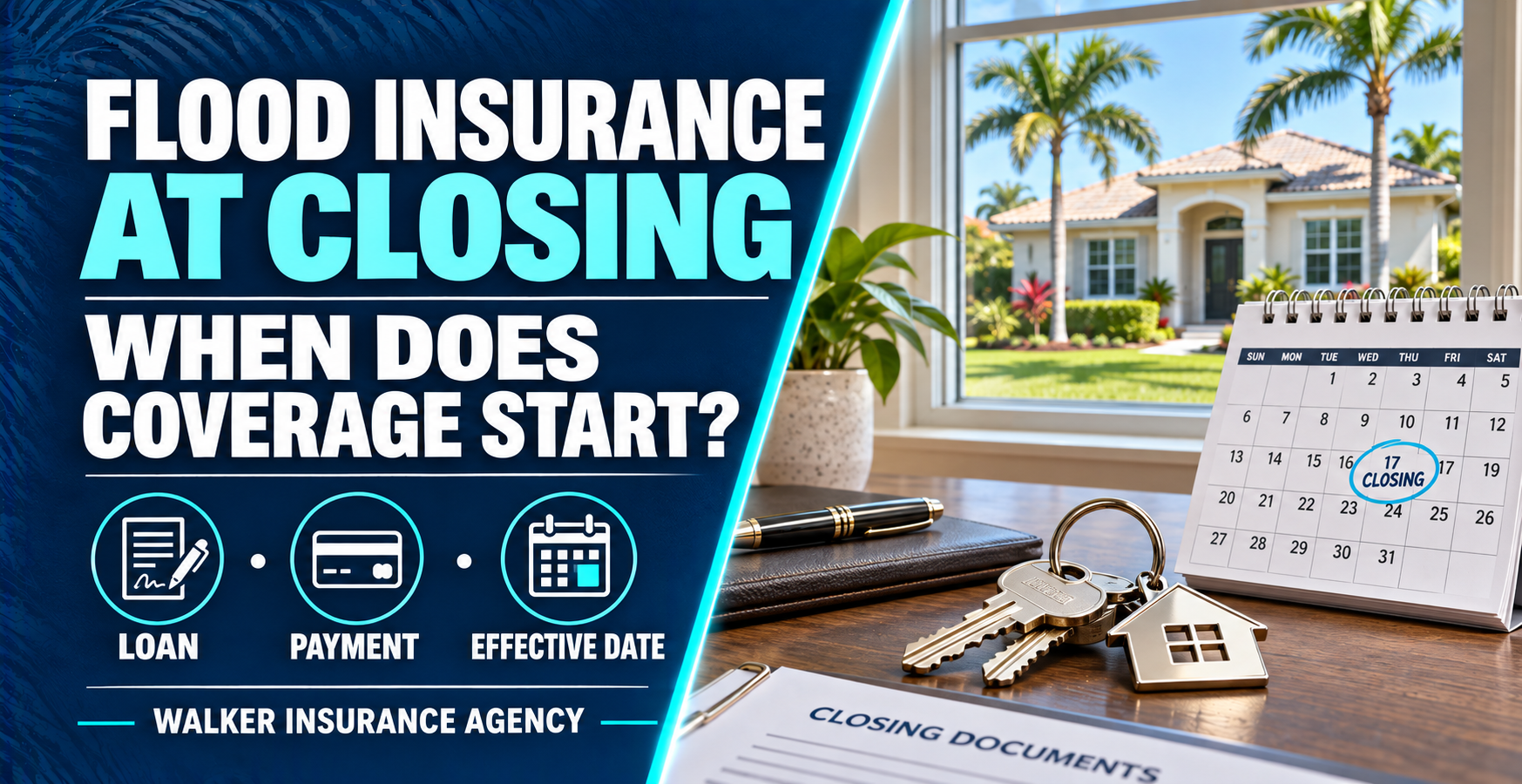
Flood Insurance at Closing in Florida: When Does Coverage Start?
The Direct Answer
A new National Flood Insurance Program (NFIP) policy generally has a 30-day waiting period. However, an eligible purchase connected with making, increasing, extending or renewing a loan can qualify for an exception. Coverage may begin at the loan closing when the applicable application, payment and receipt requirements are satisfied. A closing appointment or a lender’s request alone is not proof that coverage has started. Confirm the effective date and time with the insurance provider. [1][2]
Buying with cash does not, by itself, qualify for the loan exception. Private flood insurance follows the particular insurer’s terms, so do not apply the NFIP timetable to every proposal. A quote, a payment receipt and evidence of active coverage answer different questions. [3]
When you are buying a house in Stuart or elsewhere in Florida, the insurance conversation should fit into the closing checklist alongside the lender’s documents and the transfer of funds. The practical question is specific: “What document confirms that this flood policy will be effective when I take ownership?” Asking early gives everyone time to resolve discrepancies.
1. Separate the Loan Exception From the Closing Date
The NFIP exception concerns a qualifying loan transaction, not simply a change of ownership. Ask your agent to identify the basis for the requested start date and explain what must be completed before closing. FEMA’s guidance also describes the possibility of transferring a seller’s policy to a buyer; that is a separate arrangement to investigate rather than assume. [3]
Illustrative scenario: You are financing a home purchase and the lender asks for flood coverage. Send the proposed closing date, property address and lender information to the insurance provider. Ask whether the loan exception applies, how the premium will be paid and when the final evidence of insurance will be available. Keep the response with your closing records.
A different scenario: You are buying the same house without a loan. Do not copy the financed buyer’s expected start date into your own plan. Ask about the standard waiting period, any independently applicable exception and whether an eligible existing policy could be transferred. These are questions for a documented review, not a promise of immediate protection.
Keep the scope narrow. Meeting a lender’s paperwork requirement does not tell you whether the limits, deductible and insured interests fit your household. Review those items separately before accepting a proposal.
2. Reconcile the Application, Payment and Effective Date
FEMA’s insurance manual makes timing dependent on more than the day someone asks for a quote. For the loan exception, application or endorsement documentation and the full amount due must meet the applicable receipt rules. Ask the provider to explain the requirements for your transaction rather than calculating a date from an advertisement. [2]
Use a short written checklist:
• Property and applicant: Check the address and names against the purchase and loan documents.
• Transaction: Identify the loan event supporting any requested exception.
• Payment: Confirm who sends the premium, the amount due and how receipt will be documented.
• Evidence: Request the issued policy information and effective date, including the time.
• Changes: Identify the person who will notify the insurer if closing moves.
Illustrative scenario: Closing shifts after the insurance application is submitted. The next step is to notify the provider and lender, not assume that every document automatically updates. Ask them to reconcile the revised transaction date with the insurance evidence. Save the updated confirmation rather than relying on an older email.
If the seller mentions an existing policy, request a review of the transfer process before treating it as your coverage. Keep separate records for the seller’s current insurance and the coverage that will apply to you. A policy number without the relevant transfer documentation does not complete your checklist.
3. Review the Protection Alongside the Start Date
An effective date answers when coverage begins. It does not answer what a particular loss would receive. Read the proposed flood coverage with attention to building and contents selections, deductibles, limits and exclusions. Most homeowners insurance does not cover flood damage, so reviewing your home policy alone does not replace this conversation. [4]
Prepare a comparison sheet with one row per proposal. Record the insurer or program, proposed start date, building coverage, contents coverage, deductible, premium and any questions left unanswered. If a field is blank, ask for clarification before deciding that two quotes provide equivalent protection.
For a private flood proposal, ask for the actual waiting-period terms and lender acceptance requirements. Do not assume “private” means immediate or broader coverage. Ask the provider to explain differences in writing and identify the documents controlling the coverage.
If you already have insurance at another address, tell the agent about the move. Discuss the new property on its own facts rather than assuming an old policy follows you. The goal is a clearly documented plan for the property you are purchasing.
Why Working With an Independent Agency Matters
An independent agency can help organize questions about the coverage being considered. Bring the lender’s request, proposed closing date and available quotes to the conversation. Ask for explanations tied to the policy and transaction rather than a general assurance that everything is covered.
Walker Insurance Agency’s flood insurance service page describes help understanding flood exposure and comparing available options. Its home insurance service is also relevant when coordinating the separate policies for a purchase. Start with those verified services and ask which options are available for your property. [5]
Questions to Bring to Walker
• Which program or insurer is this proposal from?
• What supports its proposed effective date?
• What application and payment steps remain?
• Are building and contents both selected?
• Which document should my lender receive?
• Who should I contact if the closing date changes?
Frequently Asked Questions
1. Does an NFIP policy always require a 30-day wait?
No. The usual waiting period has exceptions, including eligible purchases tied to certain loan transactions. Ask which exception applies to your facts and what documentation is required. Avoid treating the general rule or an exception as a universal answer. [1]
2. Does paying cash guarantee flood coverage on closing day?
No. A cash purchase does not establish the loan exception. Ask the provider to confirm the applicable start date and whether another valid arrangement, such as an eligible policy transfer, is available. Do not count on a date until it is documented. [3]
3. What if the closing date changes?
Notify the insurance provider and lender promptly. Request confirmation of whether the change affects the application, payment arrangements or effective date. Retain updated evidence with the closing file so the parties are working from the same information.
Plan Your Coverage Before You Sign
Put flood insurance on the purchase checklist early. Compare the protection, resolve the payment process and request written confirmation of the start date before relying on coverage.
Request a quote from Walker Insurance Agency: https://www.walkerinsuranceagency.com/quote
Explore flood insurance: https://www.walkerinsuranceagency.com/services/flood-insurance
Explore home insurance: https://www.walkerinsuranceagency.com/services/home-insurance
Contact the agency: https://www.walkerinsuranceagency.com/contact
Call +1 407-977-7100 or visit 789 SW Federal Highway, Suite 201, Stuart, FL 34994.
Sources
[1] NFIP — Flood Insurance 101: https://agents.floodsmart.gov/topics/flood-insurance-101
[2] FEMA — NFIP Flood Insurance Manual, April 2024, section 2, effective dates: https://agents.floodsmart.gov/sites/default/files/media/document/2025-09/fema_nfip_flood-insurance-manual_042024.pdf
[3] FEMA — Questions & Answers: Flood Insurance for Real Estate Professionals, August 2025: https://agents.floodsmart.gov/sites/default/files/media/document/2025-09/questions-answers-real-estate-professionals-brochure-08-2025.pdf
[4] NFIP — Buy a Flood Insurance Policy: https://www.floodsmart.gov/get-insured/buy-a-policy
[5] Walker Insurance Agency — Flood Insurance: https://www.walkerinsuranceagency.com/services/flood-insurance
Related Articles
Seguro de Inundación al Comprar Casa en Florida: Vigencia
¿Compras casa en Florida? Conoce cuándo puede aplicar la excepción del NFIP por préstamo y qué confirmar sobre pago, cierre y fecha de inicio del seguro.
Read More →
Página de Declaraciones del Seguro de Casa en Florida
Aprende a leer la página de declaraciones de tu seguro de vivienda en Florida. Revisa límites, deducibles y endosos antes de comparar precios.
Read More →
Florida Home Insurance Declarations Page: What to Check
Learn how to read a Florida home insurance declarations page. Check limits, deductibles and endorsements before comparing renewal prices.
Read More →