Florida Home Inventory Checklist: Document Your Belongings
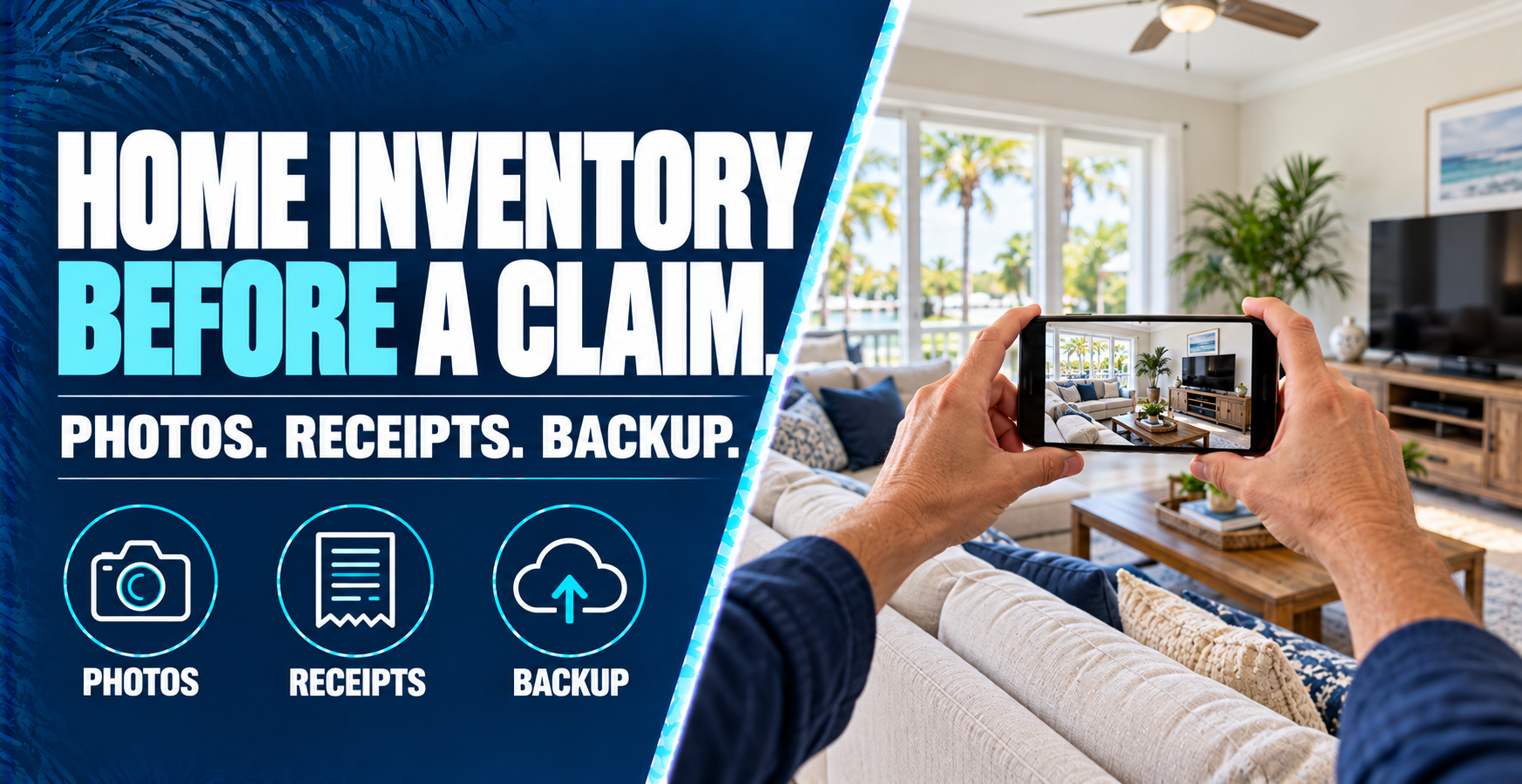
The Home Inventory Gap: What Florida Homeowners Should Document Before a Claim
The Direct Answer
A home inventory is a room-by-room record of your belongings, supported by photos, identifying details and available purchase documents. It can help you explain what you owned after a covered loss and prepare a more organized personal property claim. It does not create coverage, increase a policy limit or guarantee reimbursement. Your insurer still applies the policy's terms, deductibles, exclusions and loss-settlement provisions to the circumstances of the loss.
Imagine trying to remember every appliance, piece of clothing and electronic device after a fire or theft. The problem is not only recalling the expensive items. It is accounting for the ordinary belongings accumulated over years. A usable inventory turns that memory exercise into an organized record you can review before you ever need to file a claim.
1. Why a Quick Walkthrough Can Leave Important Gaps
A video is a useful starting point, but footage alone may not identify the model of a television, when a laptop was purchased or how many tools were stored in a cabinet. Pair broad images with details that make individual belongings easier to distinguish.
Record the room and the item: Start with a room name and a clear description. Photograph the room from several angles, then capture important belongings separately. Include storage spaces that are easy to overlook, such as closets, a garage and a utility room.
Capture identifying details: When available, record brand, model, serial number, purchase date and price paid. Photograph the manufacturer's label on electronics or appliances. If a date or price is approximate, identify it as an estimate rather than a verified figure.
Connect the supporting records: Keep available receipts, order confirmations, appraisals and photographs with the corresponding inventory entry. A simple filename such as living-room-television-receipt makes the documents easier to locate than a folder of unexplained screenshots.
2. Three Situations Where Better Records Can Help
The following examples illustrate documentation problems, not promises of coverage or claim outcomes. What an insurer requests and pays depends on the particular policy and loss.
A stolen laptop with no clear model information: A photo of a desk may show that a computer was present without establishing which computer it was. A model number, purchase confirmation and device photo give you a clearer record to discuss with the insurer.
A fire affecting everyday household contents: It may be easy to remember a sofa and television but difficult to list kitchenware, bedding, clothing and small appliances. Organizing by room and category can help you identify items that would otherwise be forgotten.
A valuable item with an unexpected policy limit: Recording jewelry, collectibles or other valuable belongings can prompt an important question before a loss: does the policy have a special limit or coverage restriction for this property? A documented value does not override that restriction.
The important distinction: documentation and coverage are different parts of the same review. A record helps describe the property. The insurance contract determines whether and how a particular loss is covered.
3. How to Build an Inventory You Can Actually Maintain
The most useful system is one you will keep updated. Choose a manageable process instead of delaying the task until you can document everything perfectly.
Step 1: Finish one room first. Use a spreadsheet or an inventory application. Create fields for the room, description, quantity, identifying details, purchase information and the location of supporting files. The NAIC offers a home inventory app that can group items by room or category and export the record.
Step 2: Create a recoverable backup. As an organizational practice, store a protected copy somewhere other than the phone used to take the photos. Check that you can access it from another device. Keep insurance contact information with the records, and avoid posting private inventory details publicly.
Step 3: Review changes with your insurance questions. Update the inventory after a major purchase, move or replacement of an important item. At your next policy review, ask about personal property limits, special limits and whether the applicable settlement terms use replacement cost or actual cash value.
Why Working with an Independent Agency Matters
An inventory makes your insurance questions specific. At Walker Insurance Agency, we help Florida residents explore home insurance options through access to multiple carriers. Bring your current policy and your inventory so the conversation can focus on the belongings, limits and conditions that matter to your household.
Questions to Bring to Walker
Personal property limits: Does the amount shown on my policy fit the belongings I have documented, and are there separate limits for particular categories?
Valuation and deductibles: Which loss-settlement terms apply to my belongings, and how could my deductible affect an otherwise covered claim?
Changes since the last review: Which purchases, household changes or uses of the property should I discuss before renewing?
FAQ
1. Can I make a home inventory without every receipt?
Start with the information you have. Add photos, identifying details and available order histories or other ownership records. Do not invent missing purchase information. Ask your insurer what additional documentation it may need; acceptance of a particular record is not guaranteed.
2. Does a home inventory replace insurance coverage?
No. It records belongings. Coverage depends on the policy and the cause and circumstances of the loss. Keeping an inventory does not remove exclusions, raise limits or make every listed item payable.
3. Is replacement cost the same as actual cash value?
No. Actual cash value generally accounts for depreciation. Replacement-cost coverage operates under different settlement terms and may require conditions to be met. Review your own contract rather than assuming that a purchase price or an inventory estimate determines a payment.
Document Your Belongings Before You Need the Details
Start with one room today. Take clear photos, connect available purchase records and save a backup you can retrieve. Then use the inventory to prepare a focused conversation about your personal property insurance.
Contact Walker Insurance Agency to discuss your Florida home insurance needs and available options. Bring your current policy and questions about limits, deductibles and the belongings you want to protect.
[GET A FREE QUOTE TODAY]
Call +1-407-977-7100 or visit 789 SW Federal Highway, Suite 201, Stuart, FL 34994. Contact: https://www.walkerinsuranceagency.com/contact
Sources
NAIC Home Inventory: https://content.naic.org/consumer/home-inventory
Florida disaster preparation: https://myfloridacfo.com/division/ica/planprepareprotect/Prepare
NAIC policy and inventory guidance: https://content.naic.org/article/consumer-insight-understanding-your-homeowners-or-renters-policy
Florida coverage and claims overview: https://myfloridacfo.com/division/consumers/understanding-insurance/homeownersinsuranceoverview
Florida personal property and valuation guidance: https://myfloridacfo.com/division/ica/fullcoverage/homeowners/beyourownadvocate
Related Articles
Seguro de Inundación al Comprar Casa en Florida: Vigencia
¿Compras casa en Florida? Conoce cuándo puede aplicar la excepción del NFIP por préstamo y qué confirmar sobre pago, cierre y fecha de inicio del seguro.
Read More →
Flood Insurance at Closing in Florida: When Does It Start?
Buying a Florida home? Learn when an NFIP loan exception may apply and what to confirm about payment, closing and your flood policy’s effective date.
Read More →
Página de Declaraciones del Seguro de Casa en Florida
Aprende a leer la página de declaraciones de tu seguro de vivienda en Florida. Revisa límites, deducibles y endosos antes de comparar precios.
Read More →