Florida Home Remodeling: Theft & Damage Insurance Denials (2026)
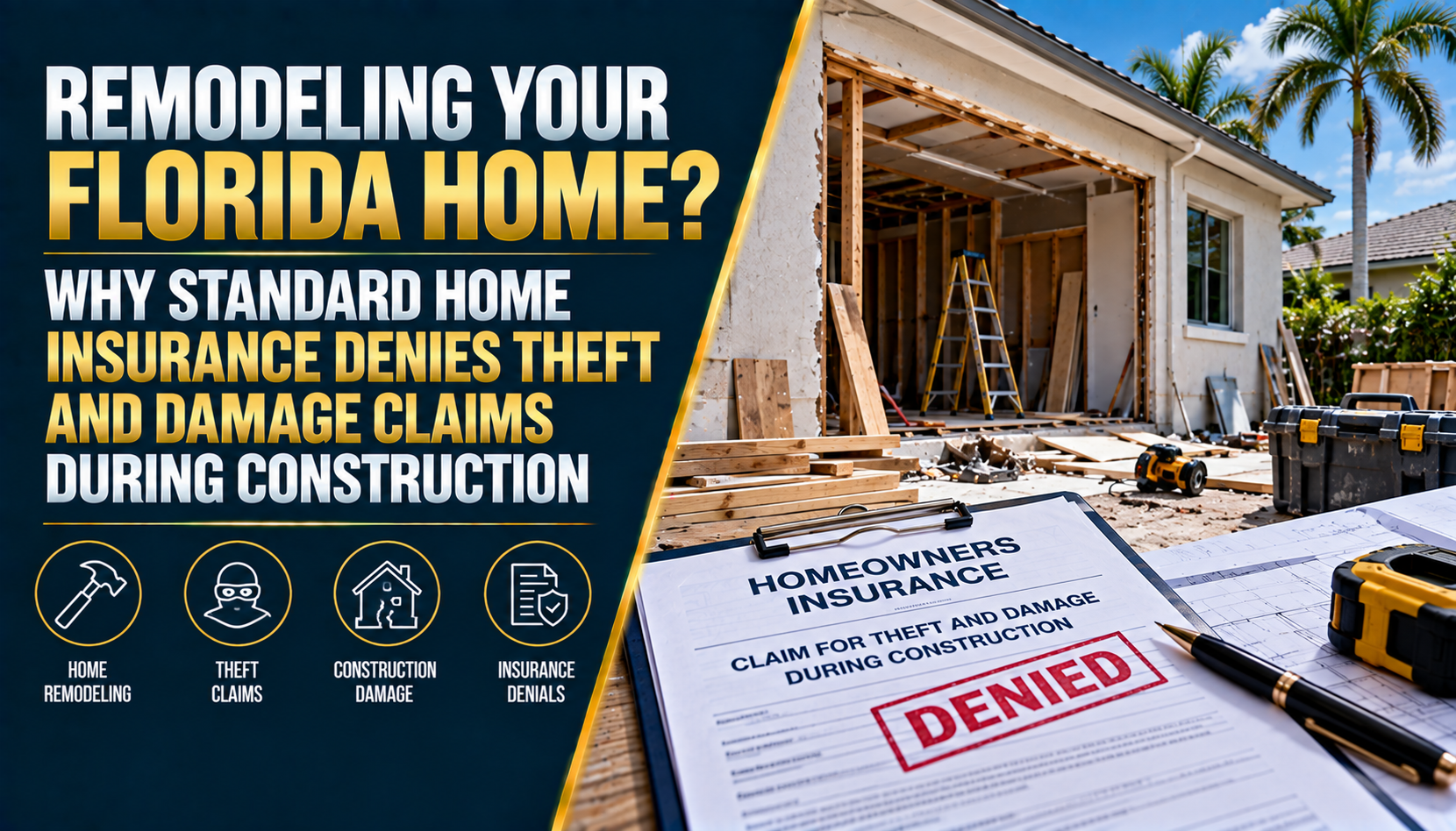
Remodeling Your Florida Home? Why Standard Home Insurance Denies Theft and Damage Claims During Construction
The Direct Answer
Here is a major coverage gap affecting Florida homeowners during renovation projects: the moment major construction, structural alterations, or home additions begin, your standard homeowners policy (HO-3) exposes you to claim denials for theft, vandalism, and structural damage—because standard property insurance explicitly excludes or limits risks associated with vacant structures, major alterations, and active construction sites.
Home renovation projects are booming across Florida as homeowners upgrade kitchens, add living space, or fortify roofs against severe weather.
However, bringing contractors, heavy equipment, and open building materials onto your property fundamental changes your home's risk profile in the eyes of insurance underwriters.
During active construction, building materials sit exposed to theft, doors or windows are often removed, and workers constantly enter and exit the premises. If copper pipes are stolen, high-end building supplies vanish overnight, or a sudden storm damages an exposed roof frame, standard home insurance carriers frequently deny the claim citing vacancy clauses, construction exclusions, or failure to notify the insurer of major material changes to the risk.
Investing tens of thousands of dollars into transforming your Florida property, only to discover that a stolen lumber delivery or a collapsed framing wall is completely uninsured, turns an exciting home improvement into a financial nightmare.
1. Why Standard Home Insurance Fails During Construction
A standard Florida homeowners policy is designed for an occupied, completed residential home. When a major renovation project starts, several restrictive policy provisions are triggered:
- The Vacancy / Unoccupancy Exclusion: If you move out during extensive remodeling and the home remains unoccupied for more than 30 or 60 consecutive days, standard policies automatically suspend coverage for theft, vandalism, glass breakage, and water discharge.
- Theft of Building Materials Exclusion: Standard policies explicitly exclude theft of raw building supplies, fixtures, appliances, or lumber that are not yet permanently installed or part of the completed dwelling.
- Increased Hazard / Material Alteration Clauses: Póliza provisions require homeowners to notify their carrier of major structural changes. Unannounced structural work, roof modifications, or square-footage expansions can lead to claim denials or policy cancellation for non-disclosure.
- Third-Party Liability Limits: If a subcontractor or worker gets injured on your property and your contractor lacks sufficient Workers' Compensation or General Liability coverage, injured parties may sue you directly—leaving you exposed if your policy excludes construction-related liabilities.
2. Comparing Your Insurance Coverage During Remodeling
Understanding how different coverage types protect your property during construction prevents costly out-of-pocket losses:
- Standard Homeowners Insurance (HO-3): Designed for fully built, occupied homes. It does not cover theft of uninstalled building materials, vandalism to vacant structures, or unannounced major structural alterations.
- Builder's Risk Insurance (Course of Construction): A specialized policy designed specifically for active renovation or construction projects. It does cover raw materials on-site, theft of tools and supplies, framing collapses, and weather damage to open structures during construction.
- Contractor’s General Liability & Workers' Comp: Coverage carried directly by your general contractor. It does cover bodily injuries to workers and accidental property damage caused by contractor negligence on your job site.
3. Key Protections You Need Before Construction Starts
To ensure your home, materials, and finances remain fully protected from day one of your renovation, implement these essential insurance safeguards:
- Obtain Builder's Risk Coverage: Either secure a dedicated Builder's Risk Policy or request a Permitted Incidental Occupancy / Construction Endorsement from your insurer to cover uninstalled materials, framing, and construction-phase hazards.
- Verify Contractor Credentials & Certificates of Insurance: Require your general contractor and all subcontractors to provide valid Certificates of Insurance (COI) demonstrating active Commercial General Liability and Florida Workers' Compensation insurance.
- Notify Your Independent Insurance Agent: Inform your agent before signing construction contracts or pulling permits so your base property policy limits can be adjusted to reflect your home's increased post-renovation replacement value.
Why Working with an Independent Agency Matters
Navigating construction contracts, vacancy rules, and Builder's Risk endorsements requires experienced local guidance. At Walker Insurance Agency, we audit Florida renovation plans to ensure homeowners carry seamless protection from demolition to final inspection.
- Remodeling Risk Audits: We evaluate your project scope and confirm whether your current carrier requires a Builder's Risk policy or a construction endorsement.
- Contractor COI Verification: We help review contractor insurance certificates to protect you from third-party injury claims and property damage liabilities.
- Post-Renovation Policy Updates: Once work completes, we update your Dwelling Coverage (Coverage A) to accurately reflect your upgraded home's market value.
Frequently Asked Questions
1. Does my general contractor's insurance cover stolen building materials stored on my property?
Not necessarily. A contractor’s General Liability policy covers damage caused by their negligence, not theft of supplies stored at your home. A Builder's Risk policy (held by you or the contractor) is required to insure raw materials against theft or weather loss.
2. Can I stay in my home during remodeling without triggering a vacancy clause?
Yes. If you continue living in the home during minor or phased renovations, the vacancy clause is not triggered. However, theft of uninstalled construction materials may still be excluded under your base home policy without proper endorsements.
3. How does remodeling affect my homeowners insurance premium after construction is finished?
Adding square footage, high-end finishes, or new structures increases your home's total replacement cost, which slightly increases your annual premium. However, upgrades like a new fortified roof, updated plumbing, or hurricane impact windows can qualify you for substantial windstorm mitigation discounts in Florida.
Protect Your Remodel and Your Home Today
Don't let a theft of materials or a storm delay turn your dream home renovation into a major financial loss. Auditing your insurance coverage before ground breaks ensures your project stays on schedule and fully protected.
Keep your home, your investment, and your renovation plans completely secure. Contact Walker Insurance Agency today for a fast, zero-pressure Florida home insurance review.
[GET A FREE FLORIDA HOME INSURANCE QUOTE TODAY]
Call our home insurance team at +1-407-977-7100 or visit our office at 789 SW Federal Hwy, Ste 201, Stuart, FL 34994. We are always ready to help you navigate Florida insurance options and protect your property.
Related Articles
Remodelaciones en Florida (2026): ¿Cubre el Seguro Robos o Daños?
¿Vas a remodelar tu casa en Florida? Descubre por qué el seguro de hogar estándar niega reclamos por robo de materiales o daños en obras y cómo protegerte.
Read More →
¿Cubre el Seguro el Agua del Drenaje por el Inodoro en Florida? (2026)
¿El agua del drenaje se regresó por tu inodoro en Florida? Descubre por qué ni el seguro de casa ni el NFIP lo cubren y cómo protegerte en 2026.
Read More →
Sewer Backup vs. Flood Insurance in Florida (2026): Coverage Gaps
Overflowing drains in Florida? Learn why neither home nor flood insurance covers sewer backups in 2026 and how to get the right endorsement to protect your wallet.
Read More →