Insured Your Home for $300k? How a Co-Insurance Penalty Cuts Claim Checks
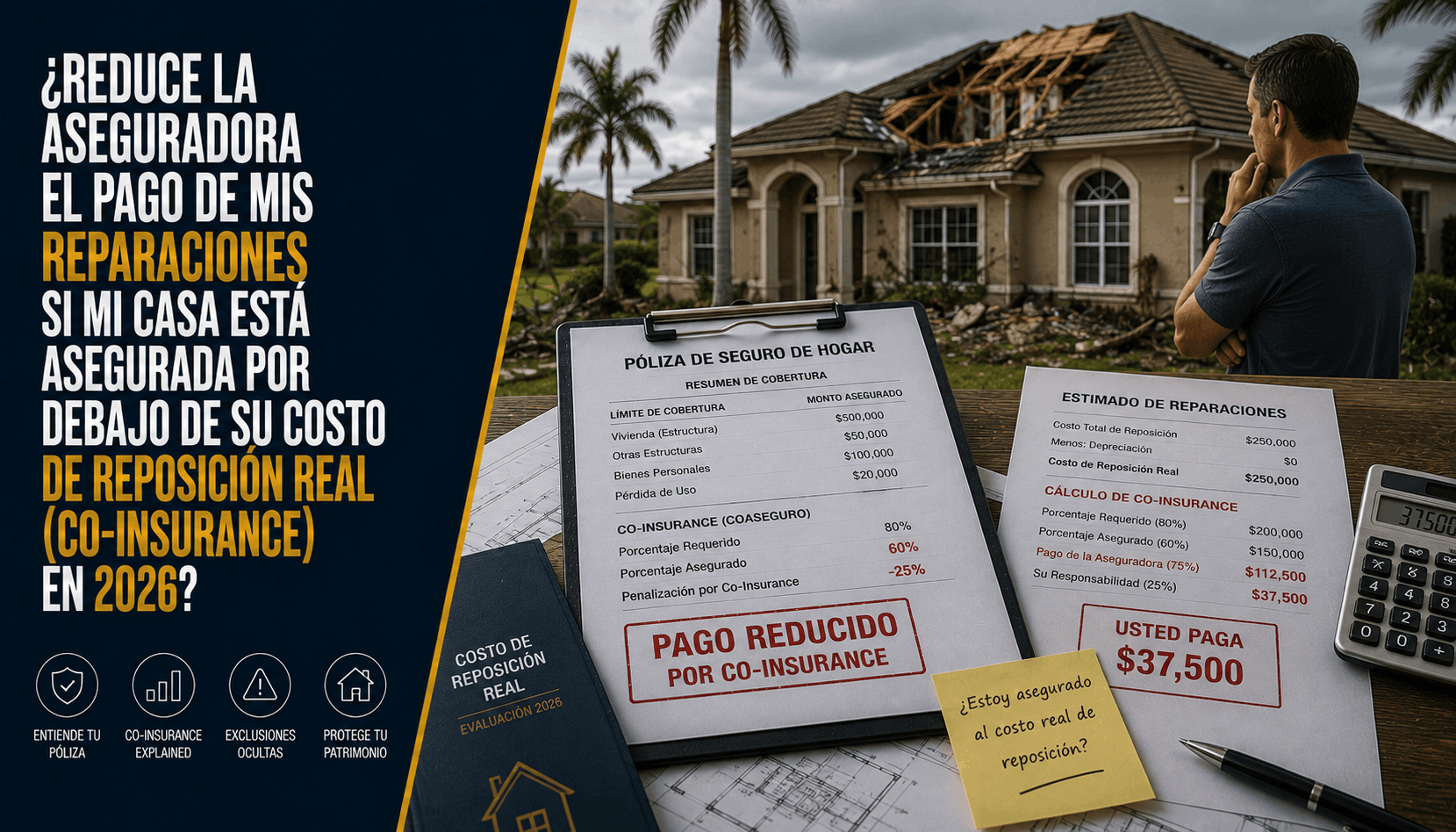
Insured Your Home for $300k? Why a Co-Insurance Penalty Will Cut Your Claim Check by Thousands
The Direct Answer
Here is a devastating financial trap hiding inside standard homeowners policies in 2026: if your home is insured for $300,000, but its true replacement cost is $500,000, your insurance company will penalize you on partial damage claims—paying far less than the actual cost of repairs.
Home insurance policies include a mandatory contract clause known as the Co-Insurance Clause (or the 80% Rule).
This clause requires you to insure your dwelling for at least 80% of its current full rebuild cost. If surging construction inflation or unnotified renovations push your home's true rebuild value above your policy limit, your insurer classifies you as "underinsured." As a result, they will apply a mathematical penalty to cut your repair check on every partial loss—leaving you to pay thousands out of pocket.
Experiencing partial property damage—such as a kitchen fire, a burst pipe, or windstorm damage to your roof—is stressful enough. Discovering that your insurance check covers only a fraction of the repair bill because your coverage limit didn't keep up with rising build costs turns an insurable event into an unexpected financial crisis.
1. What Is the 80% Co-Insurance Rule?
Insurance carriers enforce the 80% co-insurance rule to ensure homeowners maintain coverage limits that reflect actual local construction prices, labor fees, and raw material costs.
Here is how the rule operates under your policy terms:
- Replacement Cost Value (RCV): What it would cost today to rebuild your exact house from the ground up, using equivalent modern materials and local contractors, excluding the land value.
- The 80% Requirement: To receive 100% reimbursement on partial loss repairs (minus your deductible), your dwelling coverage (Coverage A) must equal at least 80% of the home's total RCV at the time of loss.
- The Underinsurance Penalty: If your coverage falls below that 80% benchmark, you become a "co-insurer" with the insurance company. They will calculate your payout based on the ratio of coverage you actually bought versus what you should have carried.
2. The Math Behind the Penalty: A $300k Example
To see how severely this penalty impacts your wallet during a partial claim, consider this real-world scenario:
Co-Insurance Payout Formula: (Coverage Carried ÷ Coverage Required) × Total Damage = Claim Payout
Imagine this situation:
- True Rebuild Cost (RCV) of your home: $500,000
- 80% Co-Insurance Threshold: You need at least $400,000 in Coverage A ($500,000 × 80%).
- Coverage Carried on your policy: You kept your policy locked at $300,000.
- Partial Damage Event: A pipe bursts, causing $40,000 in water damage repairs.
How the adjuster calculates your payout:
- They divide what you carried ($300,000) by what was required ($400,000) = 75%.
- They apply 75% to your $40,000 repair bill = $30,000.
- They subtract your $1,000 deductible.
The Result: The insurance company pays $29,000. You must pay $11,000 out of pocket for the remaining repairs, even though your total policy limit ($300,000) was vastly higher than the $40,000 repair bill!
3. Why Homes Become Underinsured
Underinsurance rarely happens intentionally; it is usually the result of gradual market shifts and unadjusted policy limits over time:
- 1. Construction Inflation: The cost of lumber, roofing materials, electrical wiring, and skilled labor has surged dramatically. A policy written 3 to 5 years ago that hasn't been updated likely trails current replacement costs.
- 2. Major Home Improvements: Finishing a basement, upgrading to a luxury kitchen, or building a room addition increases your rebuild cost. Failing to notify your agent leaves your dwelling limit lagging behind.
- 3. Confusing Market Value with Rebuild Cost: Real estate market value includes land value, neighborhood demand, and location. Insurance covers strictly the physical labor and raw materials to rebuild the structure. Setting coverage based on mortgage balance or purchase price leads to costly errors.
4. How to Eliminate the Co-Insurance Penalty
You can protect your repair checks from co-insurance reductions by taking three proactive steps with your policy:
- Request an Updated Replacement Cost Estimate (RCE): Have your independent agent run an up-to-date Replacement Cost Estimator tool to calculate current local labor and material pricing for your square footage.
- Add Extended Replacement Cost Coverage: Include an Extended Replacement Cost Endorsement (e.g., 125% or 150%). This rider automatically expands your dwelling limit if local rebuild costs spike after a widespread catastrophe.
- Enable Automatic Inflation Guard: Ensure your homeowners policy includes an Inflation Guard rider, which automatically increases your Coverage A limit annually to match regional inflation indices.
Why Working with an Independent Agency Matters
Navigating replacement cost valuations, inflation adjustments, and co-insurance clauses requires ongoing insurance oversight. At Walker Insurance Agency, we help homeowners review their dwelling limits to prevent devastating payout penalties after a claim.
- Accurate Rebuild Valuations: We evaluate your home’s square footage, building materials, and custom upgrades to calculate precise rebuild costs.
- Co-Insurance Audits: We examine your policy language and structure endorsements that protect your claim checks from underinsurance deductions.
- Local Coastal Support: Based in Stuart, Florida, our team understands the local coastal construction market and delivers straightforward guidance to keep your property fully protected.
Frequently Asked Questions
1. Does the co-insurance penalty apply if my home is a total loss?
If your home suffers a total loss (e.g., completely destroyed by fire), the insurer generally pays up to the policy limit stated on your declarations page. However, the co-insurance penalty severely impacts partial loss claims, which make up more than 90% of all property insurance claims.
2. Is my land value included in my home's replacement cost?
No. Insurance covers only the physical structure and attached items. Land does not burn down or blow away in a storm, so its market value must be excluded when determining your home’s rebuild coverage.
3. How do I know if my policy contains a co-insurance clause?
Check the Loss Settlement section of your home insurance contract. An independent insurance agent can review your policy documents with you and confirm whether your dwelling limit meets current co-insurance requirements.
Protect Your Claim Checks and Home Value Today
Don't wait for a roof leak, kitchen fire, or pipe burst to discover that an underinsurance penalty will shrink your claim check. Reviewing your home's replacement value today ensures you receive 100% of the funds needed to repair your home when disaster strikes.
Keep your home, family, and financial future fully protected. Contact Walker Insurance Agency today for a fast, zero-pressure home policy audit. We are here to keep your home, your repairs, and your savings safe.
[GET A FREE HOME INSURANCE AUDIT TODAY]
Call our home insurance team at +1-407-977-7100 or visit our office at 789 SW Federal Hwy, Ste 201, Stuart, FL 34994. We are always ready to protect your property and your peace of mind.
Related Articles
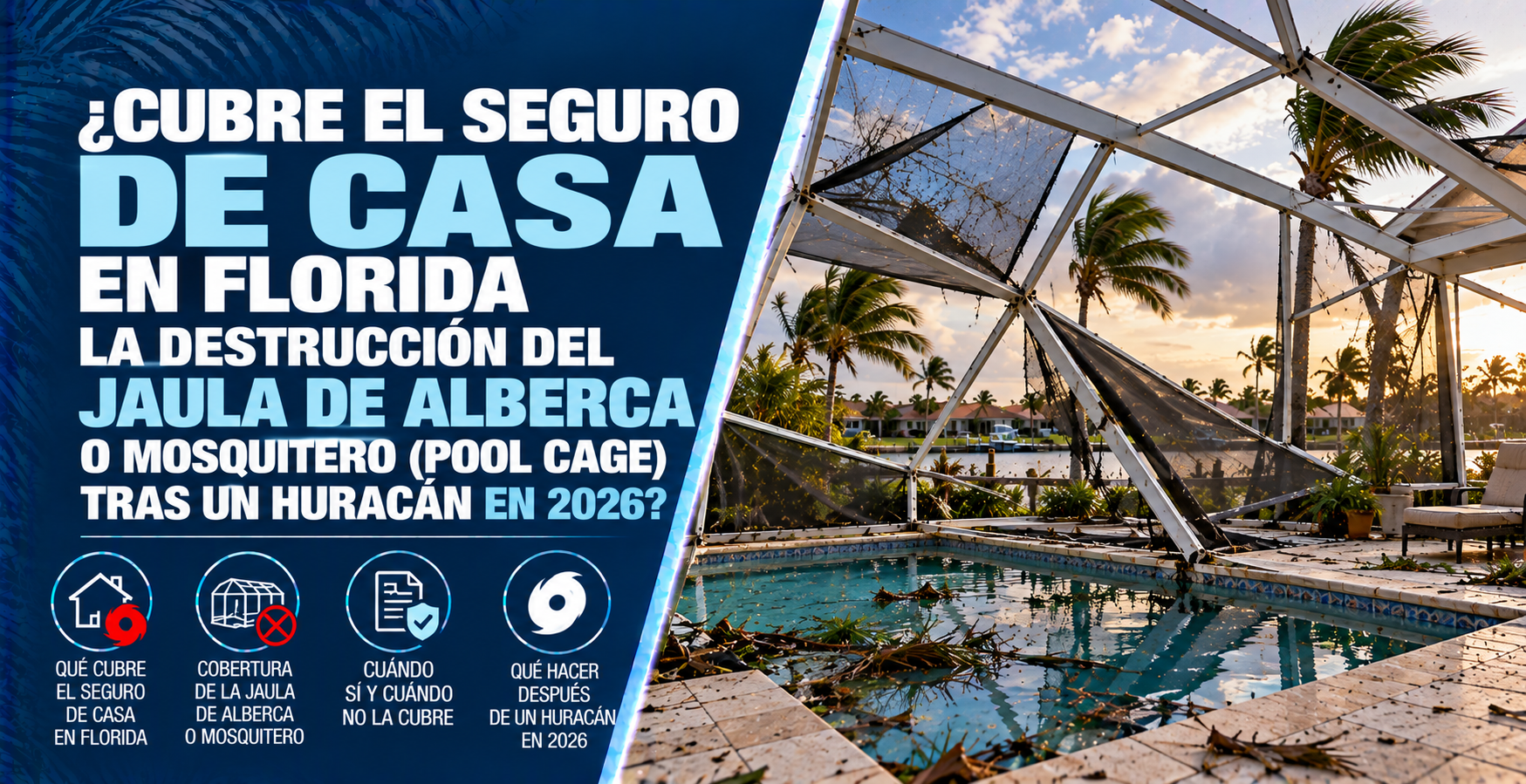
Seguro de Casa en Florida: Cobertura de Jaula de Alberca (2026)
¿Se destruyó tu jaula de alberca (pool cage) o mosquitero tras un huracán en Florida? Descubre por qué el seguro básico no lo cubre y cómo solucionarlo en 2026.
Read More →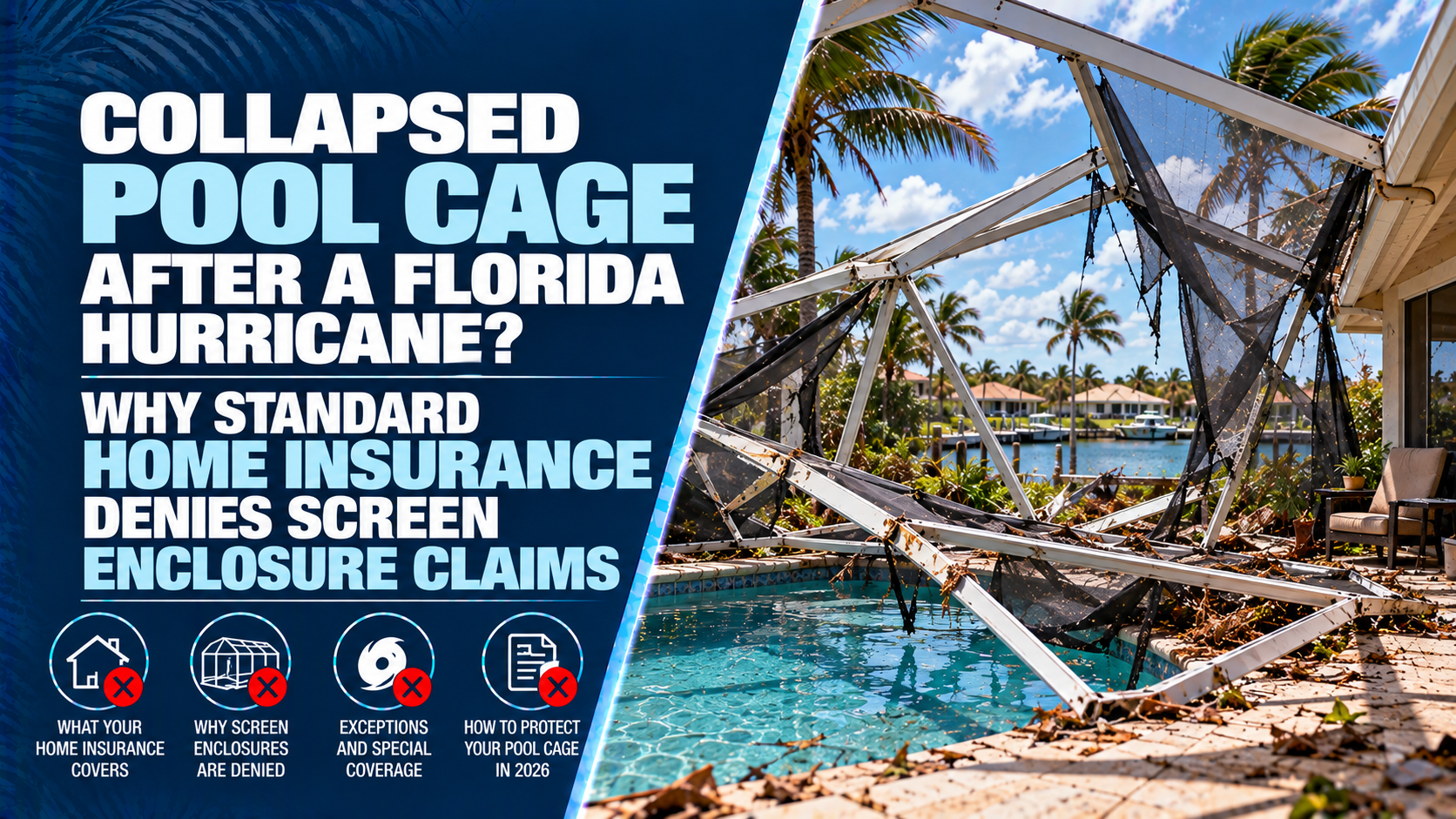
Florida Hurricane Pool Cage Damage: Screen Enclosure Claims
Collapsed pool cage or damaged patio screen after a Florida hurricane? Learn why standard home insurance denies screen enclosure claims and how to buy coverage.
Read More →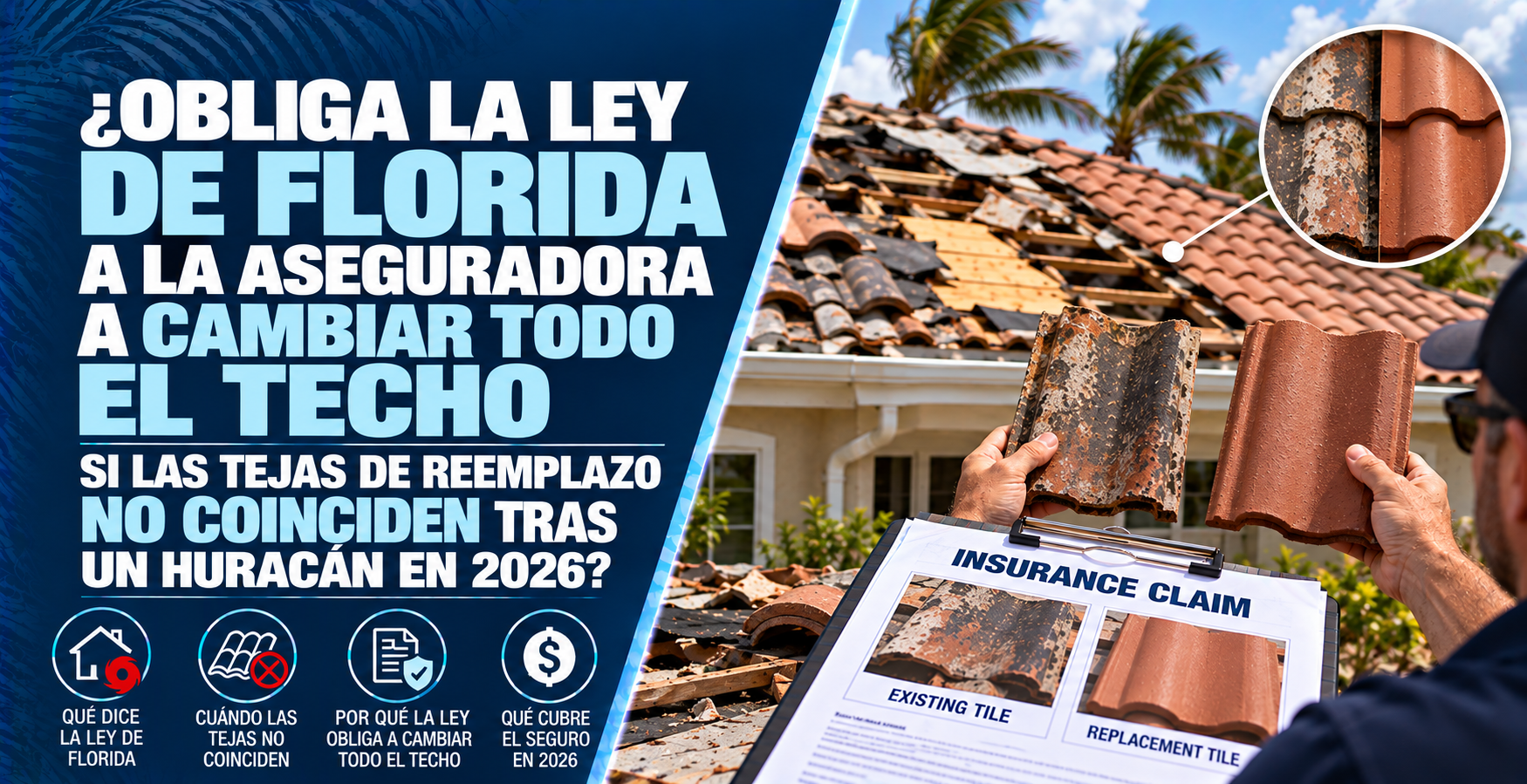
Ley de Coincidencia de Techos en Florida (2026): Tejas No Coincidentes
¿Daños en el techo tras un huracán en Florida? Descubre cómo la Ley de Coincidencia obliga a la aseguradora a cambiar todo el techo si las tejas no coinciden.
Read More →