Lending Your Boat in Florida? Check Insurance Before Handoff
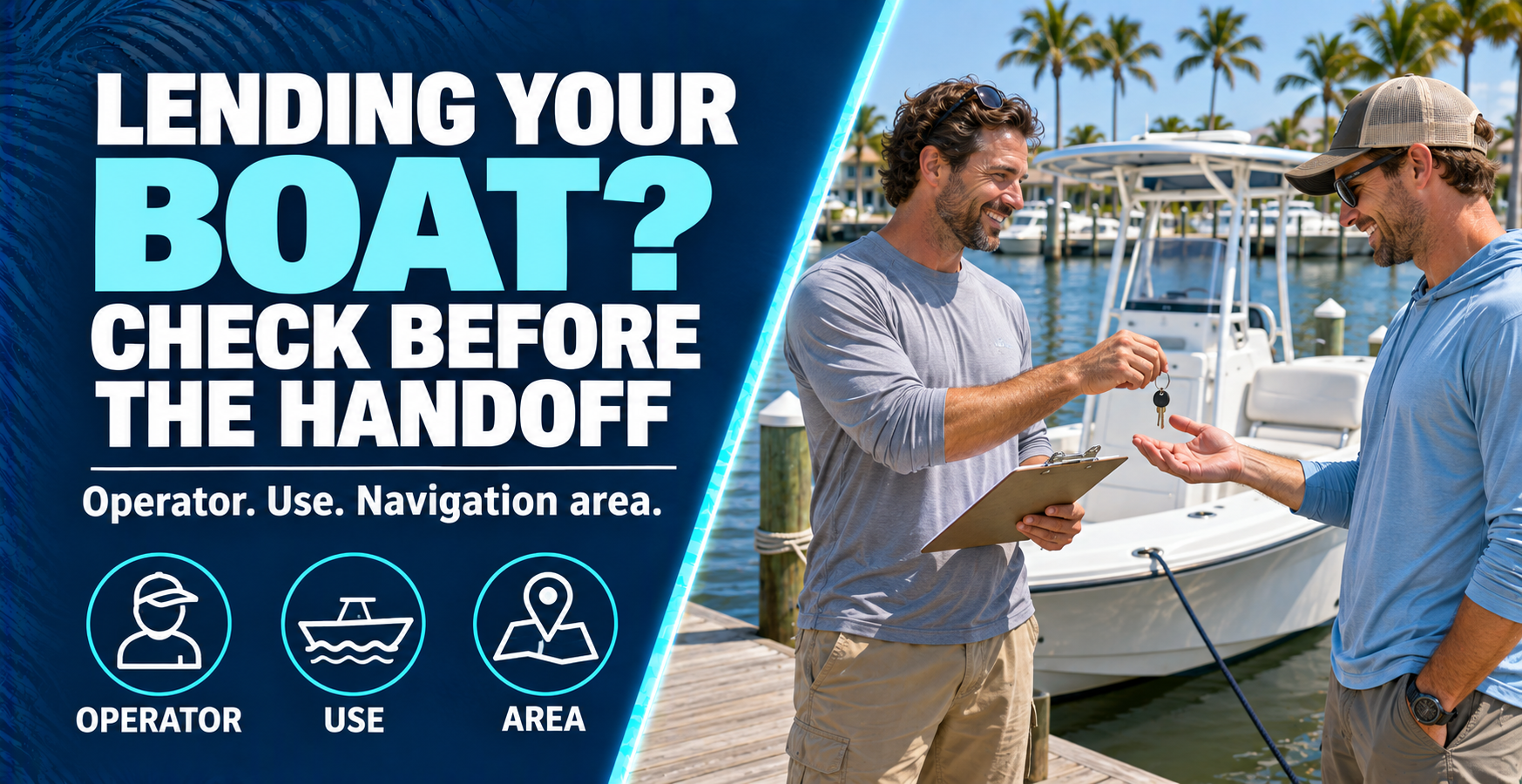
Lending Your Boat to a Friend in Florida? Review the Operator, Use and Trip First
The Direct Answer
Before a friend operates your boat, ask your insurer whether that person and the proposed outing fit your issued policy. Describe who will operate the vessel, whether you will be aboard, the intended use, the dates and the navigation area. Then ask separately about damage to your boat and liability to others. Giving permission is part of the factual picture; it is not a substitute for checking the contract.
Travelers’ boat insurance FAQ illustrates the point: its coverage may extend to people operating with permission, subject to policy terms, and it recommends confirming other operators with the insurer or representative. That is an example of an insurer’s guidance, not a statement that every Florida boat policy covers every friend or trip.
Make the Insurance Conversation Specific
A friend may know your boat and still be an operator your insurer needs more information about. A familiar local route may also differ from the outing originally discussed. Explain the arrangement before the handoff, rather than asking only, “Can someone else drive?”
Prepare a short trip summary with the person’s name, relevant experience, expected dates, where the boat will go and whether you will be present. Include any payment, rental, business purpose or other arrangement that could affect the insurer’s understanding of the use. The goal is an answer tied to the real plan.
1. Confirm How the Policy Treats the Operator
Have the declarations page, full policy and endorsements available. Ask whether the proposed operator must be listed, approved or otherwise meet a policy condition. If the person will use the boat regularly, say so. Do not assume an answer about an occasional outing also addresses repeated use.
Ask which details the insurer needs to make that assessment. Provide accurate information about the operator and their experience with the type of vessel involved. If approval or a policy change is required, ask how it will be documented and when it takes effect before relying on it.
Illustrative scenario: Elena plans to let a friend operate her center console while she stays ashore. She tells the insurer that she will not be aboard and describes the intended route. That gives the insurer a specific arrangement to review. An answer about a guest briefly taking the helm with Elena present would not describe the same facts.
Keep the explanation with the policy and confirm that it addresses the operator you named. A general brochure or a friend’s recollection of their own insurance is not a determination under your contract. If the proposed operator changes, revisit the question.
2. Describe the Actual Use and Navigation Area
Explain where the outing begins, the waters the friend expects to use and the expected return. Ask how any navigation limits or other relevant conditions apply to that plan. Use the policy’s wording when identifying the area rather than replacing it with a casual description such as “just offshore.”
Discuss the purpose accurately. A social outing, a paid arrangement and a business activity should not be described as interchangeable. Ask the insurer to classify the actual use; do not decide that a payment is irrelevant or that calling an arrangement a favor settles the coverage question.
Illustrative scenario: Marcus discusses a short local outing with his insurer. The friend later proposes a different destination and an overnight stop. Marcus sends the revised plan for review before departure. The earlier conversation should not be treated as confirmation for an outing that was never described.
Also ask what happens if plans change while the boat is away. Identify whom to contact and what information to provide. A written summary of the intended outing is useful for coordination, but it does not expand the navigation area or change the policy by itself.
3. Separate Coverage Questions and Plan the Handoff
Ask about damage to the insured boat separately from claims involving injuries or damage to someone else’s property. Florida DFS consumer guidance distinguishes physical-damage coverage from liability coverage and emphasizes that the consumer’s own policy controls. A statement that the boat is insured does not identify every protection purchased.
Request an explanation of the relevant limits, deductible and claim-reporting instructions for this arrangement. If someone suggests relying on another policy, ask that insurer what it actually covers. Do not assume the friend’s home, auto or umbrella policy replaces the review of the boat contract.
Education and lawful operation are separate checks. FWC’s boating education guidance describes Florida requirements and exemptions. Confirm what applies to the operator and vessel, including the appropriate documents, rather than treating an education card as proof of insurance coverage or an insurance discussion as boating authorization.
Illustrative scenario: Priya and her friend review the boat’s condition before departure and make sure the operator knows where to find the relevant documents and insurer contact. They confirm the return plan and discuss what to report if something happens. These practical handoff steps support communication; they do not guarantee a claim payment.
Why an Independent Agency Can Help
An independent-agency review can help organize the questions around the way the vessel will actually be used. Walker’s Boat Insurance page describes working with carriers offering policies for different vessel types and helping match coverage to how and where the boat is used. Bring the specific outing to that conversation, rather than asking for a blanket promise about all permissive operators.
Questions to Bring to Walker Insurance Agency
Bring the declarations, endorsements, operator details and trip summary. Ask: Does this person need to be listed or approved? Does your answer change if I am not aboard? Does the proposed use and area fit the contract? Which limits and deductible apply? What must be completed before the handoff? Use Walker’s Contact page to request help with the review.
Frequently Asked Questions
Does my permission automatically make a friend covered?
Do not treat permission as the complete answer. Ask the insurer to review the person, use and trip under the actual policy. Keep any required approval or issued change with the contract. The relevant question is whether this arrangement meets the applicable terms, not whether another owner’s policy works a certain way.
What if I will be aboard while my friend takes the helm?
Explain that fact, along with who will operate and for how long. Ask whether the answer differs from an outing where you remain ashore. Do not assume either situation is automatically covered or excluded; the insurer needs the actual facts to explain your policy.
Is lending the boat the same as renting it out?
Describe the arrangement instead of relying on a label. Disclose payments, the purpose of the trip and who will control the boat. Ask the insurer what provisions apply before proceeding. An answer about a private outing should not be reused for a different arrangement without another review.
Ask Before the Keys Change Hands
A useful review leaves you with an operator-specific answer, an accurate trip description and a clear understanding of the coverage questions. Contact Walker Insurance Agency at +1 407-977-7100 or visit 789 SW Federal Highway, Suite 201, Stuart, FL 34994. Use Walker’s Get a Quote page to request a boat insurance quote or coverage discussion before the handoff. Coverage depends on the issued policy and the facts of any loss.
Related Articles
¿Prestarás tu barco en Florida? Revisa el seguro antes
Antes de que un amigo opere tu barco en Florida, revisa operador, uso, zona de navegación y coberturas con la aseguradora. Conoce qué preguntar.
Read More →
Seguro para tus cosas en almacén durante una mudanza en Florida
¿Guardarás tus cosas en un almacén durante una mudanza en Florida? Revisa límites, riesgos cubiertos, deducibles y fechas antes de mover las cajas.
Read More →
Storage Unit Insurance During a Florida Move: What to Check
Putting belongings in storage during a Florida move? Check off-premises limits, covered causes, deductibles and policy dates before moving your boxes.
Read More →