Storage Unit Insurance During a Florida Move: What to Check
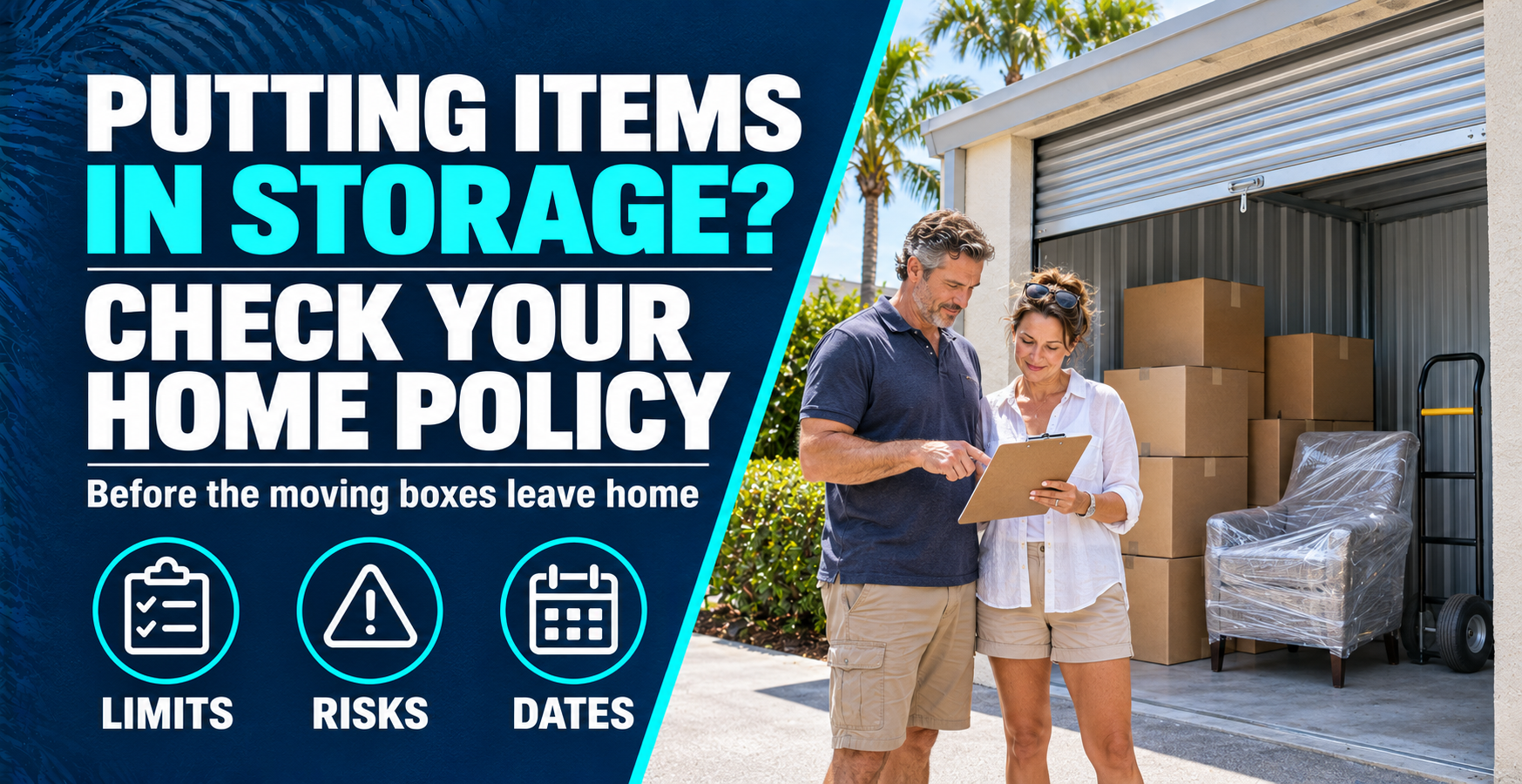
Putting Belongings in Storage During a Florida Move? Check Your Home Insurance First
The Direct Answer
Your homeowners policy may cover belongings in a storage unit, but the full personal-property limit shown for your home may not follow them there. Allstate’s explanation of off-premises coverage notes that lower limits can apply away from home. Before renting a unit, ask your insurer to identify the applicable limit, deductible, covered causes of loss and any storage conditions. Then compare that answer with the actual items and dates involved.
The storage agreement is another document to review. Ask what protection, if any, it provides for your belongings, what it costs and what it excludes. A rented space, a lock and a policy on your house do not answer all those questions. Get the insurance explanation before the boxes leave home.
Why the Gap Between Homes Deserves Its Own Review
Perhaps your new home in Stuart is not ready, or you need space while coordinating a move. The plan sounds temporary: put the furniture away and collect it later. Yet the address, contents and expected dates may change as the move develops. Treat storage as a specific arrangement to explain, rather than a small detail hidden inside the phrase “I’m moving.”
Prepare one short summary: storage address, unit type, expected start and end dates, who owns the belongings, and a list of the main items. The NAIC’s moving guidance recommends discussing possessions in storage with the insurer. That conversation is more useful when the actual arrangement is clear.
1. Identify the Storage Limit Before Relying on Coverage
Start with the declarations page and complete policy, including endorsements. Ask the insurer which provision applies to this storage location and whether a separate dollar limit or other restriction changes the amount available. Do not copy a percentage from an online example and assume it is the rule in your contract.
Build a simple comparison between the property you intend to store and the coverage the insurer identifies. Note the deductible separately. If the explanation uses a term you do not understand, ask for a plain-language example based on your arrangement. Keep the response with the policy documents.
Illustrative scenario: Elena plans to store bedroom furniture, a television and several boxes of kitchen equipment. She initially looks only at the large personal-property amount on her home policy. Before signing the storage agreement, she asks how much applies at the unit. She can then review the answer against her list instead of discovering the location-specific rule after damage occurs.
Also ask how a covered loss would be valued. The NAIC distinguishes actual cash value, which considers depreciation, from replacement cost coverage. Confirm your own settlement terms and any requirements for replacement. An estimated shopping total and the amount payable under a policy are different figures; avoid assuming they will match.
2. Review the Cause of Damage and the Storage Contract
A limit answers how much may be available; it does not establish which events qualify. Progressive’s moving and storage overview describes both storage coverage and limitations, including that damage from the process of moving items is generally not covered by the household policy. Ask about the specific situations that concern you rather than treating all damage as the same event.
For example, ask how the policy treats theft, a roof leak, water entering from outside, mold or an item dropped during unloading. These are questions for the insurer, not assumed covered claims. Ask the facility separately what conditions its contract imposes and whether any offered protection is insurance or another contractual arrangement.
Request the full terms of any additional plan before paying for it. Identify who provides it, the limit, deductible, exclusions, claim-reporting instructions and start date. If you already have insurance, ask what evidence the facility requires and whether that evidence satisfies its contract.
Illustrative scenario: Marcus sees “protection included” in a rental advertisement. Instead of assuming the phrase covers every box, he requests the terms and compares them with his home insurer’s explanation. If either document leaves a question unanswered, he resolves it before selecting what to store. This is a document comparison, not a prediction that either provider will pay.
3. Coordinate the Dates and Keep the Storage Record Current
Tell the insurer when items will leave the old home, enter storage and arrive at the new address. State Farm’s moving guidance recommends reviewing coverage before the move and checking belongings in transit and storage. Ask which policy responds at each stage and whether any time condition or change in residence affects the answer.
Do not cancel or change a home policy solely because the furniture has left. Discuss the old home, new home and stored belongings together, then confirm the intended changes and effective dates. If the storage period extends, revisit the explanation rather than assuming the original answer applies indefinitely.
Illustrative scenario: Priya expects storage to last until her closing, but the closing is delayed. She updates the insurer with the revised dates and confirms how the belongings will be insured through the extended period. She also keeps a dated item list, photos and available purchase records outside the unit, where she can retrieve them if needed.
Why an Independent Agency Can Help
An independent-agency review can help you compare policy questions and options using the same facts about your move. Walker Insurance Agency lists Home Insurance among its services and describes personalized assistance on its About page. Ask for help understanding your existing policy and available choices; do not assume that a particular storage product or endorsement is available until confirmed.
Questions to Bring to Walker Insurance Agency
Bring your declarations, storage agreement, item list and timeline. Ask: Which limit applies at this address? What deductible and settlement method apply? What happens if storage lasts longer? Is an adjustment or separate option worth considering for this arrangement? Start with Walker’s Home Insurance page, or use its Contact page to request a review.
Frequently Asked Questions
Does the storage facility’s insurance automatically protect my belongings?
Do not assume it does. Request the document that actually provides protection for your property and identify its provider and terms. A statement about the facility being insured is not enough to establish your personal claim rights. Compare any offered plan with your own policy before accepting or declining it.
Can I use my full home contents limit for items in storage?
Ask the insurer to identify the applicable storage provision. A policy’s main personal-property amount does not by itself establish the limit for every location. Review the deductible, exclusions and valuation method as well, so you are comparing more than the largest number on the declarations page.
What if the move takes longer than planned?
Update the insurer before relying on the original timeline. Provide the revised storage dates and any changes to the old or new residence. Request confirmation of the relevant policy and conditions, and retain the response. Extending a storage rental should prompt another coverage check.
Make the Storage Plan Part of Your Insurance Review
A useful review leaves you with a clear limit, a documented timeline and an understandable storage agreement. Contact Walker Insurance Agency at +1 407-977-7100 or visit 789 SW Federal Highway, Suite 201, Stuart, FL 34994. Use Walker’s Get a Quote page to request a home insurance quote or coverage discussion before moving day. Coverage depends on the issued policy and the facts of any loss.
Related Articles

Seguro para tus cosas en almacén durante una mudanza en Florida
¿Guardarás tus cosas en un almacén durante una mudanza en Florida? Revisa límites, riesgos cubiertos, deducibles y fechas antes de mover las cajas.
Read More →
Parabrisas en Florida: revisa antes de autorizar la reparación
¿Parabrisas agrietado en Florida? Revisa cobertura, presupuesto, calibración y documentos del reclamo antes de autorizar el trabajo del taller.
Read More →
Florida Windshield Claims: Check Before Authorizing Repairs
Cracked windshield in Florida? Review comprehensive coverage, shop estimates, calibration and claim paperwork before authorizing auto glass work.
Read More →