Rental Car Coverage: What to Check Before Signing
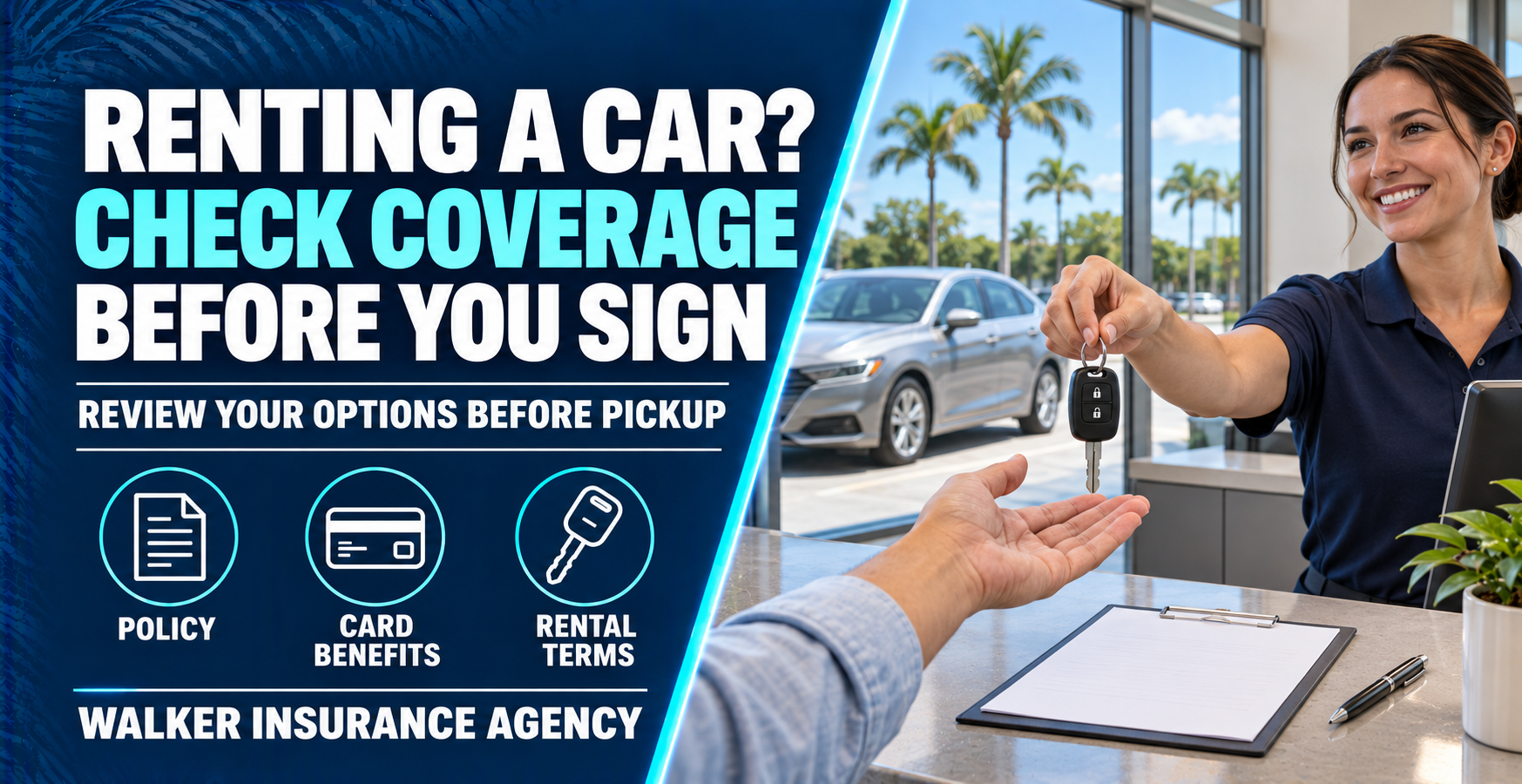
Renting a Car? What Florida Drivers Should Check Before Accepting or Declining Protection
The Direct Answer
Do not accept or decline rental-counter protection solely because you have auto insurance or a credit card. Review the actual rental, your selected auto coverages, and any card benefit guide first. Ask separately about damage to the rented vehicle, liability to others, and charges you might owe under the rental agreement. Existing protection may overlap with a counter product, but its terms determine whether it fits your trip.
A family leaving Stuart may reserve a car for an out-of-state visit and encounter several protection options at pickup. The useful preparation happens before that moment: identify the driver, vehicle, destination, dates, and use, then have the relevant providers explain their contracts. A familiar insurance label is not a substitute for those answers.
This guide concerns protection while using a rented car. If your question is who pays the rental bill while your own car is being repaired after a covered loss, see Walker’s rental reimbursement guide. That is a different coverage review.
1. Check Your Auto Policy Against the Actual Rental
Gather your declarations, policy forms, and endorsements. Give your insurer the rental details and ask what selected protection extends to that arrangement. Progressive explains that personal auto protection can overlap with rental coverage, including physical-damage protection in many situations when comprehensive and collision are carried. That description is a starting point, not confirmation for every vehicle or trip.
Ask for separate answers: Which protection addresses damage to the rental? Which addresses an injury or damage claim from another person? What deductible and limits apply? Are there vehicle, location, rental-duration, driver, or use conditions that affect the answer? Request the policy wording rather than relying on “you should be fine.”
Illustrative scenario: Jordan has liability coverage on an older personal car and reserves a newer rental for a vacation. Jordan asks the insurer to review the actual selections instead of assuming that having an auto policy establishes physical-damage protection for the rental. The answer should identify what is included and what remains unresolved.
Describe any work-related use, additional driver, unusual vehicle, or travel outside the anticipated area. If the booking changes, send the updated details. Do not transfer an answer about a short domestic leisure rental to a different arrangement without checking again.
Keep the provider’s contact information and explanation with your reservation. A quote request or conversation does not itself issue a coverage change. If a change is needed, confirm acceptance, documentation, and the effective date before relying on it.
2. Read the Specific Credit Card Benefit Guide
The NAIC recommends asking the card provider about rental benefits. A card’s collision or theft benefit should not be assumed to answer every insurance question. Ask the benefit administrator to identify the protection available on your exact card and explain how it interacts with any auto policy.
Review eligibility before deciding about a counter product. For example, Chase’s published guidance for certain Freedom cards describes payment and damage-waiver conditions. That is an example of card-specific rules, not an instruction that every renter should decline a waiver. Obtain the current guide for the card you plan to use.
Ask who must rent and pay, which drivers and vehicles qualify, where the benefit applies, and whether duration or use restrictions matter. Also ask whether the benefit is primary or secondary in your situation, which documents are needed, and whom to contact after an incident. Record unanswered questions before pickup.
Illustrative scenario: Maya plans to pay with a card she has held for years. Before assuming the benefit applies, she checks the current guide and asks the administrator to review the reservation. If she changes the payment method or vehicle, she revisits the answer rather than depending on an old summary.
Keep liability questions separate from a benefit described as covering damage or theft of the rental. Ask what the card benefit actually addresses and have your insurer explain any remaining insurance questions. Do not infer a broad protection package from the words “rental coverage.”
3. Understand the Counter Product and Rental Agreement
Ask the rental company to identify each optional product by name and explain what it changes. Enterprise, for example, describes its damage waiver as a contractual waiver of some or all responsibility for vehicle damage, loss, or theft, subject to its agreement; it states that the waiver is not insurance. Other products and contracts require their own review.
Read the agreement’s driver and permitted-use provisions, return requirements, and incident-reporting instructions. Ask the company and your coverage providers about potential charges beyond the repair itself, such as loss of use, administrative fees, towing, or diminished value. Treat these as questions to resolve, not as a universal list of charges that every contract imposes or every policy pays.
Illustrative scenario: a rental employee offers a damage waiver. Alex asks for the written terms and compares them with the insurer’s and card administrator’s answers. Alex also confirms whether the travel companion is properly authorized to drive. A quick verbal statement at the desk does not replace the agreement.
Before departure, document the vehicle’s existing condition with the rental company and retain your pickup records. Ask how to report damage and what records to keep. These practical steps support communication; they do not determine fault, coverage, or payment. Keep the signed agreement and any selected product terms accessible during the trip.
Why an Independent Agency Review Helps
An independent-agency conversation can organize the auto-policy part of this comparison. Walker’s auto insurance page states that it works with multiple carriers and helps customers review options. The card administrator and rental company still need to explain their own products; do not assume an agency conversation changes those contracts.
Bring Walker your policy documents and rental details. Ask which selected auto protections may apply, what limits or deductibles matter, and what questions require the insurer’s clarification. Use the same trip description when speaking with every provider so their answers address the same arrangement.
Frequently Asked Questions
1. Should everyone decline the rental company’s damage waiver?
No blanket answer fits every renter. Compare the actual waiver with confirmed policy and card benefits, including eligibility and remaining expenses. If a question is unresolved, request clarification before deciding. Neither accepting nor declining should be based only on someone else’s rental experience.
2. Does my credit card replace liability insurance?
Do not assume so. Ask the benefit administrator exactly what the card covers and ask your insurer how liability protection applies to the planned rental. A benefit addressing collision or theft of the rental does not, by that description alone, establish protection for claims made by other people.
3. Is rental reimbursement the same as protection for a rental car?
No. Reimbursement concerns eligible rental expenses while your own vehicle is unavailable after a qualifying loss. Protection for damage or liability involving the rented car requires a separate review. Keep the payment of the rental bill distinct from the risks of operating the vehicle.
Review the Trip Before You Reach the Counter
Prepare one accurate reservation summary and resolve policy, card, and contract questions before pickup. Contact Walker Insurance Agency at 407-977-7100 or use Walker’s contact page to discuss your auto policy. You can request an auto insurance quote through Walker’s quote page. Its listed office is 789 SW Federal Highway, Suite 201, Stuart, FL 34994. Coverage depends on the issued policy and circumstances; requesting a quote does not bind coverage.
Sources
NAIC — Consumer Auto: https://content.naic.org/consumer/auto-insurance.htm
Progressive — Rental Car Insurance: https://www.progressive.com/answers/rental-car-insurance/
Enterprise — Rental Protection Options: https://www.enterprise.com/en/car-rental-faqs/us-insurance-and-protections/car-rental-insurance.html
Chase — Freedom Auto Rental Coverage: https://www.chase.com/personal/credit-cards/education/chase-cards/what-to-know-about-chase-freedom-car-rental-insurance
Walker — Rental Reimbursement Guide: https://www.walkerinsuranceagency.com/blog/rental-reimbursement-in-florida-what-to-check
Walker — Auto Insurance: https://www.walkerinsuranceagency.com/services/auto-insurance
Walker — Contact and Quote: https://www.walkerinsuranceagency.com/contact | https://www.walkerinsuranceagency.com/quote
Related Articles
Silla Infantil Después de un Choque: Seguro
Después de un choque, consulta las instrucciones de la silla infantil, reúne documentos y pregunta al seguro por el reemplazo. Guía para familias de Florida.
Read More →
Car Seat After a Crash: Safety & Insurance
After a crash, check car seat replacement guidance, document the seat and ask your insurer about coverage. A practical review for Florida parents.
Read More →
Auto de Alquiler: Revisa la Cobertura Antes de Firmar
¿Vas a alquilar un auto? Revisa tu póliza, beneficios de tarjeta, exención de daños y contrato antes de recogerlo. Consulta tus dudas con Walker Insurance Agency.
Read More →