RV Roadside Assistance in Florida: What to Check
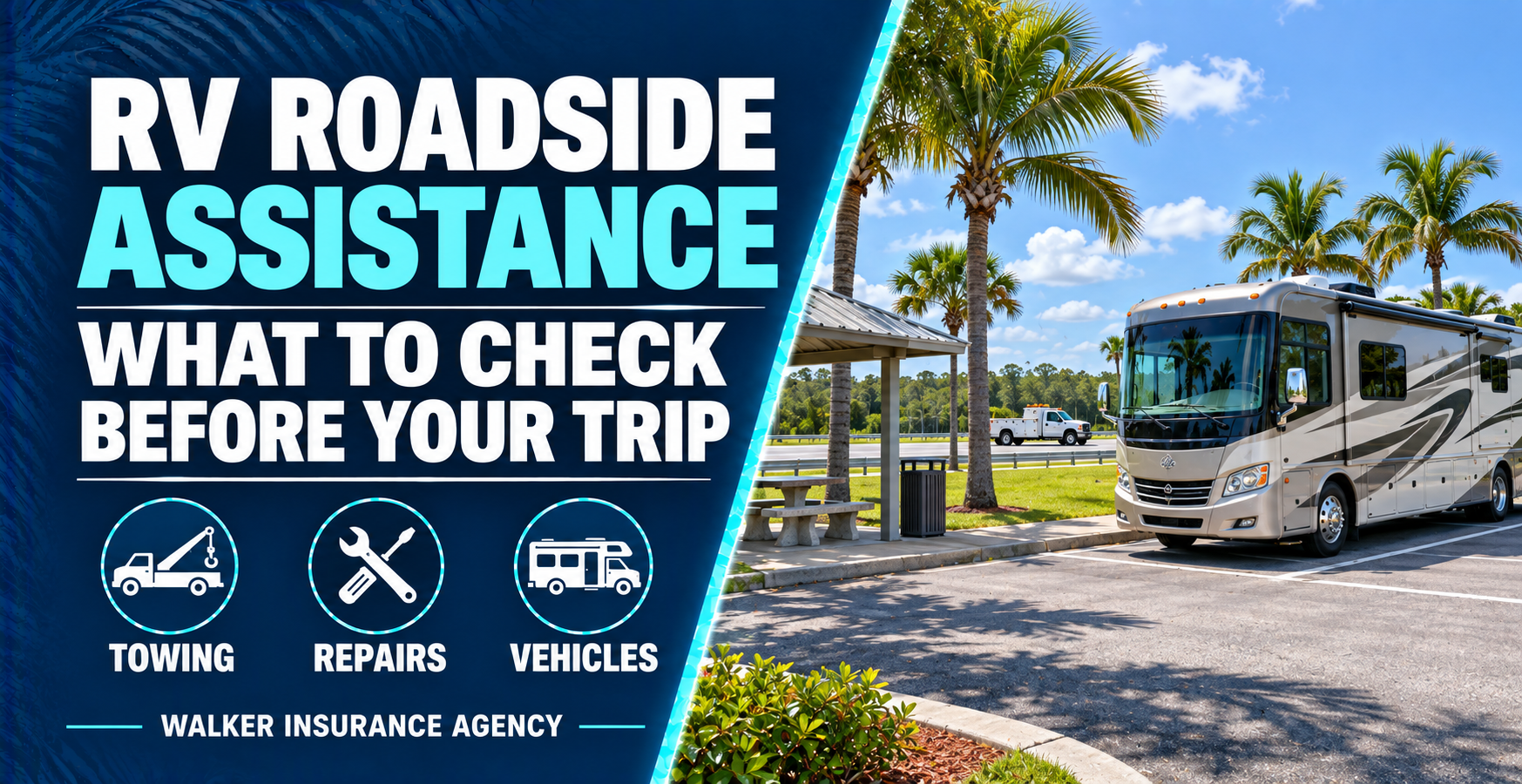
RV Roadside Assistance in Florida: What to Check Before Your Trip
The Direct Answer
RV roadside assistance may help arrange services such as towing or a jump-start after a breakdown, but the actual benefits depend on the coverage or service plan you selected. Before traveling, confirm which vehicles qualify, where a tow can take you, which expenses remain yours and how to request authorized help. A service described as “roadside assistance” does not automatically pay the mechanical repair bill. [1]
For an owner leaving Stuart for a Florida road trip, the useful question is not simply whether the policy mentions towing. Ask what would happen if your particular motorhome, trailer or tow vehicle stopped running along your planned route. Put the answer in writing while you have time to compare options.
A realistic review starts with the vehicles you own and the way you travel. Gather the RV policy, any separate roadside membership and the towing vehicle’s insurance information. Keep each arrangement distinct until someone explains which document controls the service you expect.
1. Confirm the Vehicle and the Towing Destination
Start by identifying your setup: a self-propelled motorhome, a travel trailer pulled by a truck, or a fifth wheel. Walker Insurance Agency’s RV service page distinguishes motorhomes from towed units because their coverage needs differ. [2]
Ask the provider to check the vehicles by description, not just the word “camper.” Include the model, approximate dimensions and towing arrangement when discussing whether the assistance matches your equipment. A note saying “RV included” leaves practical questions unanswered.
Then ask about the destination. Progressive’s published RV coverage description, for example, describes towing a disabled motorhome or travel trailer to the nearest repair facility subject to location conditions. That is a provider example, not a universal promise of transport to any shop you choose. [3]
Illustrative scenario: Your preferred repair shop is near home, but the RV stops running elsewhere. Before assuming the plan will transport it back to Stuart, ask how the destination is selected and what happens if you request another facility. Record any distance limit, service-area condition or extra charge described in your own terms.
For a truck-and-trailer combination, ask separately about each unit. One provider’s fifth-wheel offering explicitly discusses towing both trailer and tow vehicle under its conditions. Other arrangements need their own confirmation; do not transfer that example to every policy. [4]
2. Separate Roadside Service From Repair Expenses
A tow solves the problem of moving a disabled vehicle. Repairing an engine, replacing a tire or buying fuel creates different expenses. Progressive’s roadside claims information states that the customer remains responsible for vehicle parts and repairs under its roadside service. Review the equivalent language in your arrangement. [1]
Build a simple expense checklist before deciding that two options are comparable:
Service: What assistance can be dispatched?
Materials: Who pays for fuel, a replacement battery or other supplied items?
Repairs: Which labor or repair expenses, if any, are addressed?
Limits: What restrictions apply to events, distance or service locations?
Authorization: Who must approve the service before you arrange it?
Illustrative scenario: A flat tire interrupts your trip. Ask whether the service involves installing a usable spare, supplying a new tire or arranging a tow. Those are different requests. Tell the provider what equipment you carry and have the relevant terms explained before relying on a benefit.
Also ask about interruption expenses such as a hotel or alternative transportation. Treat those as a separate question rather than assuming they follow automatically from roadside assistance. If a benefit is proposed, request its specific trigger, eligible expenses, limits and documentation requirements.
Price comparisons become more useful when the unanswered items are visible. A lower premium or membership price does not, on its own, tell you whether a particular recovery or repair expense fits the contract.
3. Write Down the Request Process Before Departure
Choose a time before your trip to confirm the assistance contact method and policy or membership number. Ask whether you must contact the service provider first, whether you can choose an operator and how independently arranged service is handled.
Make a short trip reference:
Vehicle details: Keep the RV description and towing configuration available.
Service contact: Save the assistance number and relevant account details.
Documents: Retain the policy or membership information needed to explain your selection.
Location: Know how you will describe your route and where the vehicle is stopped.
Receipts: Ask what records are required if reimbursement is available.
Illustrative scenario: You have roadside benefits through more than one arrangement. Instead of assuming they combine, ask each provider how its request process works. Decide which number to contact for the situation and retain the written instructions.
If you are comparing a membership with an insurance add-on, compare their actual terms rather than their labels. Ask which vehicles, drivers and circumstances each arrangement addresses. Check effective dates as well; a requested change and an active benefit are different things.
Update the reference if you replace the RV, change the towing vehicle or alter how you use it. The purpose is to make the plan usable, not simply to collect another document.
Why an Independent Agency Conversation Helps
Bring specific scenarios to your insurance review: a disabled motorhome away from home, a tow vehicle problem while pulling a trailer, or a request to reach a preferred repair shop. Clear examples make it easier to identify the policy language you need explained.
Walker Insurance Agency offers RV insurance guidance for motorhomes, travel trailers, fifth wheels and other campers. Its RV service page invites owners to discuss coverage suited to how they use the vehicle. Ask which roadside options, if any, are available for your particular proposal. Do not assume every optional feature is included. [2]
Questions to Bring to Walker
Which vehicle or combination is included?
What towing destination rule applies?
Which parts, repairs or additional mileage could be my responsibility?
What must I do before authorizing service?
Is any interruption benefit included or separate?
What document confirms the selected benefit and effective date?
Frequently Asked Questions
1. Does roadside assistance mean my engine repair is covered?
Do not assume so. Roadside service and the repair itself are different expenses. Read the service terms and any separate repair-related coverage. Ask for a direct explanation of what you would pay after a mechanical breakdown.
2. Will a roadside plan tow both my truck and travel trailer?
That depends on the arrangement. Describe both units and ask whether assistance follows the RV, the tow vehicle or the specific combination. Obtain confirmation of the covered setup rather than relying on a general towing label.
3. Can I have the RV taken to my preferred shop?
Check the destination rule first. Ask whether the benefit uses a nearest-facility standard, a mileage allowance or another condition. If you choose a different shop, request an explanation of any additional cost before depending on that option.
Review the Plan Before the Road Trip
A useful roadside review connects the vehicle, the service and the expenses. Have the unanswered questions resolved before departure and keep the confirmed instructions with your travel documents.
Request a quote from Walker Insurance Agency: https://www.walkerinsuranceagency.com/quote
Explore RV insurance: https://www.walkerinsuranceagency.com/services/rv-insurance
Discuss your questions: https://www.walkerinsuranceagency.com/contact
Call +1 407-977-7100 or visit 789 SW Federal Highway, Suite 201, Stuart, FL 34994.
Sources
[1] Progressive — Roadside assistance claims: https://www.progressive.com/claims/roadside-assistance/
[2] Walker Insurance Agency — RV Insurance: https://www.walkerinsuranceagency.com/services/rv-insurance
[3] Progressive — RV insurance coverages: https://www.progressive.com/rv-insurance/coverages/
[4] Progressive — Fifth-wheel insurance: https://www.progressive.com/rv-insurance/fifth-wheel-trailer-insurance/
Related Articles
Asistencia Vial para RV en Florida: Qué Revisar
Antes de viajar en RV por Florida, revisa destino del remolque, costos de reparación y vehículos incluidos. Lleva estas preguntas a tu agente.
Read More →
Seguro de Inundación al Comprar Casa en Florida: Vigencia
¿Compras casa en Florida? Conoce cuándo puede aplicar la excepción del NFIP por préstamo y qué confirmar sobre pago, cierre y fecha de inicio del seguro.
Read More →
Flood Insurance at Closing in Florida: When Does It Start?
Buying a Florida home? Learn when an NFIP loan exception may apply and what to confirm about payment, closing and your flood policy’s effective date.
Read More →