The Hidden Cost of Fraud: Does Home Insurance Cover Identity Theft? (2026)
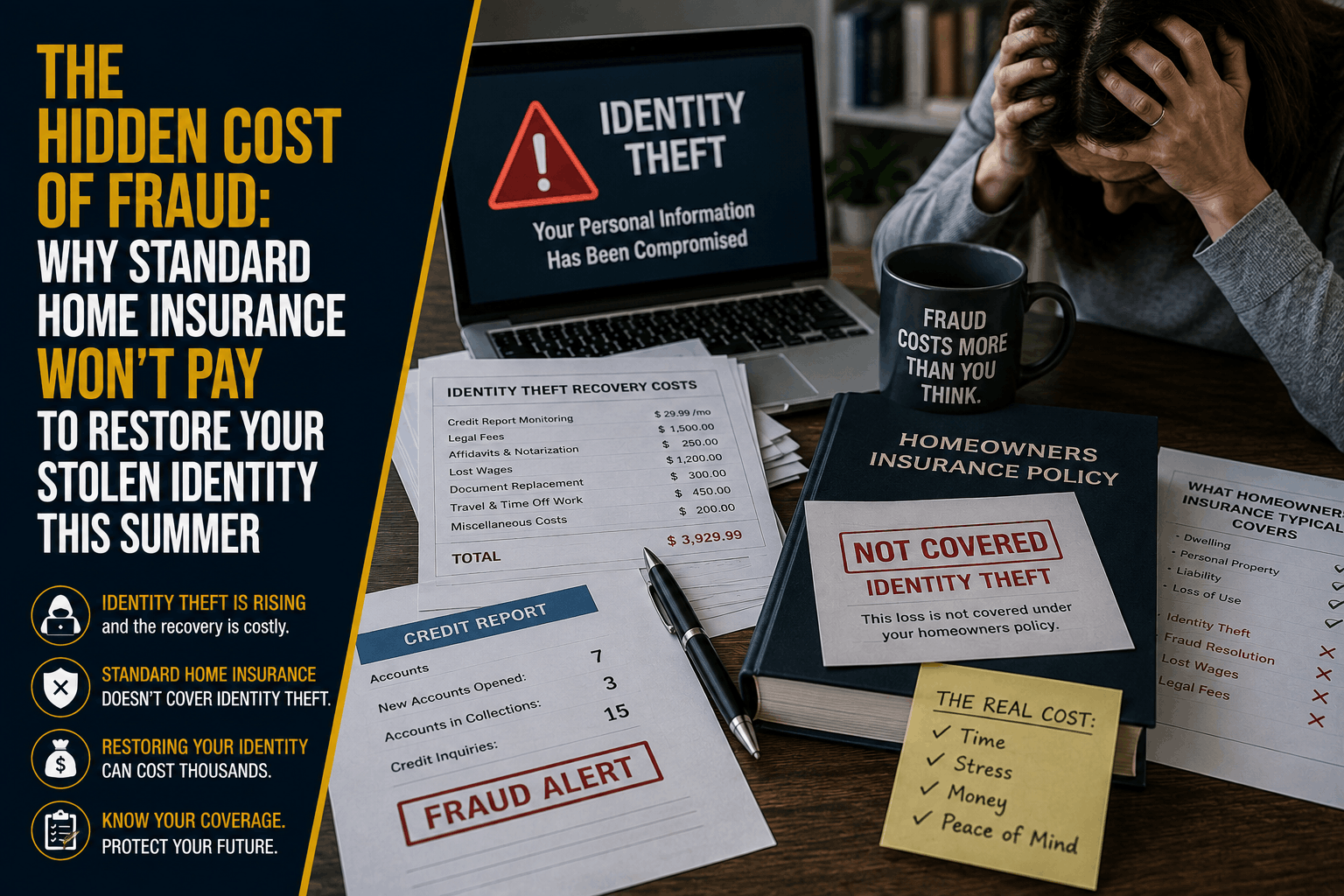
The Hidden Cost of Fraud: Why Standard Home Insurance Won't Pay to Restore Your Stolen Identity This Summer
The Direct Answer
The short answer is no—a standard homeowners insurance policy (HO-3 or HO-6) does not automatically cover the costs required to restore your stolen identity or reimburse stolen cash. While your baseline home policy protects physical property against theft (like a burglar physically stealing a television or laptop from your living room), it explicitly excludes financial fraud, digital identity theft, and unauthorized bank transfers. Under standard policy terms, financial assets, digital credentials, and lost wages spent restoring ruined credit are not considered "tangible personal property." Unless you have added an optional Identity Theft Restoration Endorsement to your policy, your home insurance carrier will not pay for the expensive legal fees, notarization costs, credit monitoring services, or fraud resolution specialists required to clear your name after a summer travel breach or cyber scam.
Summer is prime season for digital fraud. Between booking vacation rentals on public Wi-Fi networks, dining out at tourist hotspots, and making frequent online purchases while traveling, consumers expose personal credentials at an unprecedented rate. Discovering that a criminal has opened fraudulent credit accounts or stolen your identity is alarming—and realizing your standard home policy offers zero financial protection for identity restoration makes a frustrating crisis far worse.
1. Physical Theft vs. Digital Identity Theft Under Standard Policies
Homeowners insurance policy contracts draw a strict line between tangible physical property and digital financial identity:
- Coverage C (Personal Property Limitations): Standard policies cover tangible items inside your home—furniture, clothing, electronics, and tools. However, money, bank accounts, and digital identity credentials fall under strict monetary sub-limits (often capped at just $200 for cash and zero for digital account balances).
- The Direct Physical Loss Requirement: Insurance claims require "direct physical loss or damage" to trigger property coverage. A scammer stealing your Social Security number, hijacking your credit profile, or filing a fraudulent tax return creates massive financial harm, but causes zero physical damage to your dwelling or physical goods.
- Bank Liability vs. Out-of-Pocket Restoration Costs: Banks and credit card issuers may protect you from unauthorized charges under federal regulations (like the Electronic Fund Transfer Act), but they do not pay for the indirect costs of fixing your identity—such as lost wages while taking time off work, attorney fees, application re-filing costs, and certified mailing fees.
2. The Surprising Hidden Costs of Restoring a Stolen Identity
Clearing a compromised identity is a prolonged administrative process that averages 100 to 200 hours of laborious paperwork and legal navigation over several months. Without specialized coverage, victims absorb thousands of dollars in out-of-pocket expenses:
- Lost Wages and Time Off Work: Identity restoration requires calling credit bureaus, filing police reports, and attending court hearings during normal business hours. The average victim loses several thousand dollars in missed working hours.
- Legal Fees and Document Expenses: Hiring a specialized consumer attorney to remove fraudulent judgments, pay off fraudulent debt claims, or draft affidavits requires substantial legal retainers. Certified mail, notary public fees, and loan re-application fees stack up quickly.
- System Refurbishment and Cyber Cleanup: If your identity was stolen via phone malware or a compromised personal laptop while traveling, cleaning malicious software and securing personal devices creates immediate technical costs.
Crucial Reality: Fraudulent charges on a credit card are usually refunded by the card issuer. The real financial burden of identity theft comes from the hundreds of hours and thousands of dollars spent battling credit bureaus, court systems, and debt collection agencies to prove you are who you say you are.
3. How to Properly Secure Identity Theft Protection
Protecting your family from identity theft during high-risk summer travel months requires a low-cost, proactive policy endorsement:
- Step 1: Add an Identity Theft Restoration Endorsement. Attach an optional Identity Theft rider to your homeowners or renters policy. This endorsement usually provides $15,000 to $25,000 in dedicated coverage for identity restoration expenses with a very low deductible (often $100 or zero).
- Step 2: Leverage Professional Fraud Case Management. A comprehensive endorsement gives you access to a dedicated resolution specialist. Instead of spending 150 hours making phone calls yourself, a professional advocate handles the credit bureaus, financial institutions, and law enforcement agencies on your behalf.
- Step 3: Combine Cyber Coverage for Total Protection. Ensure your rider includes broad cyber protection that covers online extortion, ransomware cleanup, and social engineering fraud—safeguard measures essential for modern digital risk profiles.
Why Working with an Independent Agency Is Vital
Navigating policy endorsements, coverage sub-limits, and modern cyber risk options requires personalized expertise. At Walker Insurance Agency, we review personal lines coverage to ensure you aren't left vulnerable to invisible digital threats.
The Walker Advantage:
- Comprehensive Policy Reviews: We analyze your existing homeowners policy to identify hidden exclusions and add vital protection riders before fraud occurs.
- Access to Top Insurance Providers: As an independent agency, we shop top carriers across Florida to find broad identity theft and personal cyber endorsements at the most competitive rates.
- Local Florida Service: Based in Stuart, FL, we understand the specific risks facing local homeowners—from summer travel scams to coastal property coverage needs.
FAQ
1. Doesn't my credit card company cover identity theft automatically?
Credit card companies protect you against unauthorized credit card transactions on their specific card accounts. They do not pay for legal costs, lost wages, court fees, or credit bureau battles required if a scammer opens new mortgages, loans, or utility accounts in your name using your Social Security number.
2. How much does an Identity Theft Endorsement cost on a home policy?
Adding an Identity Theft Restoration rider to your standard homeowners or renters policy is surprisingly affordable—typically costing between $25 and $60 per year for up to $25,000 in dedicated restoration coverage and professional case management.
3. What steps should I take immediately if my identity is stolen this summer?
First, place a temporary fraud alert or security freeze on your credit files with Equifax, Experian, and TransUnion. Next, file an identity theft report with the FTC at IdentityTheft.gov and contact your local police department. Finally, notify your insurance agent to file a claim under your identity theft endorsement so a dedicated fraud specialist can take over the recovery process.
Protect Your Financial Future Before You Travel
Don't wait until fraudulent credit accounts derail your finances to discover what your home insurance policy covers. Reviewing your policy endorsement options today gives you complete peace of mind whenever you travel or transact online.
Take control of your personal security today. Contact Walker Insurance Agency for a comprehensive coverage check. We provide the tailored advice you need to eliminate hidden coverage gaps and keep your financial identity fully protected.
[GET A FREE QUOTE TODAY]
Call our personal lines division at +1-407-977-7100 or visit our office at 789 SW Federal Hwy, Ste 201, Stuart, FL 34994. Let us safeguard what matters most to you today.
2
Related Articles

Cobertura de Ley y Ordenanza en Florida (Ordinance or Law) 2026
¿Cubre el seguro de casa en Florida las actualizaciones obligatorias del código de construcción? Descubre cómo la Regla del 50% te afecta en 2026.
Read More →
The 50% Rule in Florida: Storm Damage & Building Codes 2026
Did a storm damage 40% or more of your Florida home? Learn how the 50% Rule can force total code upgrades and cost you over $150,000 out of pocket.
Read More →
¿Cuánto Tiempo Tengo para Reclamar Daños por Tormenta en Florida? (2026)
¿Tuviste daños por agua o tormenta en Florida? Conoce la regla estricta de 1 año para reportar tu reclamo al seguro en 2026 y evita que sea denegado.
Read More →