Basement Flooded by Drains? Why Your Policy Pays $0 | Walker Insurance
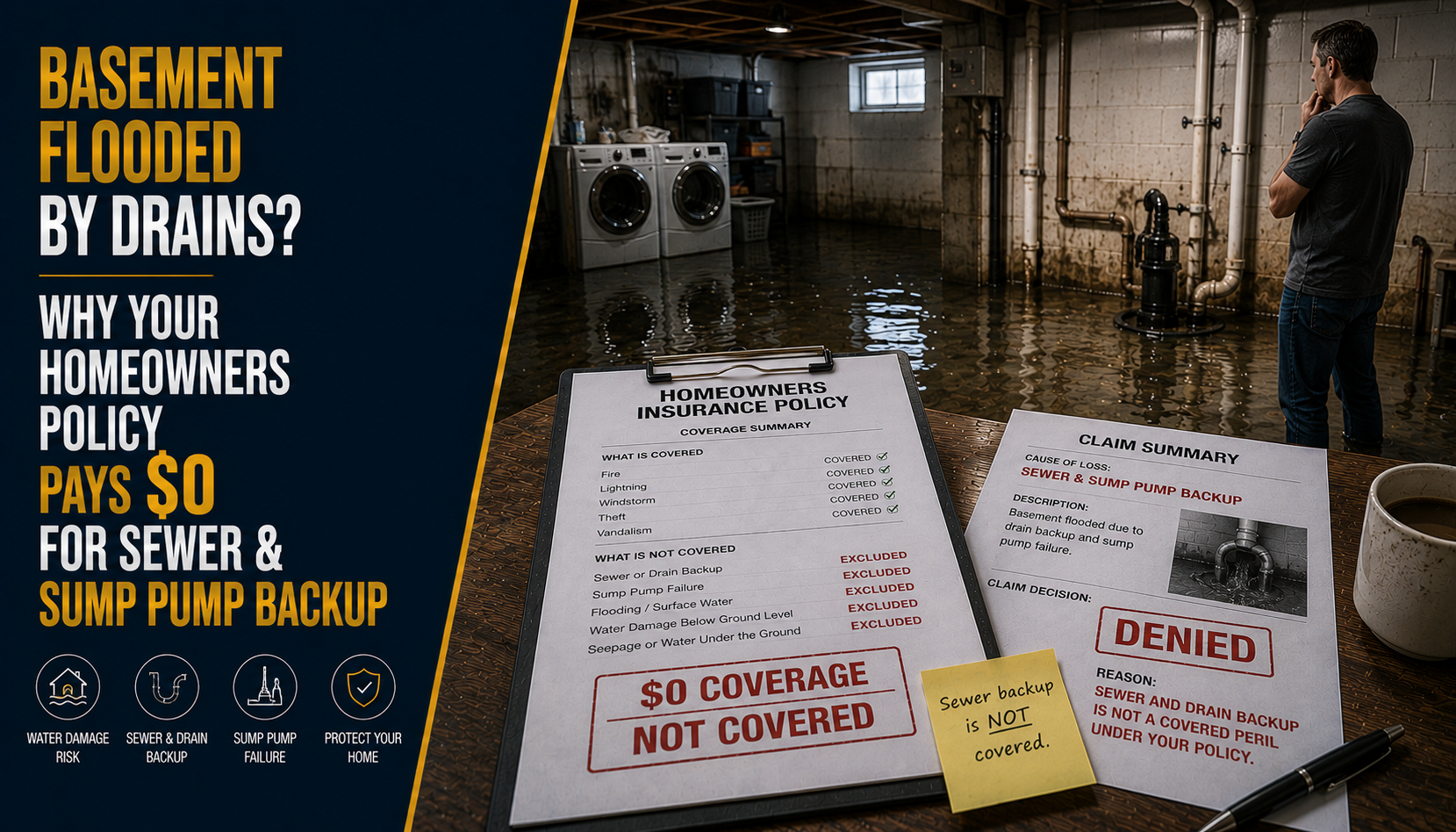
Basement Flooded by Drains? Why Your Homeowners Policy Pays $0 for Sewer & Sump Pump Backups
The Direct Answer
Here is a costly misconception that surprises thousands of homeowners every rainy season: if water backs up through your basement drains, toilets, or a failed sump pump, a standard homeowners insurance policy will pay $0 toward the cleanup or repairs.
Standard homeowners insurance policies (HO-3 and HO-5) contain an explicit exclusion for water damage caused by sewer backups, drain overflows, and sump pump failures.
Unless you have added a specific rider known as a Water Backup and Sump Overflow Endorsement to your policy prior to the storm, your insurer will deny the claim entirely—leaving you to pay tens of thousands of dollars out of pocket to restore your flooded basement.
Walking downstairs to find inches of murky water soaking into your drywall, finished flooring, and personal belongings is every homeowner's nightmare. Discovering that your insurance company will not contribute a single dollar to clean up the mess turns a physical disaster into a major financial crisis.
1. The Fine Print: Why Standard Policies Exclude Drain Backups
Insurance contracts draw a strict distinction between different types of water damage. Understanding how insurers classify water origin explains why drain and sump pump overflows fall outside standard coverage:
- Covered Water Damage (Sudden & Accidental): Standard policies cover internal plumbing bursts, such as a ruptured washing machine hose, a frozen pipe that cracks, or a leaking water heater. Water origin is key: if the water comes from inside your clean plumbing lines, it is generally covered.
- Excluded Water Damage (Backups & Surface Water): Standard policies explicitly exclude damage caused by water that originates outside the living structure or reverses direction through drainage pipes. This includes municipal sewer main surcharges, clogged drain lines, and sump pump power or mechanical failures.
- The Flood Exclusion Gap: Rising groundwater or heavy rain pooling against your foundation and seeping through basement walls is categorized as "flood damage," which requires a separate National Flood Insurance Program (NFIP) or private flood insurance policy altogether.
2. Common Causes of Sump Pump Failures and Sewer Backups
Basement flooding from drains rarely occurs during clear weather; it strikes when municipal infrastructure and home drainage systems are pushed beyond capacity:
- 1. Torrential Rainfall & Municipal Overload: Heavy rainstorms overwhelm city sewer mains. As municipal lines fill, excess water searches for the path of least resistance—often pushing backward through sewer lateral pipes into low-lying basement floor drains and toilets.
- 2. Sump Pump Power Outages: Severe storms frequently cause neighborhood power loss. When the electricity goes out, your sump pump stops running precisely when basement water pressure is at its peak.
- 3. Mechanical Wear & Float Switch Jamming: Sump pumps have a limited lifespan (typically 7 to 10 years). Float switches can jam, impellers can clog with debris, or motors can burn out during extended heavy pump cycles.
- 4. Tree Root Intrusions & Blocked Lines: Tree roots growing into underground sewer pipes create blockages, trapping gray water and sewage until it backs up into lower-level fixtures.
The Cost of Basement Restoration: Remediating a flooded basement requires professional water extraction, mold prevention treatments, tearing out waterlogged drywall, and replacing carpet or LVP flooring. Total restoration costs routinely run between $10,000 and $35,000+.
3. The Solution: Water Backup and Sump Overflow Endorsement
You can close this dangerous coverage gap by taking three proactive steps with your home insurance policy:
- Add the Water Backup Rider: Request your insurance agent to attach a Water Backup and Sump Discharge Endorsement to your homeowners policy. This low-cost rider extends coverage to damage caused by water backing up through drains or overflowing from a sump pump pit.
- Select Adequate Coverage Limits: Water backup riders are sold in specific limit tiers (e.g., $5,000, $10,000, $25,000, or $50,000+). If you have a finished basement with electronics, furniture, or guest rooms, select a limit that covers both structural repairs and contents replacement.
- Install a Battery Backup Sump Pump: Pair your primary electric sump pump with a secondary battery-operated backup unit. This ensures your pump continues operating during storm-induced power outages, significantly reducing your flood risk.
Why Working with an Independent Agency Matters
Protecting your home from hidden policy exclusions requires thorough insurance audits. At Walker Insurance Agency, we help homeowners identify water damage gaps and customize coverage options to keep their properties fully protected.
- Customized Endorsements: We review your home’s layout, basement finish, and drainage setup to match you with the right Water Backup endorsement limits.
- Policy Gap Audits: We examine the distinctions between water backup, flood insurance, and internal plumbing coverage so you know exactly what is covered before heavy storms hit.
- Dedicated Local Support: Located in Stuart, Florida, our team provides clear, straightforward advice to protect your family, your property, and your financial savings.
Frequently Asked Questions
1. How much does a Water Backup endorsement cost?
A Water Backup and Sump Overflow endorsement is remarkably affordable. Depending on your home's location and the coverage limit chosen (e.g., $10,000 to $25,000), adding this rider typically costs between $50 and $250 per year.
2. Does a Water Backup rider cover rising floodwaters from outside?
No. Water Backup coverage specifically applies to water entering your home through drains, sewers, or sump pits. Water flowing over the ground into your basement doors or foundation windows requires a separate Flood Insurance policy.
3. What should I do immediately if my basement floods from a drain?
First, turn off power to the basement at the main breaker panel if it is safe to do so. Avoid direct contact with stagnant water, as sewer backup water contains harmful bacteria. Document the damage with photos and videos, and contact your insurance agent immediately to confirm if you have a Water Backup rider in place.
Protect Your Basement and Financial Savings Today
Don't wait for a heavy storm or power outage to discover that your standard homeowners policy leaves you unprotected against sewer and sump pump backups. Adding a Water Backup endorsement today gives you peace of mind and complete financial protection.
Keep your home, basement, and savings safe from unexpected water disasters. Contact Walker Insurance Agency today for a fast, zero-pressure home policy audit. We are here to help you secure complete property coverage.
[GET A FREE HOME INSURANCE AUDIT TODAY]
Call our home insurance team at +1-407-977-7100 or visit our office at 789 SW Federal Hwy, Ste 201, Stuart, FL 34994. We are always ready to protect your home and keep your savings safe.
Related Articles
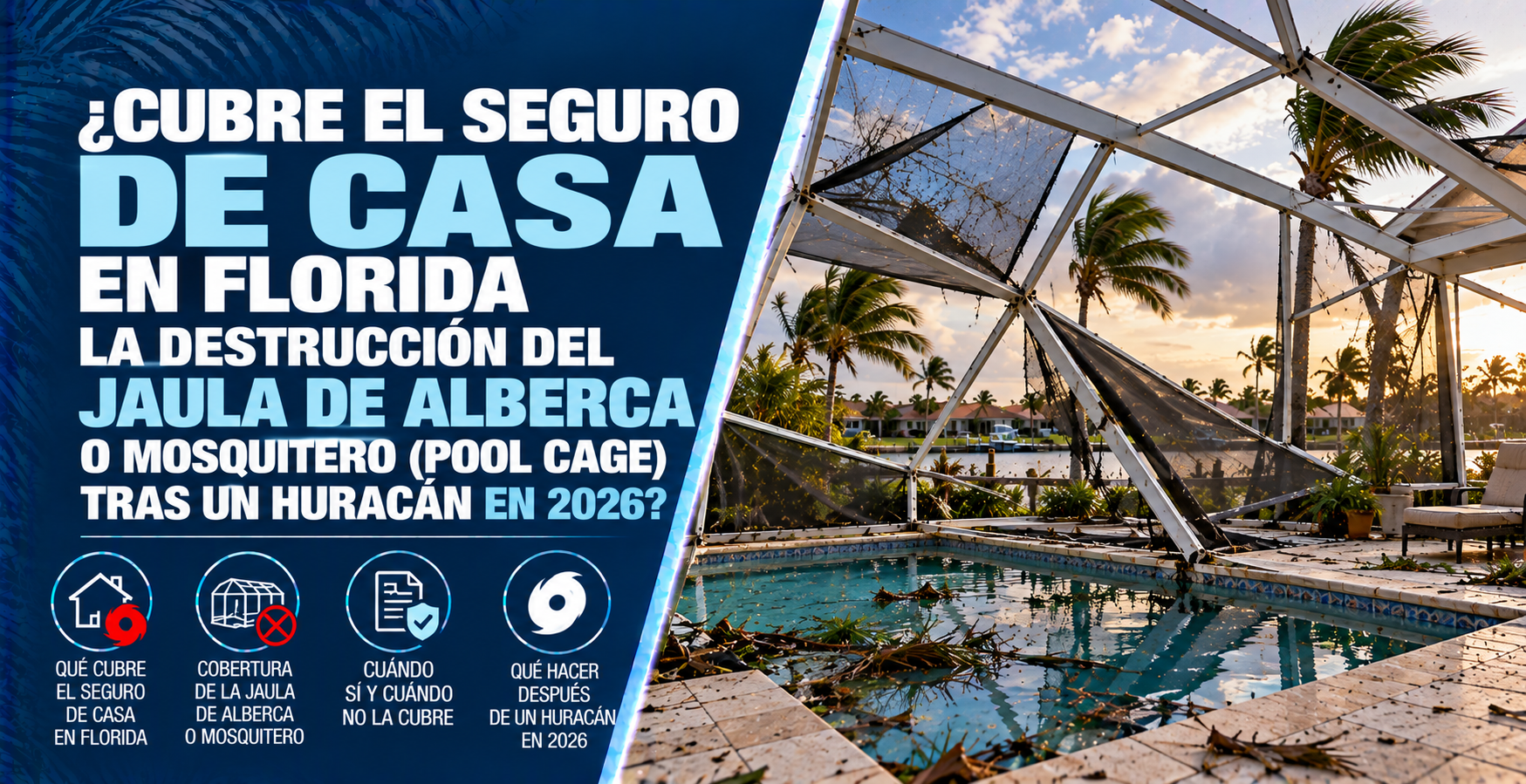
Seguro de Casa en Florida: Cobertura de Jaula de Alberca (2026)
¿Se destruyó tu jaula de alberca (pool cage) o mosquitero tras un huracán en Florida? Descubre por qué el seguro básico no lo cubre y cómo solucionarlo en 2026.
Read More →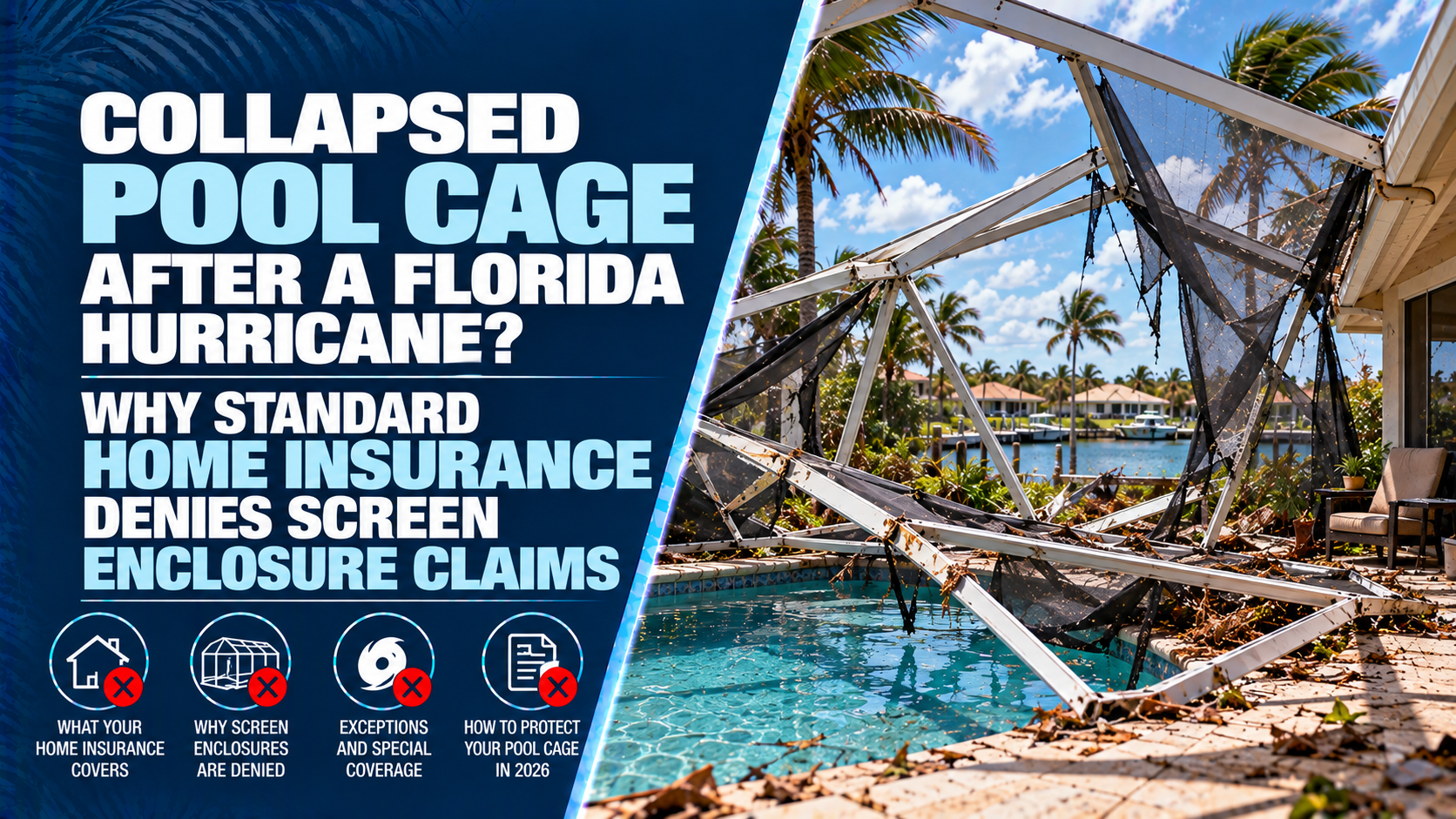
Florida Hurricane Pool Cage Damage: Screen Enclosure Claims
Collapsed pool cage or damaged patio screen after a Florida hurricane? Learn why standard home insurance denies screen enclosure claims and how to buy coverage.
Read More →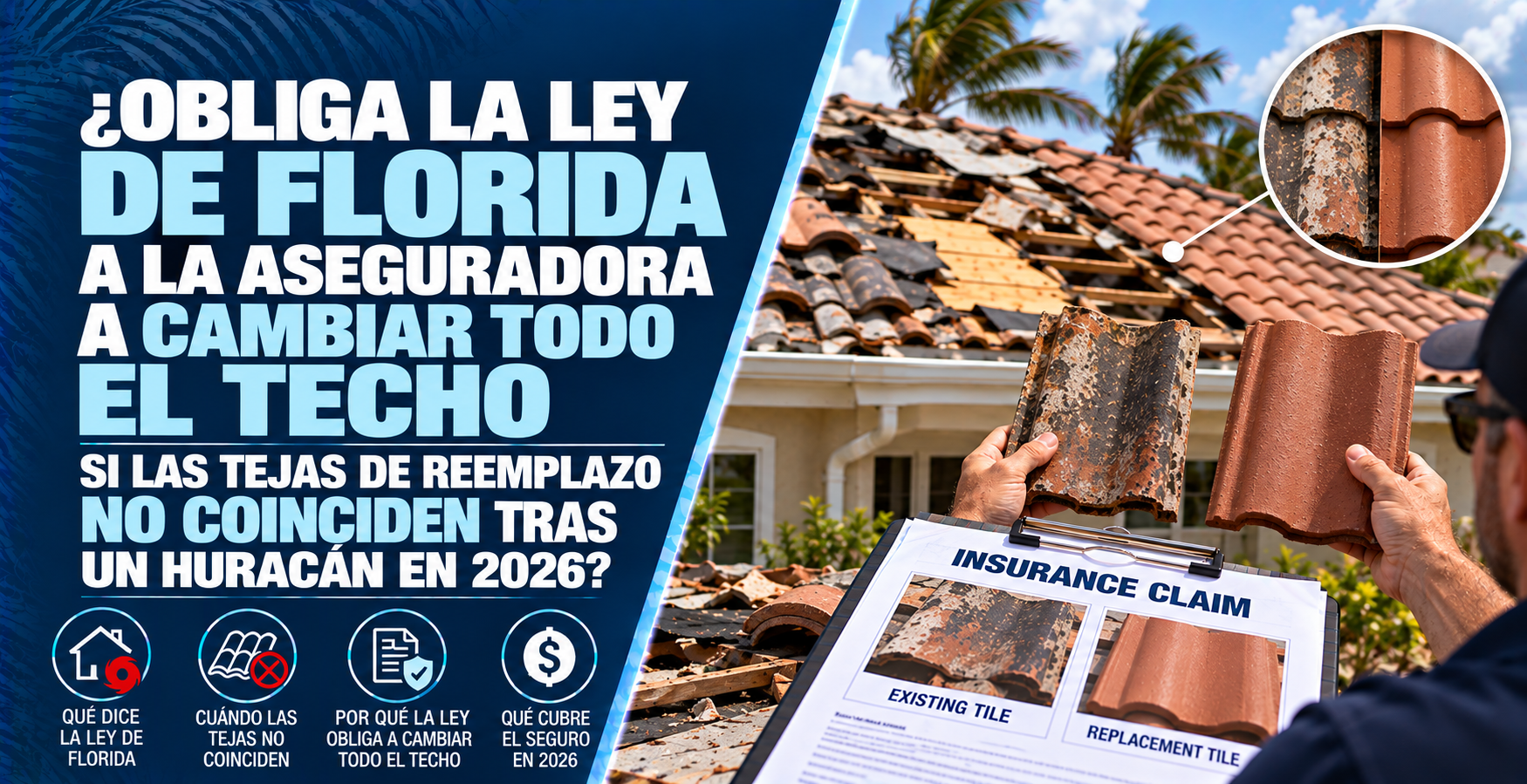
Ley de Coincidencia de Techos en Florida (2026): Tejas No Coincidentes
¿Daños en el techo tras un huracán en Florida? Descubre cómo la Ley de Coincidencia obliga a la aseguradora a cambiar todo el techo si las tejas no coinciden.
Read More →