Does Collision Cover Hit-and-Run Damage Without a Deductible? (2026)
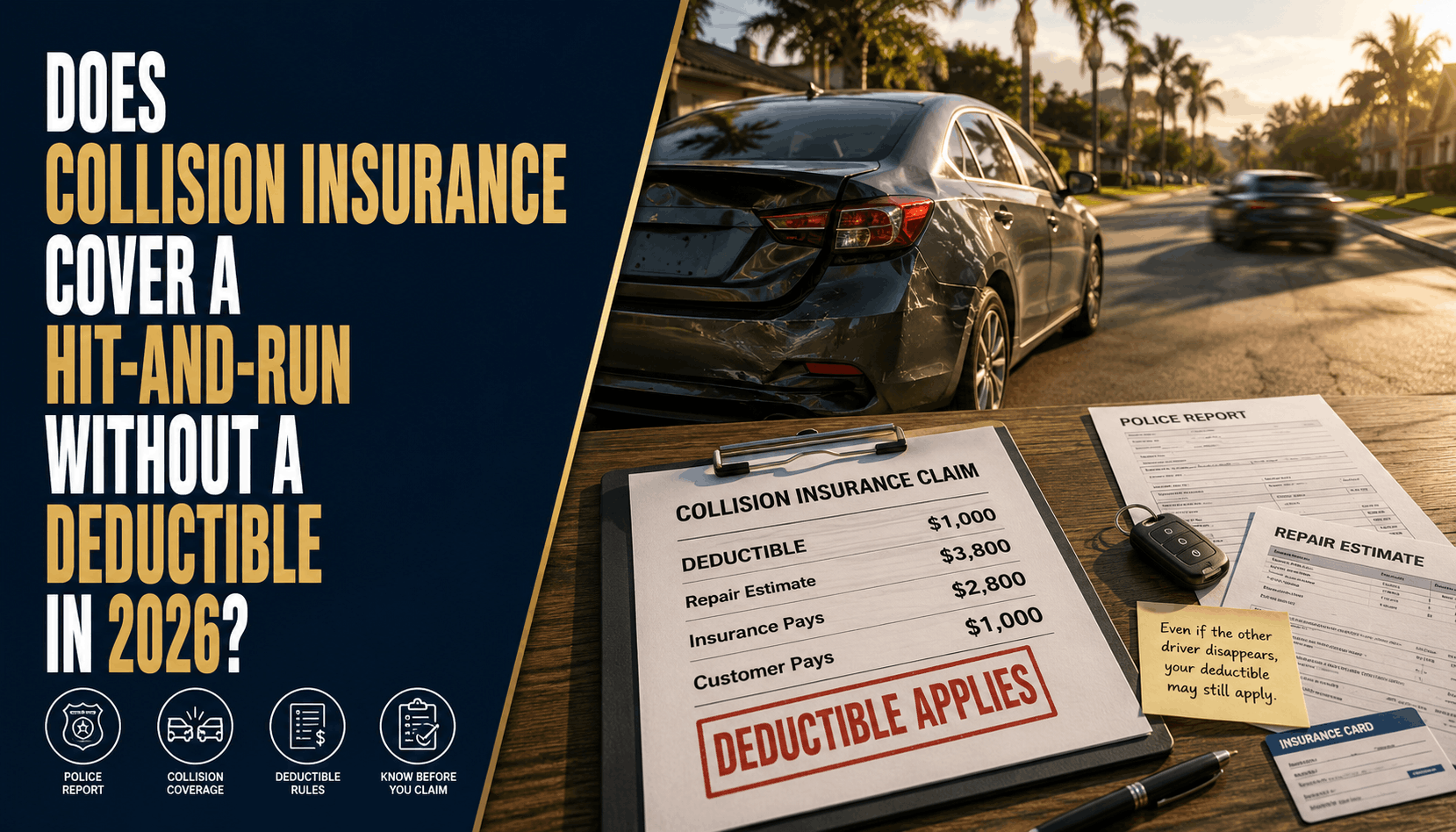
Does Collision Insurance Cover a Hit-and-Run Without a Deductible in 2026?
The Direct Answer
The short answer is almost always no—standard collision insurance will cover physical damage from a hit-and-run driver, but it almost never waives your policy deductible. A frequent and frustrating surprise for drivers after discovering a smashed bumper or side panel in a parking lot is realizing that even though they were completely at fault for 0% of the crash, collision coverage requires out-of-pocket payment first. When an unidentified driver strikes your parked or moving vehicle and flees the scene, your insurer treats the claim like any other collision loss. Unless you carry specialized Uninsured Motorist Property Damage (UMPD) coverage with a dedicated deductible waiver—or live in one of the few states with statutory deductible relief—you will have to pay your standard collision deductible (typically $500 to $1,000) out of pocket before your insurance carrier pays a single dollar toward repairs.
Absorbing a hefty deductible for damage caused by a phantom driver feels unfair, but understanding how auto contracts handle unidentified at-fault parties allows you to structure your policy to avoid paying out of pocket in the future.
1. The Mechanic of Hit-and-Run Claims: How Insurers Categorize the Peril
To understand why collision insurance enforces a deductible on hit-and-run incidents, you must examine how insurance contracts classify fault and party identification:
- Impact Driven: Because a hit-and-run involves your car colliding with another vehicle, it falls legally under the Collision section of your physical damage coverage, not Comprehensive.
- The Missing At-Fault Party: In a standard two-car accident where the other driver is at fault, your insurer can seek subrogation against the other driver’s insurance company to recover your deductible. In a hit-and-run, because the responsible party fled and cannot be identified, there is no third-party insurer to collect from.
- The Deductible Requirement: Because your carrier cannot subrogate the loss, you must fulfill your policy agreement by paying your selected collision deductible up front. If repairs cost $3,500 and your deductible is $1,000, your insurer pays $2,500, and you pay $1,000.
2. Exceptions to the Rule: How to Avoid Paying a Deductible
While basic collision coverage requires a deductible, specific endorsements and state laws can eliminate or reduce your out-of-pocket exposure following a hit-and-run:
- Uninsured Motorist Property Damage (UMPD): In states where available, UMPD is designed specifically to cover property damage caused by uninsured or hit-and-run drivers. UMPD often comes with a much lower statutory deductible (frequently $250) or no deductible at all.
- Collision Deductible Waivers (CDW): Some insurance carriers offer an optional Collision Deductible Waiver endorsement. If an uninsured or hit-and-run driver damages your vehicle, this waiver eliminates your deductible entirely, provided specific reporting requirements are met.
- State-Specific Mandates: A handful of states regulate how hit-and-run claims are processed. Depending on local statutes, drivers may be allowed to file hit-and-run damage under UMPD instead of Collision, drastically lowering out-of-pocket fees.
3. Crucial Steps to Take Immediately After a Hit-and-Run
To ensure your insurer accepts your claim under collision or UMPD without delays or disputes, you must document the incident thoroughly:
- Step 1: File an Immediate Police Report. Most insurance policies strictly require an official police report within 24 to 48 hours of a hit-and-run incident to verify that fraud did not occur.
- Step 2: Collect Physical Evidence & Photos. Take wide and close-up photographs of the damage, paint transfer from the fleeing vehicle, glass on the ground, and the precise location where your car was parked or struck.
- Step 3: Canvas for Security Video & Witnesses. Check surrounding businesses or residences for security cameras or ring doorbells that may have captured the fleeing vehicle's license plate, make, or model.
Why Working with an Independent Agency is Vital
Navigating complex claim rules, policy endorsements, and state-specific deductible waivers requires expert risk guidance. At Walker Insurance Agency, we ensure your auto portfolio is optimized so you aren't left holding the bill for someone else's negligence.
The Walker Advantage:
- Policy Structure Audits: We evaluate your current policy declarations to check if you carry Collision Deductible Waivers or Uninsured Motorist Property Damage protection.
- Deductible Optimization: We help you balance premium savings with out-of-pocket comfort, ensuring hit-and-run incidents don't cause sudden financial strain.
- Claims Advocacy: If you fall victim to a hit-and-run, our local agency assists you in gathering documentation, filing police reports, and working directly with adjusters to protect your coverage.
FAQ
1. Will my auto insurance rates go up after filing a hit-and-run claim?
Because a hit-and-run is a non-fault accident, many states prohibit insurers from raising your base rates solely for filing a single claim. However, multiple claims within a short timeframe can impact your non-demonstrated claim history or lead to a loss of a "claims-free" discount.
2. Can I use Comprehensive coverage for a hit-and-run if my car was parked?
No. Even if your car was legally parked and turned off when it was hit, impact with another vehicle is legally defined as a collision event. Comprehensive coverage applies to non-collision perils like theft, fire, animal strikes, or storm damage.
3. What if I find security footage that shows the hit-and-run driver's license plate later?
If security video or police investigation identifies the fleeing driver and their insurance policy, your carrier can pursue a subrogation claim against them. Once recovered, your insurer will reimburse your out-of-pocket collision deductible in full.
Protect Your Car Against Uninsured Drivers Today
Discovering hit-and-run damage on your car is stressful enough without getting hit by an unexpected $1,000 deductible bill. Structuring your policy with the right endorsements ensures that a fleeing driver doesn't wreck your personal monthly budget.
Take control of your auto insurance strategy today. Contact Walker Insurance Agency for a comprehensive coverage review. We provide the technical guidance and tailored endorsements you need to minimize out-of-pocket expenses and keep your vehicle fully protected on and off the road.
[GET A FREE QUOTE TODAY]
Call our personal lines division at +1-407-977-7100 or visit our office in Stuart, FL. Let us safeguard your property boundaries today.
Related Articles

Seguro de Casa en Florida: Restauración Histórica y Huracanes (2026)
¿Se dañó tu casa histórica por un huracán en Florida? Descubre por qué el seguro básico no cubre materiales originales y qué endosos necesitas en 2026.
Read More →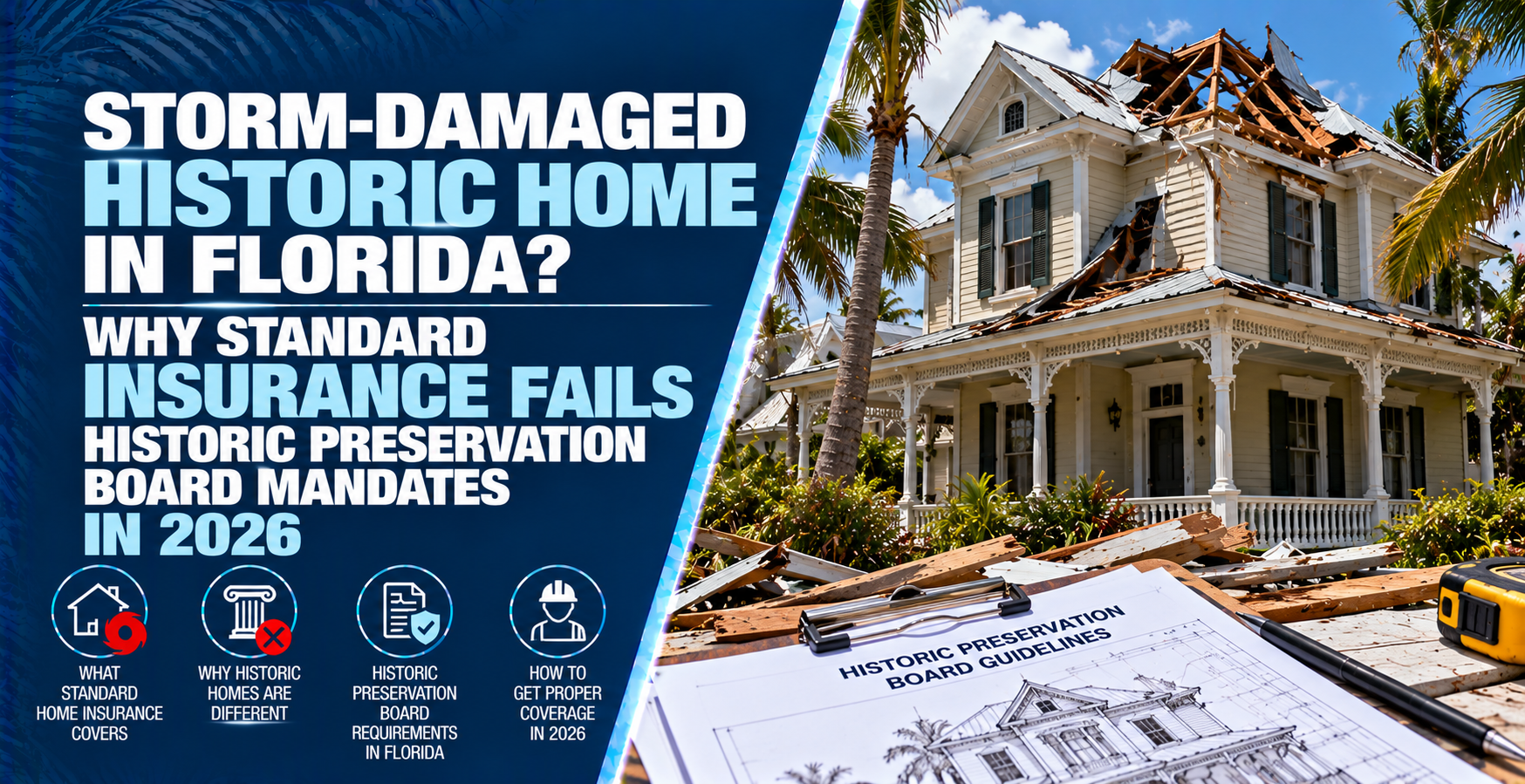
Florida Historic Home Insurance: Preservation Rules & Storm Claims
Historic home damaged by a Florida hurricane? Learn why standard home insurance fails Historic Preservation Board mandates and how Ordinance or Law coverage helps.
Read More →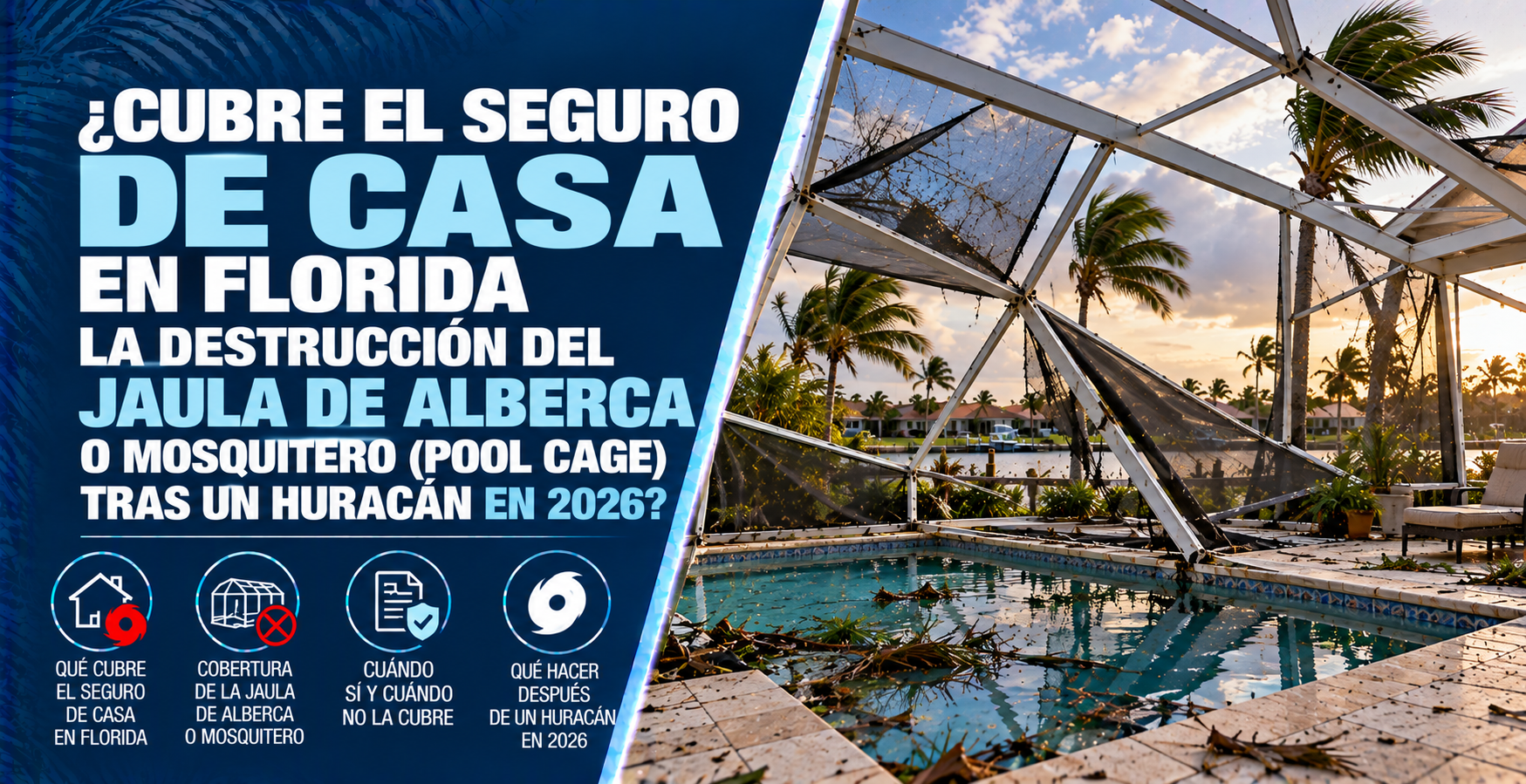
Seguro de Casa en Florida: Cobertura de Jaula de Alberca (2026)
¿Se destruyó tu jaula de alberca (pool cage) o mosquitero tras un huracán en Florida? Descubre por qué el seguro básico no lo cubre y cómo solucionarlo en 2026.
Read More →