Florida Historic Home Insurance: Preservation Rules & Storm Claims
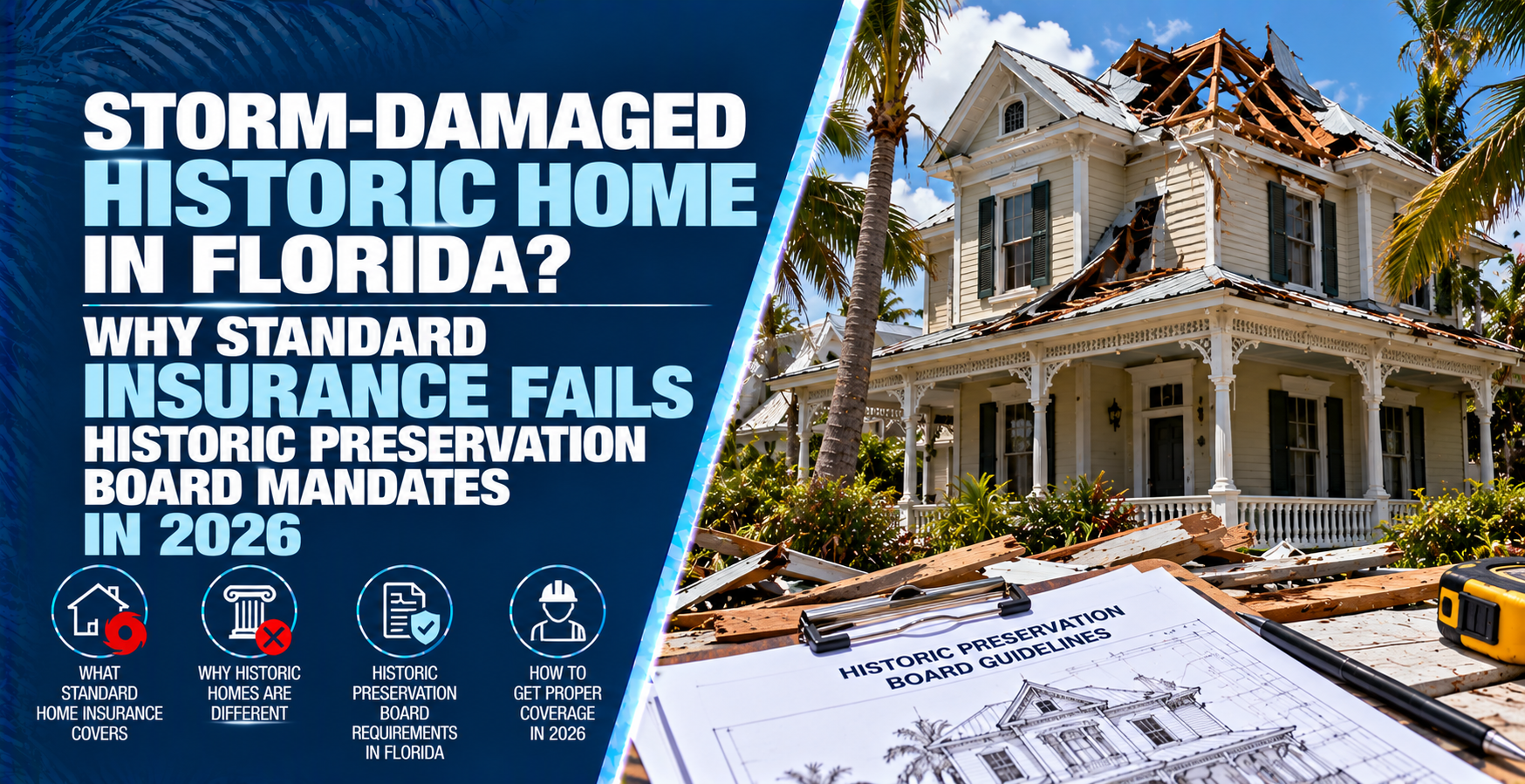
Storm-Damaged Historic Home in Florida? Why Standard Insurance Fails Historic Preservation Board Mandates in 2026
The Direct Answer
Here is a severe coverage gap facing owners of historic properties across Florida: if a hurricane or severe storm damages your historic home, standard homeowners insurance policies (HO-3) will only pay to replace damaged building materials with modern, standard-grade equivalents—leaving you 100% financially responsible for the tens or hundreds of thousands of dollars required to comply with strict Historic Preservation Board mandates.
Florida is home to vibrant historic districts in cities like St. Augustine, Key West, Pensacola, West Palm Beach, and Stuart. When a storm strikes a registered historic structure, local Historic Preservation Boards (HPBs) and architectural review guidelines legally prohibit modern shortcuts.
Preservation boards routinely mandate the use of period-accurate materials—such as custom milled solid wood trim, hand-cast clay roof tiles, historic wood sash windows, true lime-based mortar, and original masonry profiles.
Because standard insurance contracts calculate repairs based on modern Standard Construction Guidelines rather than historic preservation standards, property owners without specialized Ordinance or Law Coverage and Historic Structure Endorsements face massive out-of-pocket shortfalls during post-storm reconstruction.
Restoring a historic Florida landmark after a storm requires navigating a delicate balance between modern building codes, strict architectural preservation laws, and complex insurance policy language. Understanding how carrier valuation clauses apply to historic construction is essential for protecting your investment.
1. The Core Conflict: Standard Insurance Valuation vs. Historic Board Mandates
Standard homeowners insurance policies are designed to restore modern suburban homes to "like kind and quality" using off-the-shelf materials. When applied to historic architecture, this creates three major financial friction points:
- Modern Materials Clause: Standard policies approve stock vinyl siding, asphalt shingles, and modern aluminum-clad windows. However, historic boards will reject these materials, issuing code violation fines or work stop-orders if non-conforming materials are installed on a landmarked façade.
- Specialized Craftsmanship Requirements: Restoring historic plaster walls, timber framing, or decorative gingerbread woodwork requires specialized historic restoration contractors. Standard insurance claim software (Xactimate) defaults to standard drywall and trim labor rates, underfunding the specialized labor required by historic boards.
- The 50% FEMA Rule & Code Upgrades: If a historic home suffers substantial damage (exceeding 50% of its market value), local building codes require the entire structure to be brought up to current Florida Building Code standards (elevating the foundation, updating electrical systems, and retrofitting wind-mitigation anchors). Standard policies explicitly exclude these mandatory upgrades unless specific riders are attached.
2. Standard Home Insurance vs. Historic Property Coverage & Endorsements
Comparing a basic policy against specialized historic property protection reveals the drastic difference in claim payouts following a hurricane:
- Standard Homeowners Policy (HO-3): Reimburses repairs based on standard modern building materials and standard contractor labor rates. Denies coverage for custom architectural milling, historical board design compliance, and code-mandated structural upgrades.
- Specialized Historic Property Policy / Enhanced Ordinance or Law Rider: Reimburses the actual cost to repair or replace structural elements using period-accurate materials, historic artisan craftsmanship, and covers 25% to 50% (or more) in building code and preservation board compliance costs.
3. Essential Endorsements for Florida Historic Homes in 2026
To ensure your historic residence or commercial structure is fully protected against post-hurricane preservation mandates, your insurance portfolio should include three key coverages:
- Enhanced Ordinance or Law Coverage (Coverage Option 25% to 50%+): Pays for the increased cost of construction required to comply with local building codes, historic preservation board ordinances, and flood elevation mandates following a major loss.
- Guaranteed / Extended Replacement Cost Value (RCV) Endorsement: Waives standard policy cap limits, providing an extra 25% to 50% buffer above Coverage A limits to absorb the inflated costs of historic restoration materials and specialized labor.
- Agreed Value / Historic Materials Endorsement: Pre-establishes the agreed historical valuation of custom architectural features (such as stained glass, wrought iron, or original hardwood floors) prior to a loss, eliminating disputes over material authenticity during claim adjustments.
4. Steps to Safely Restore a Storm-Damaged Historic Home
Protecting your historic property’s architectural integrity and insurance settlement requires four proactive steps following a storm:
- Obtain an Immediate Historic Board Preservation Assessment: Contact your local city or county Historic Preservation Officer before initiating permanent repairs to secure a clear, written list of mandatory restoration guidelines.
- Hire an Experienced Historic Restoration General Contractor: Secure detailed, itemized bids from licensed contractors who specialize in historic preservation and are familiar with local board approval processes.
- Submit Board Guidelines Directly to the Insurance Adjuster: Provide your insurer's field adjuster with explicit documentation of local preservation mandates, demonstrating that modern building materials violate local municipal laws.
- Utilize Historic Tax Credits and Relief Grants: Coordinate your insurance settlement with available state and federal historic rehabilitation tax credits to offset unindemnified restoration costs.
Why Working with an Independent Agency Matters
Insuring registered historic homes, Victorian estates, or mid-century architectural landmarks in Florida demands specialized risk management expertise. At Walker Insurance Agency, we specialize in customizing high-value homeowners and historic property portfolios across coastal Florida.
- Historic Valuation & Exposure Audits: We evaluate your home's unique architectural features to ensure replacement cost limits reflect true historic craftsmanship and preservation costs.
- Access to Premier Specialty Insurers: We partner with A-rated carriers specializing in high-value historic homes, offering broad Ordinance or Law coverage, Agreed Value policies, and flexible restoration terms.
- Dedicated Claim Advocacy: We assist policyholders in presenting preservation board requirements to insurance adjusters, helping secure full funding for period-accurate materials.
Frequently Asked Questions
1. Does historic designation exempt my home from modern Florida wind-mitigation building codes?
While Florida Building Codes offer certain conditional exemptions for registered historic structures to preserve architectural integrity, structural safety standards (such as roof tie-downs and flood safety) must still be addressed. Ordinance or Law coverage is essential to cover code-mandated safety modifications.
2. What happens if the historic preservation board requires materials that are no longer manufactured?
If original materials (such as specific quarry stone or old-growth timber) are completely unavailable, historic boards usually permit historically accurate replica materials. A specialized historic property policy will fund custom milling or fabrication of these approved replica items.
3. Is historic home insurance significantly more expensive than standard insurance in Florida?
Because historic homes involve higher replacement costs, unique roofing materials, and specialized craftsmanship, premiums are higher than standard modern dwellings. However, attaching an Ordinance or Law Endorsement to a tailored policy provides vital financial protection for a modest increase in annual premium.
Protect Your Historic Home and Legacy Today
Don't wait for a hurricane to strike your historic property before learning that standard home insurance fails local preservation board rules. Securing proper Ordinance or Law coverage and historic riders ensures your home's unique character and market value remain completely protected in 2026.
Keep your historic property, your investment, and your family's heritage fully secure. Contact Walker Insurance Agency today for a fast, zero-pressure policy and historic property coverage review.
[GET A FREE FLORIDA HISTORIC HOME INSURANCE QUOTE TODAY]
Call our home insurance team at +1-407-977-7100 or visit our office at 789 SW Federal Hwy, Ste 201, Stuart, FL 34994. We are always ready to help you navigate Florida insurance options and protect your property.
Related Articles
Seguro de Casa en Florida: Restauración Histórica y Huracanes (2026)
¿Se dañó tu casa histórica por un huracán en Florida? Descubre por qué el seguro básico no cubre materiales originales y qué endosos necesitas en 2026.
Read More →
Seguro de Casa en Florida: Cobertura de Jaula de Alberca (2026)
¿Se destruyó tu jaula de alberca (pool cage) o mosquitero tras un huracán en Florida? Descubre por qué el seguro básico no lo cubre y cómo solucionarlo en 2026.
Read More →
Florida Hurricane Pool Cage Damage: Screen Enclosure Claims
Collapsed pool cage or damaged patio screen after a Florida hurricane? Learn why standard home insurance denies screen enclosure claims and how to buy coverage.
Read More →