Does Homeowners Insurance Cover Broken AC Units? (2026)
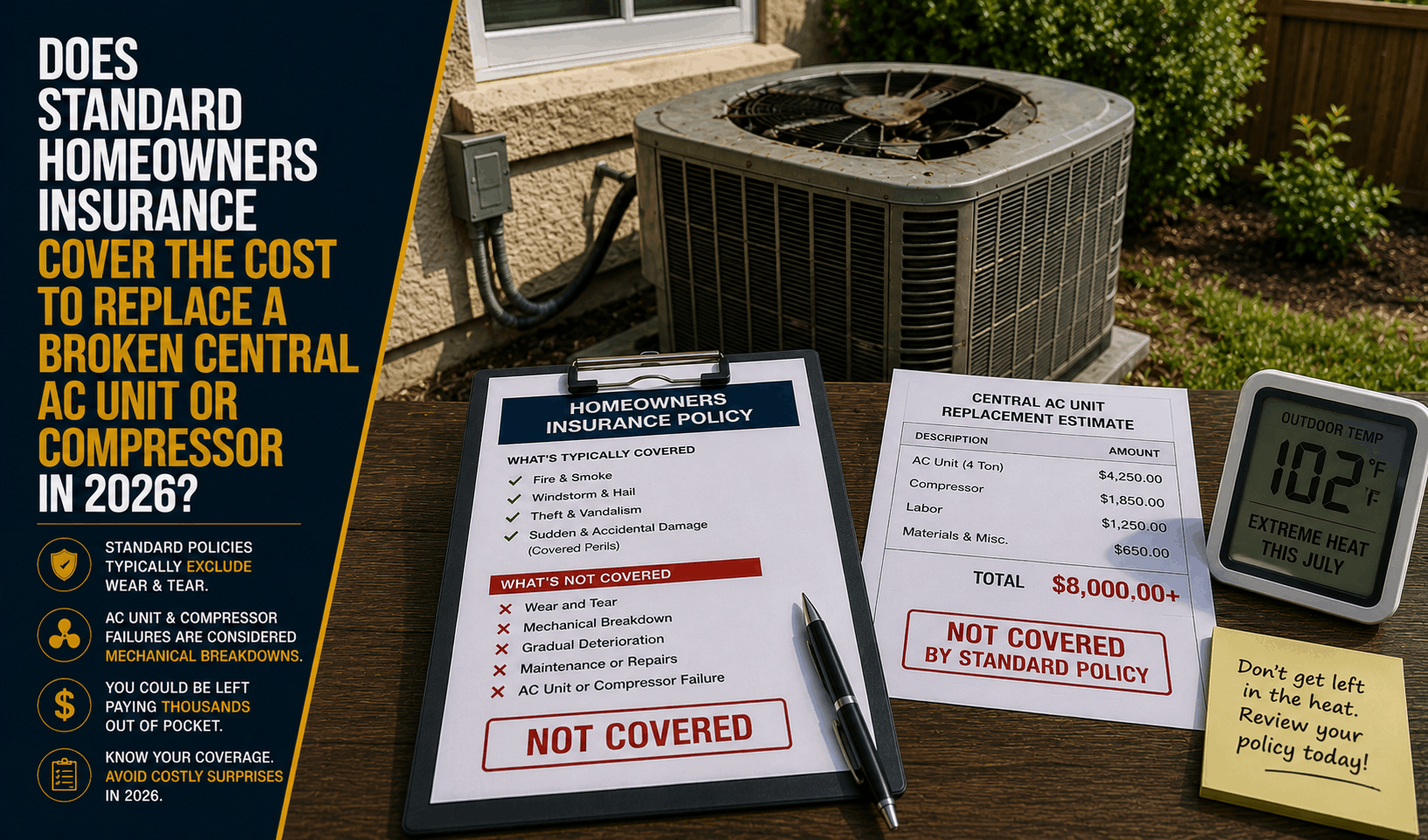
Does Standard Homeowners Insurance Cover the Cost to Replace a Broken Central AC Unit or Compressor in 2026?
The Direct Answer
The short answer is absolutely not—your standard homeowners insurance policy will not pay to repair or replace an air conditioning compressor or central AC unit that breaks down, overheats, or fails due to normal use. A frequent and costly misconception among homeowners is that a broken cooling system qualifies as an insurable property loss. In reality, standard home insurance is strictly designed to cover sudden, accidental, and external perils—such as a lightning strike, a house fire, or a fallen tree limb. If your AC unit fails simply because the compressor seized up from mechanical breakdown, age, or mechanical stress during a summer heatwave, your insurance claim will be denied instantly, leaving you to face an unexpected out-of-pocket replacement bill ranging from $1,500 to $4,500.
Relying on a standard property policy to bail you out of a routine mechanical failure is a major financial blindspot. Understanding where your land-based property liability stops is essential to protecting your household savings.
1. The Peril Penalty: Sudden Accidental Damage vs. Mechanical Breakdown
To understand why your insurance carrier will deny a standard compressor claim, you have to look at the legal definition of an insurable event under a standard HO-3 policy. Home insurance distinguishes sharply between external disasters and internal wear.
The path to a claim approval depends entirely on the root cause of the damage. When extreme summer heat causes an AC unit to run continuously, the resulting stress often leads to a system failure. If that failure is triggered by an external, covered peril—such as a direct lightning strike during a thunderstorm or a house fire—the insurance company will approve the claim and cover the structural property damage. However, if that same heatwave simply causes the internal mechanical components to overheat, seize, or suffer a voltage spike from routine grid overload, the policy's universal exclusions for mechanical breakdown, wear and tear, and lack of maintenance immediately apply, resulting in a swift and absolute claim denial.
2. The Maintenance Trap: How Unreported Neglect Voids Potential Claims
Even in scenarios where an external factor might have contributed to a system failure, insurance adjusters look closely at the physical history of the HVAC unit. Neglecting basic upkeep can completely invalidate an otherwise legitimate claim.
- The Proving Ground: If a power surge occurs during a storm, the adjuster will inspect the compressor coils and electrical contacts. If they discover the unit failed because the coils were choked with years of dirt, leaves, or rust—causing the motor to run hot long before the surge—the claim can be denied based on a failure to maintain the property.
- The Secondary Damage Danger: A blown compressor is bad enough, but a failing AC unit can cause secondary disasters, such as a frozen evaporator coil melting and flooding your drywall or ceiling. While the policy might pay to repair the damaged drywall, it will still exclude the cost of fixing the actual mechanical components of the air conditioner that caused the leak.
3. How to Bridge the AC Coverage Gap Before the System Fails
You do not have to leave your home's climate control entirely exposed to mechanical risks. Protecting your comfort and your wallet requires implementing a targeted protection strategy that sits outside your basic property insurance framework:
- Step 1: Add an Equipment Breakdown Endorsement. Many independent insurance carriers allow you to add an "Equipment Breakdown" rider to your existing homeowners policy for a very small annual fee (typically $25 to $50 per year). This specific endorsement bridges the gap by extending coverage to sudden mechanical and electrical failures of major home systems, including HVAC compressors, appliances, and smart home tech.
- Step 2: Maintain a Documented HVAC Service History. Schedule professional AC tune-ups twice a year—once in the spring before the heat hits, and once in the autumn. Keep every receipt and itemized invoice. If a surge or lightning strike does occur, having proof of pristine mechanical health makes it incredibly difficult for an insurance adjuster to claim the breakdown was caused by pre-existing wear and tear.
- Step 3: Consider a Dedicated Home Warranty Policy. If your HVAC system is aging but still functional, a structured home warranty plan can provide direct financial relief for routine wear-and-tear mechanical breakdowns that standard home insurance refuses to touch. Ensure the contract explicitly covers compressor replacement and refrigerant top-offs without low restrictive caps.
Why Working with an Independent Agency is Vital
Managing the technical border between property damage and mechanical failure requires specialized contract knowledge. At Walker Insurance Agency, we ensure your policy is built to withstand both environmental storms and internal mechanical stress.
The Walker Advantage:
- Endorsement Optimization: We evaluate your current home policy to determine if an Equipment Breakdown endorsement can be seamlessly attached, giving you mechanical coverage without the high cost of standalone warranties.
- Claim Advocacy: If your AC unit is damaged by an external event like lightning or a power surge, we act as your direct advocate, helping you gather the technical HVAC diagnostic reports needed to secure a swift claim approval.
- Comprehensive Portfolio Reviews: We analyze your home’s age, location, and mechanical assets to guarantee there are no hidden operational vulnerabilities that could leave you vulnerable to a costly summer emergency.
FAQ
1. Will my insurance company pay for the expensive refrigerant if my system needs to be replaced due to a covered storm?
Yes. If the underlying cause of the AC damage is a fully covered peril (like lightning or fire) and the entire unit must be replaced, the policy will cover the necessary parts, labor, and the specialized refrigerant required to bring the new system to full operational status, subject to your standard deductible.
2. Does standard home insurance cover an AC unit that is stolen from my backyard?
Yes. Theft is a standard covered peril on almost all comprehensive homeowners insurance policies (HO-3). If someone cuts your lines and steals the outdoor condensing unit from your property, your policy will cover the replacement cost of the unit, minus your applicable deductible.
3. What should I do immediately if I suspect my AC was blown by a lightning strike or power surge?
First, call a licensed HVAC technician to inspect the unit and request an itemized diagnostic report that explicitly states the damage was caused by an electrical surge or voltage spike rather than mechanical age. Second, take photos of any visible scorch marks on the unit or breaker panel. Finally, contact your insurance agent to file the claim with the technician’s written evaluation in hand.
Keep Your Cool with True Property Protection
A broken air conditioner in the middle of a heatwave is an immediate household crisis, but discovering that your insurance policy treats it as a routine maintenance issue makes a bad situation significantly worse. True financial protection requires structuring your coverage to handle both the elements outside and the machinery inside.
Take control of your home’s mechanical protection today. Contact Walker Insurance Agency for a comprehensive policy audit. We provide the specialized guidance you need to eliminate hidden coverage exclusions, add vital equipment protections, and keep your household safe and comfortable all year long.
[GET A FREE QUOTE TODAY]
Call our personal lines division at +1-407-977-7100 or visit our office in Stuart, FL. Let us safeguard your property boundaries today.
Related Articles
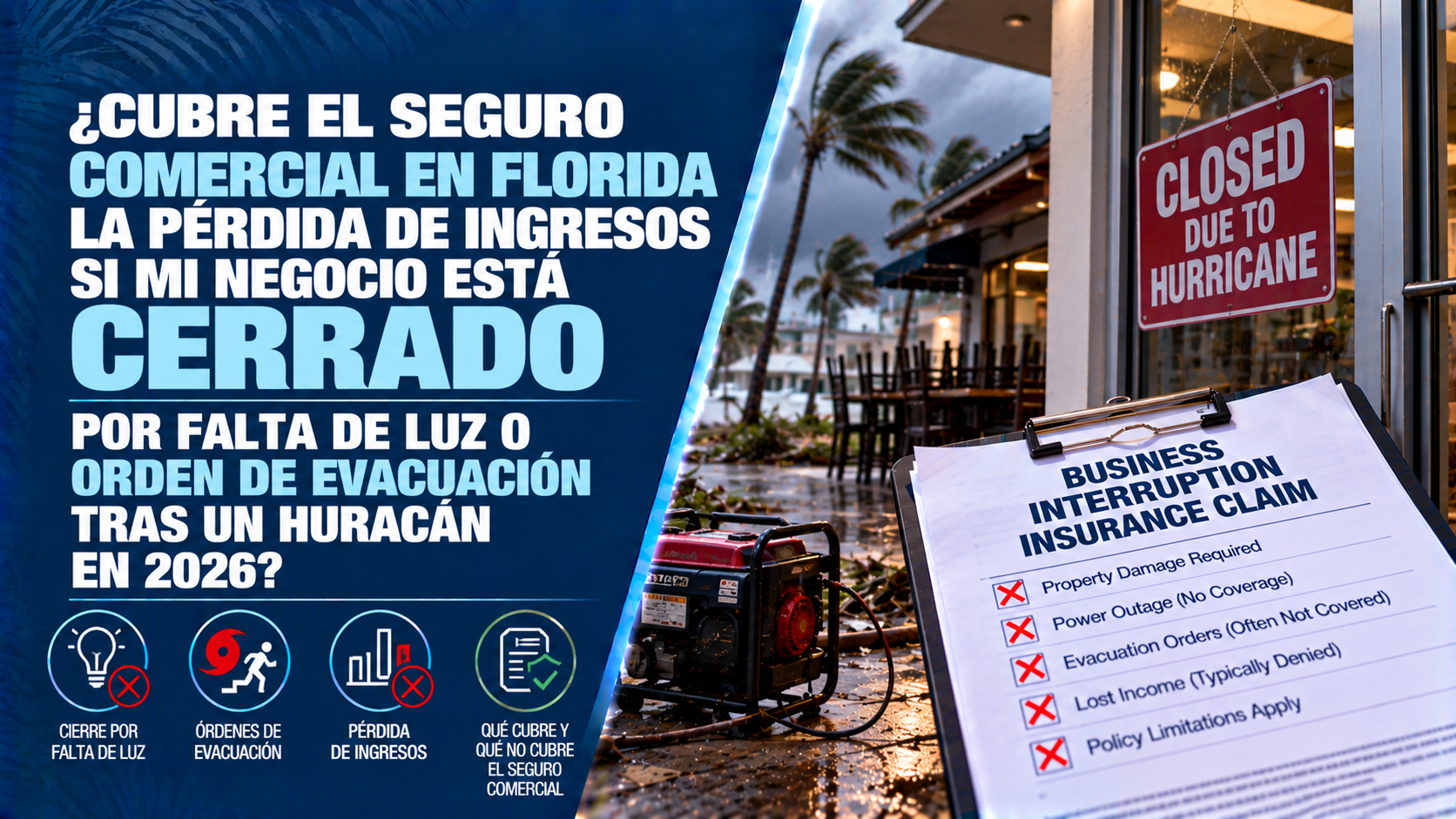
Seguro Comercial en Florida: Pérdida de Ingresos sin Daños (2026)
¿Negocio cerrado por apagones o evacuación tras un huracán en Florida? Descubre por qué el seguro estándar deniega la pérdida de ingresos y cómo protegerte en 2026.
Read More →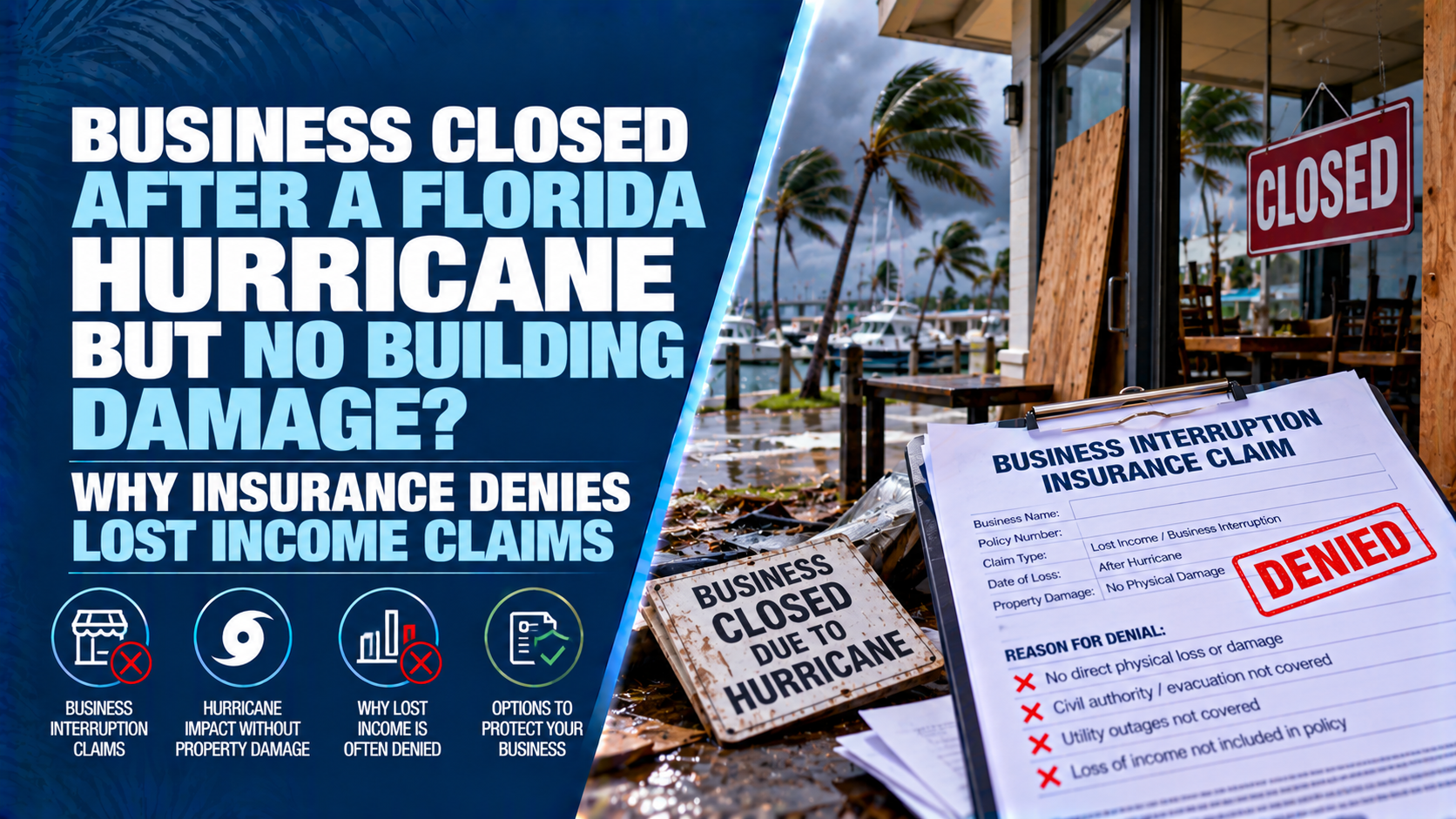
Florida Business Interruption Insurance: Lost Income Claims (2026)
Business forced to close after a Florida hurricane despite no building damage? Learn why insurance denies lost income claims and how to secure protection.
Read More →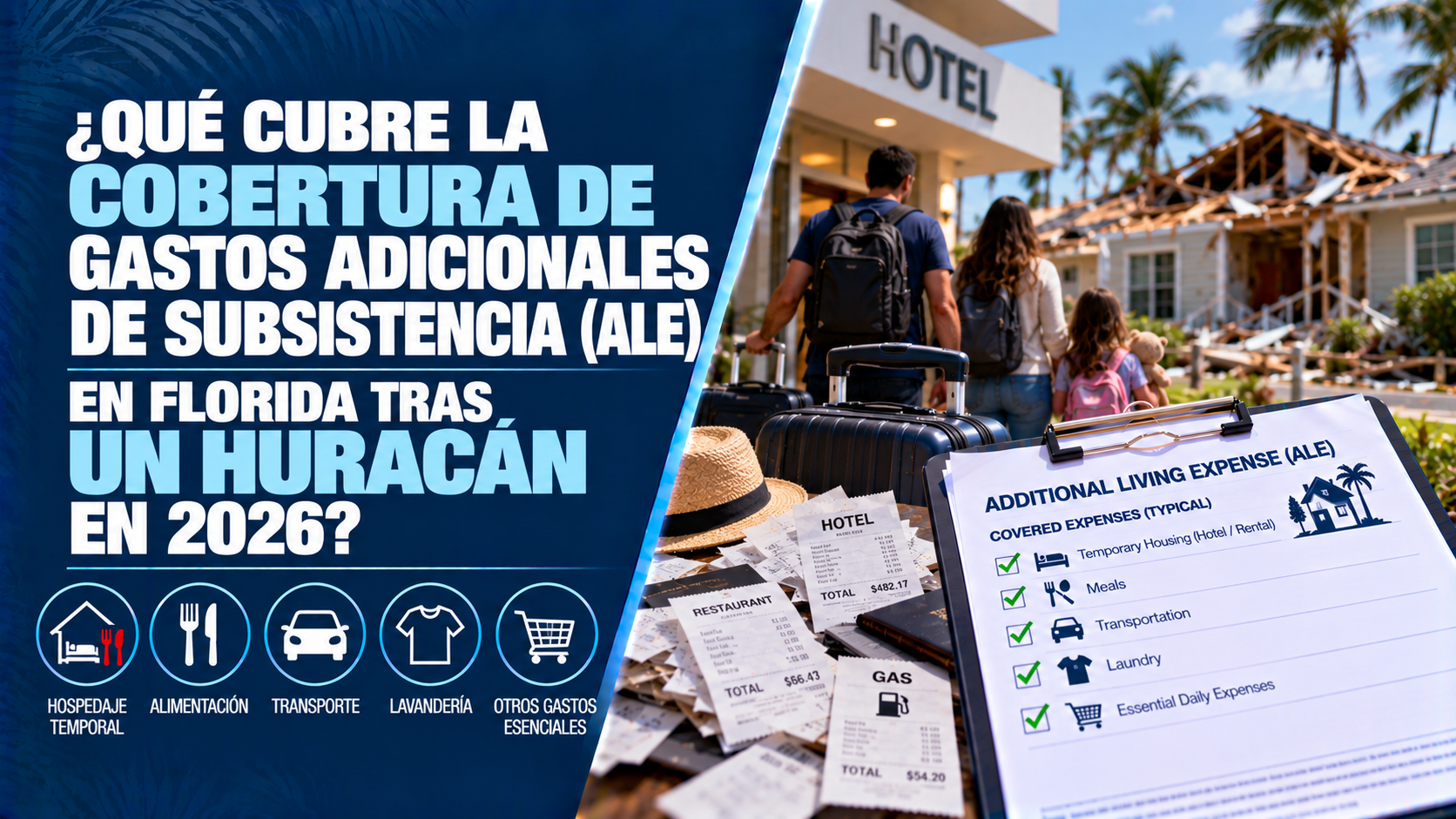
Cobertura ALE en Florida (2026): Gastos tras un Huracán
¿Desplazado por un huracán en Florida? Descubre qué cubre la cobertura ALE (Pérdida de Uso), reglas de recibos y límites de reembolso en 2026.
Read More →