EV Inverter Failed or Screen Black? Why Insurance Pays $0
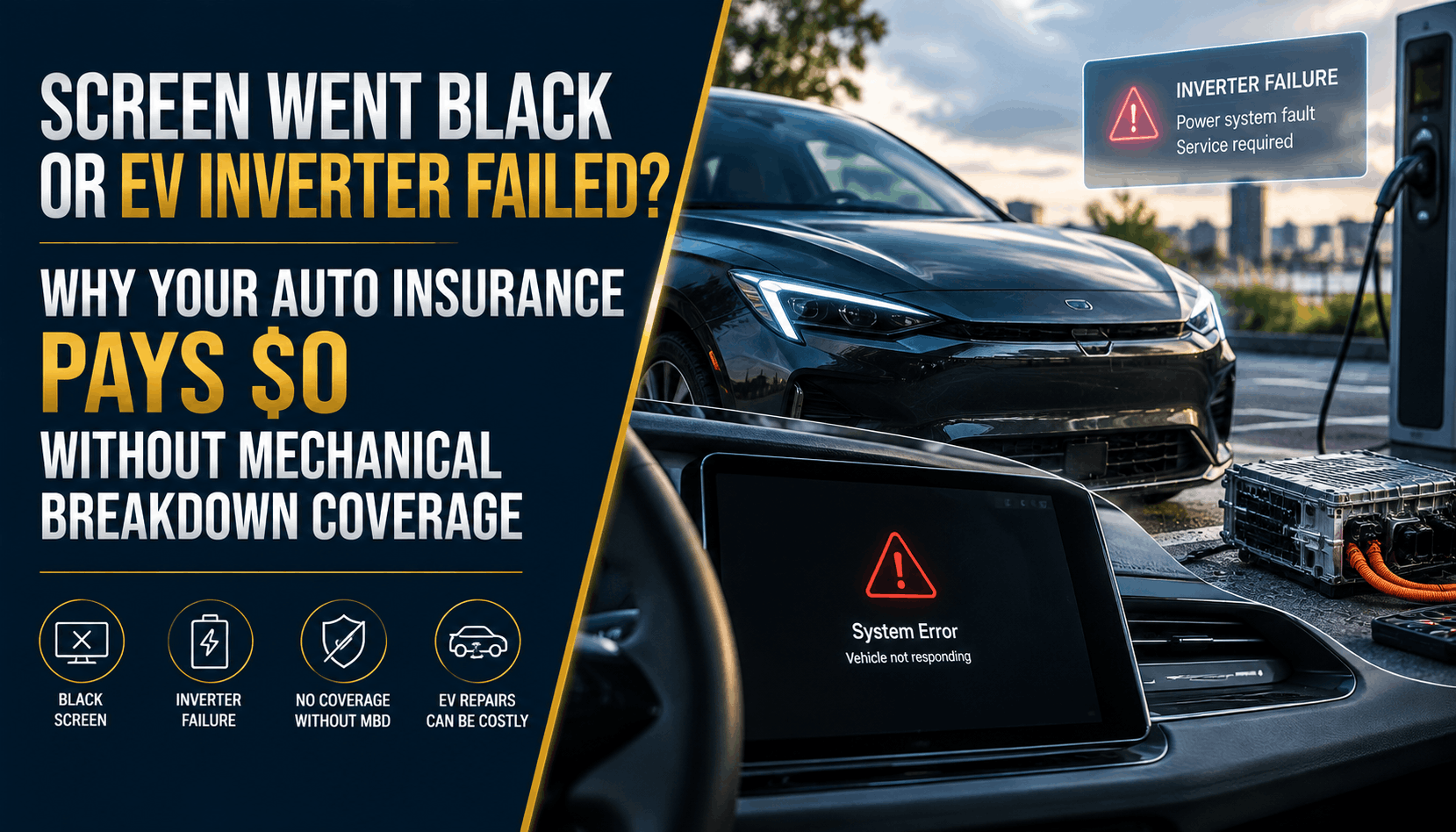
Screen Went Black or EV Inverter Failed? Why Your Auto Insurance Pays $0 Without Mechanical Breakdown Coverage
The Direct Answer
Here is a shocking financial surprise facing modern electric vehicle (EV) and high-tech car owners in 2026: if your infotainment touchscreen suddenly goes pitch black or your high-voltage inverter fails, your standard full-coverage auto insurance policy will pay $0 toward the repair bill.
Standard comprehensive and collision insurance policies cover vehicle damage caused by external, accidental events—such as crashes, hail, fallen tree branches, vandalism, or theft.
They explicitly exclude internal mechanical, electrical, and software failures.
Unless your vehicle is still protected by its original manufacturer warranty or you have added Mechanical Breakdown Insurance (MBI) to your auto policy, expensive EV component failures are considered standard wear and tear or internal mechanical breakdown—leaving you with repair bills that can easily reach $3,000 to over $10,000 out of pocket.
Driving a tech-forward vehicle or EV feels incredible until a primary control screen freezes completely dark or an inverter error message strands you on the highway. Discovering that your "full coverage" insurance policy offers zero protection for these high-tech component meltdowns turns a mechanical headache into a severe financial blow.
1. Why Standard Auto Insurance Excludes Mechanical & Tech Failures
Car insurance is designed as risk-transfer protection against unexpected external accidents, not as a maintenance plan for vehicle components.
Insurance adjusters classify vehicle damage under two main buckets:
- Covered (Collision & Comprehensive): Structural body damage from a two-car collision, cracked windshields from road debris, flood damage, fire, or animal impacts.
- Excluded (Wear, Tear & Electrical Breakdown): Inverter failure, high-voltage battery degradation, electric motor burnout, faulty wiring harnesses, sensor failures, and infotainment touchscreen computer crashes.
If your EV inverter burns out while cruising down the interstate, there was no physical collision or external force involved. Therefore, comprehensive and collision coverage will immediately deny the claim.
2. High-Tech EV Failures: The Real Cost of Modern Repairs
Modern electric vehicles and late-model smart cars are essentially high-performance computers on wheels. When complex electronic modules fail outside of factory warranty periods, the replacement costs are steep:
- 1. Main Control Screen / Infotainment Failure: In many EVs, the central touchscreen controls everything—from windshield wipers and climate control to gear selection and speedometer displays. Replacing a fried central unit costs between $1,500 and $4,500.
- 2. High-Voltage Inverter Malfunction: The inverter converts direct current (DC) from the battery into alternating current (AC) for the electric motor. A fried inverter renders the car completely un-driveable, costing $3,000 to $9,000+ in parts and specialized labor.
- 3. On-Board Charger (OBC) Failure: If your vehicle’s internal charging system fails, your car cannot accept power from wall chargers or home units. Replacements routinely run $2,500 to $5,000.
- 4. Advanced Driver-Assistance Systems (ADAS) & Sensors: A failing radar unit, camera module, or steering sensor array can trigger cascading system lockouts, costing $1,000 to $3,500 to replace and recalibrate.
3. The Solution: Mechanical Breakdown Insurance (MBI)
If you want protection against expensive electronic and mechanical failures after your manufacturer warranty expires, you do not have to rely solely on pricey dealer extended warranties. You can add Mechanical Breakdown Insurance (MBI):
- What Is Mechanical Breakdown Insurance? MBI is an optional policy endorsement or standalone coverage offered by auto insurers that pays for repairs to major mechanical and electrical components (engine, transmission, EV drivetrain, inverter, steering, cooling, and electrical systems) after a breakdown.
- MBI vs. Dealer Extended Warranties: MBI is regulated insurance protection that typically costs a fraction of a dealership extended warranty. Instead of rolling $3,000 or $4,000 into your financed auto loan with interest, MBI is paid in small monthly installments on your auto policy.
- Flexible Repair Facilities: Unlike some dealer warranties that lock you into specific dealership service bays, MBI usually allows you to take your EV or vehicle to any licensed repair facility or certified brand specialist.
Why Working with an Independent Agency Matters
Navigating the line between physical damage coverage, extended warranties, and mechanical breakdown riders requires expert policy structure. At Walker Insurance Agency, we help drivers audit their auto policies to ensure their modern vehicles are protected against both highway crashes and electronic breakdowns.
- EV & Tech-Specific Guidance: We evaluate your vehicle's current warranty status, mileage, and high-tech features to determine if Mechanical Breakdown Insurance makes sense for your vehicle.
- Comprehensive Auto Audits: We review your collision, comprehensive, roadside assistance, and liability limits so you never face unexpected coverage gaps after a breakdown or crash.
- Local, Dedicated Support: Located in Stuart, Florida, our independent team offers honest, personalized service to keep your vehicles, your family, and your savings protected.
Frequently Asked Questions
1. Does Mechanical Breakdown Insurance cover routine maintenance?
No. MBI does not cover routine maintenance items such as tire replacements, brake pad wear, cabin air filters, wiper blades, or routine alignments. It specifically covers unexpected mechanical, electrical, and component breakdowns.
2. Can I get MBI for an older car or high-mileage EV?
Insurers generally require you to enroll in Mechanical Breakdown Insurance while your vehicle is relatively new or low-mileage (for example, under 15,000 miles or less than 15 months old). Once added, the coverage can often be renewed up to 100,000 miles or 7 years.
3. What should I do if my EV screen goes black on the road?
Safely pull off the road or onto the shoulder. Try performing a system soft reset if your owner’s manual provides a steering wheel button sequence for rebooting the screen. If the vehicle is un-driveable due to an inverter or main computer failure, call Roadside Assistance for a flatbed tow to a certified repair facility.
Protect Your EV and Tech Investment Today
Don't wait for a central screen blackout, charging failure, or inverter malfunction to find out that standard auto insurance leaves you unprotected. Adding Mechanical Breakdown Insurance gives you complete financial protection against high-tech repair bills.
Keep your vehicle, high-tech components, and savings safe. Contact Walker Insurance Agency today for a fast, zero-pressure auto policy audit. We are here to help you secure complete vehicle protection.
[GET A FREE AUTO INSURANCE AUDIT TODAY]
Call our auto insurance team at +1-407-977-7100 or visit our office at 789 SW Federal Hwy, Ste 201, Stuart, FL 34994. We are always ready to protect your car, your technology, and your financial peace of mind.
Related Articles
Seguro de Casa en Florida: Cobertura de Jaula de Alberca (2026)
¿Se destruyó tu jaula de alberca (pool cage) o mosquitero tras un huracán en Florida? Descubre por qué el seguro básico no lo cubre y cómo solucionarlo en 2026.
Read More →
Florida Hurricane Pool Cage Damage: Screen Enclosure Claims
Collapsed pool cage or damaged patio screen after a Florida hurricane? Learn why standard home insurance denies screen enclosure claims and how to buy coverage.
Read More →
Ley de Coincidencia de Techos en Florida (2026): Tejas No Coincidentes
¿Daños en el techo tras un huracán en Florida? Descubre cómo la Ley de Coincidencia obliga a la aseguradora a cambiar todo el techo si las tejas no coinciden.
Read More →