Florida ALE Coverage 2026: Hurricane Displacement & Receipts
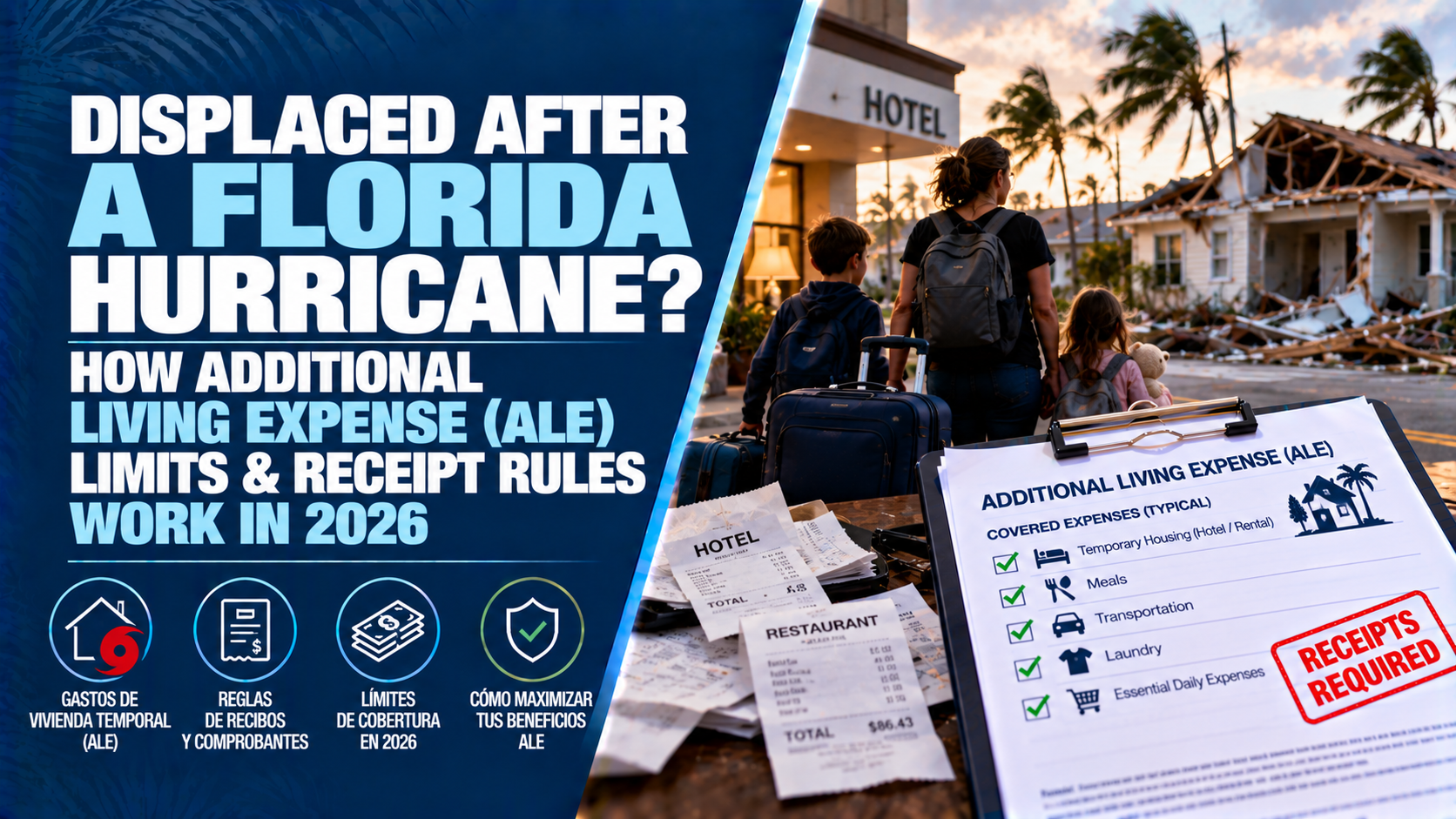
Displaced After a Florida Hurricane? How Additional Living Expense (ALE) Limits & Receipt Rules Work in 2026
The Direct Answer
Here is a vital financial lifeline for Florida homeowners forced out of their homes after a storm: if a hurricane renders your property uninhabitable due to structural wind damage, roof collapse, or prolonged power failure caused by physical damage, your policy’s Additional Living Expense (ALE) coverage—also known as Coverage D (Loss of Use)—reimburses the increase in your normal living costs while your home is being repaired.
However, receiving your full ALE reimbursement in 2026 is not automatic. Insurance carriers enforce strict policy limits, time caps, and itemized receipt documentation rules.
ALE does not pay your standard everyday expenses; it only pays the extra costs incurred above your baseline living expenses (such as hotel bills, short-term rental leases, restaurant meals, expanded commuting costs, and pet boarding).
If you fail to save itemized, dated receipts or exceed your policy's time and dollar limits, you could end up paying thousands of dollars out of pocket for temporary housing and food while waiting for home restoration.
Evacuating your neighborhood and dealing with severe hurricane damage is exhausting. Navigating temporary housing rules while keeping your family safe requires a clear understanding of how your insurance policy handles Loss of Use claims.
1. How Additional Living Expense (ALE) Coverage Works
Additional Living Expense (Coverage D) is built into standard Florida homeowners insurance policies (HO-3 and HO-6). It is designed to maintain your family’s standard of living when a covered loss forces you out of your dwelling.
- The "Uninhabitable" Trigger: ALE triggers only when a covered peril (like windstorm damage or a fallen tree) causes sufficient physical damage to make the home unsafe or unlivable, or when a civil authority orders an evacuation due to surrounding storm damage.
- The "Increase Above Normal" Principle: ALE only reimburses expenses that exceed your normal household budget. For example, if you normally spend $600 a month on groceries at home, but spend $1,400 a month eating out because your temporary rental lacks a working kitchen, ALE reimburses the $800 difference.
- Policy Time and Dollar Caps: ALE limits are usually capped at a percentage of your primary structural coverage (typically 10% to 20% of Coverage A) or restricted to a maximum timeframe (e.g., 12 to 24 months of displacement).
2. Standard Baseline Budget vs. Reimbursable ALE Expenses
Understanding what qualifies as an allowable Additional Living Expense helps prevent claim delays and denied reimbursement requests:
- Reimbursable ALE Expenses: Temporary hotel or motel stays, short-term furnished apartment rentals, laundry expenses (if your rental lacks a washer/dryer), increased grocery and restaurant costs, pet boarding fees, temporary utility hookups, and extra mileage driven for work or school due to relocation.
- Non-Reimbursable Standard Expenses: Your primary home mortgage, property taxes, standard home insurance premiums, regular monthly utility bills, or routine car payments. You must continue paying your primary fixed costs while displaced.
3. Strict Receipt and Documentation Rules for 2026
To ensure your Loss of Use claims are approved quickly by your adjuster, follow these four strict documentation protocols:
- Keep Every Itemized Receipt: Summary credit card slips are frequently rejected. You must provide itemized receipts showing individual food items, room rates, hotel taxes, and dates of service.
- Establish Your Baseline Budget: Gather pre-storm utility bills, grocery receipts, and monthly expense records to help the adjuster calculate your baseline living expenses accurately.
- Log Relocation Mileage: Track all extra miles driven between temporary housing, work, your children's schools, and your damaged property using a daily mileage log.
- Obtain Written Short-Term Lease Contracts: If renting a temporary home or apartment, secure a formal written lease agreement detailing monthly rent, included utilities, and lease duration for your insurance company.
4. Steps to Maximize Your ALE Benefits During Storm Recovery
Protecting your family's budget while displaced by a major hurricane involves three proactive steps:
- Request an Immediate ALE Emergency Advance: Ask your insurer for an initial ALE advance check at the start of your claim to cover hotel deposits, first month's rental fees, and initial emergency supplies.
- Track Your Coverage Limits Regularly: Monitor your total ALE spending against your policy's Coverage D limit so you don't exhaust your housing funds before home repairs are complete.
- Coordinate Contractor Schedules with Housing Timelines: Stay in close contact with your general contractor to ensure home restoration stays on schedule and aligns with your remaining ALE benefit window.
Why Working with an Independent Agency Matters
Navigating post-storm displacement, temporary housing negotiations, and Loss of Use claims requires dedicated local support. At Walker Insurance Agency, we help Florida homeowners manage every phase of storm recovery safely and effectively.
- Policy Limit Audits: We review your Coverage D limits and displacement clauses to ensure you have adequate financial protection before hurricane season begins.
- Claim Guidance & ALE Support: We help policyholders organize receipts, interface with adjusters, and secure advance displacement funds without unnecessary delays.
- Comprehensive Property Coverage: We partner with top-rated Florida carriers to structure policies with broad Loss of Use limits and flexible temporary housing terms.
Frequently Asked Questions
1. Does ALE pay my mortgage while my Florida home is being rebuilt?
No. You are still legally obligated to pay your primary mortgage, property taxes, and home insurance while your home is under repair. ALE only reimburses the additional costs incurred for temporary replacement housing and living expenses.
2. What happens if civil authorities order a mandatory evacuation?
If local civil authorities order a mandatory evacuation due to a covered storm, most Florida homeowners policies provide up to two weeks of ALE coverage—even if your home suffers no direct physical damage.
3. Can I stay with friends or family and still collect ALE benefits?
ALE reimburses actual out-of-pocket expenses proven by receipts. If you stay with family for free, you cannot claim temporary housing costs. However, you can still submit receipts for extra food, extended commuting fuel, and laundry expenses resulting from the displacement.
Protect Your Family and Your Budget Today
Don't wait for a hurricane displacement to learn how your Loss of Use coverage operates. Reviewing your policy limits and receipt requirements today ensures your family remains safe, comfortable, and financially secure during storm recovery.
Keep your home, your family, and your financial future fully protected. Contact Walker Insurance Agency today for a fast, zero-pressure homeowners insurance and ALE coverage review.
[GET A FREE FLORIDA HOME INSURANCE QUOTE TODAY]
Call our home insurance team at +1-407-977-7100 or visit our office at 789 SW Federal Hwy, Ste 201, Stuart, FL 34994. We are always ready to help you navigate Florida insurance options and protect your property.
Related Articles
Seguro Comercial en Florida: Pérdida de Ingresos sin Daños (2026)
¿Negocio cerrado por apagones o evacuación tras un huracán en Florida? Descubre por qué el seguro estándar deniega la pérdida de ingresos y cómo protegerte en 2026.
Read More →
Florida Business Interruption Insurance: Lost Income Claims (2026)
Business forced to close after a Florida hurricane despite no building damage? Learn why insurance denies lost income claims and how to secure protection.
Read More →
Cobertura ALE en Florida (2026): Gastos tras un Huracán
¿Desplazado por un huracán en Florida? Descubre qué cubre la cobertura ALE (Pérdida de Uso), reglas de recibos y límites de reembolso en 2026.
Read More →