NFIP Coverage Below Elevated Florida Homes: What to Check
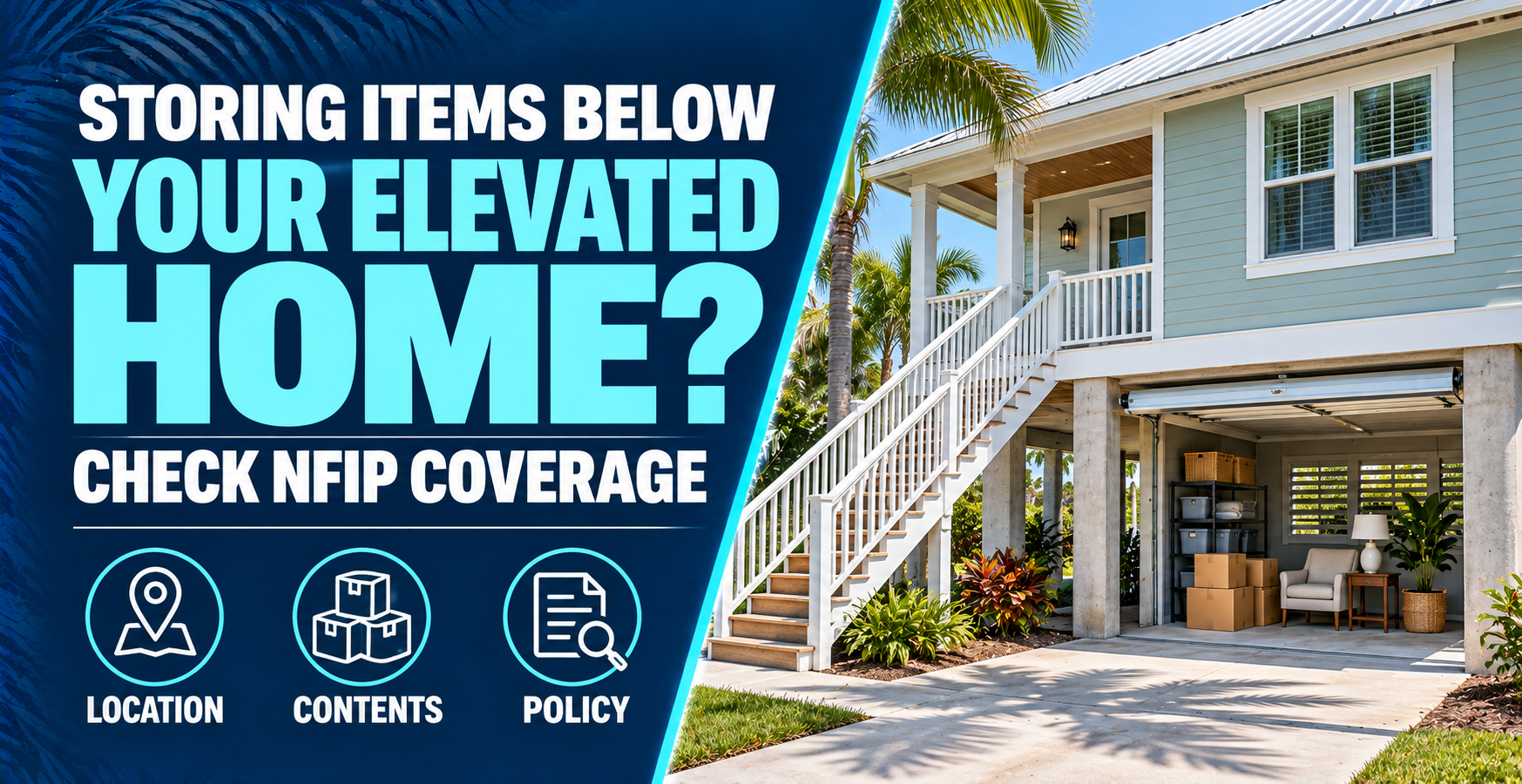
Storing Belongings Below an Elevated Florida Home? Check Your NFIP Coverage First
The Direct Answer
A flood policy’s contents limit does not mean all belongings stored beneath an elevated home are covered. Under the NFIP Dwelling Form, special restrictions apply below the lowest elevated floor of certain post-FIRM buildings in specified flood zones, and in basements regardless of zone. Ask the insurer which rule applies to your building and the exact storage area before relying on the policy.
When the personal-property restriction applies, its eligible list is narrow: certain air conditioners, clothes washers and dryers, and non-walk-in food freezers and their food. Installation and power-connection conditions also matter. A sofa, television or box of keepsakes should not be treated as covered merely because you purchased contents insurance. Private flood policies require their own review.
The convenient space beneath a raised Florida house can gradually become a second storage room. Seasonal furniture, spare electronics and moving boxes accumulate there without anyone revisiting the insurance. Before adding more belongings, make the storage location part of the conversation. Photos, a short item list and the actual policy can make that review much more useful.
1. Identify the Space Before Interpreting the Policy
Describe the area precisely: open space, enclosed storage, garage, crawlspace or a lower room. Include how the floor sits relative to the surrounding ground. A familiar household label is not a policy classification. FloodSmart’s glossary defines a basement by whether the floor is below ground on all sides; describing a room as finished does not answer that question.
For an elevated home, ask whether the post-FIRM and flood-zone conditions in the policy’s lower-floor provisions apply. Request an explanation tied to the property’s records and actual construction, rather than assuming that all homes on pilings receive identical treatment. Bring any existing elevation certificate, relevant building information and current declarations.
Illustrative scenario: a homeowner calls a lower enclosure a garage and assumes that makes the stored furniture insurable. Instead of relying on that label, the owner sends photographs and asks the insurer to identify the relevant provision. The result should be a documented explanation of the location’s treatment, not a guess based on the room’s name.
Keep insurance and permitted use as separate questions. Ask the local building or floodplain office about proposed physical changes when appropriate; a coverage discussion is not permission to finish or convert a lower enclosure. Do not alter flood openings or utilities based solely on an insurance article.
2. Separate the Building from the Belongings Inside It
Review building coverage and contents coverage separately. An insured piece of installed equipment does not establish that furniture beside it is insured. Identify which coverage was purchased, then ask how the item and its exact location are treated. The NFIP Dwelling Form’s building and personal-property provisions have separate lists and conditions.
Make a location-specific list rather than one household total. For each item, note its description, purpose, where it sits, and whether it is installed and connected for normal operation. Ask the insurer about the applicable provision before drawing conclusions from the item’s name. Keeping an appliance in a box is a different fact to disclose from using it in its functioning location.
Illustrative scenario: an operating clothes dryer and a television are both in the same lower enclosure. The owner should ask about them separately. Their proximity does not mean they have the same insurance treatment, even when a single flood damages both. This example illustrates the review process and does not promise payment for either item.
Once eligibility is understood, discuss the applicable limit, deductible and settlement provisions. Buying a larger contents limit does not remove a location restriction. If considering private flood insurance, ask for the corresponding wording and exclusions; do not apply an NFIP explanation automatically to another contract.
3. Make a Storage Plan Before Flooding Is Forecast
Decide what can be stored elsewhere before the lower area fills up. FloodSmart recommends moving furniture and valuables to a high, safe place when flooding is predicted, while putting personal safety first. Plan access, lifting help and a destination early rather than assuming everything can be moved during an emergency.
Use a simple room-by-room record showing where important belongings are actually kept. Photograph the lower space and retain purchase information where available. Documentation helps explain what existed and where; it does not turn an excluded item into insured property.
Illustrative scenario: a family keeps photo albums and spare electronics under its raised home. Before storm season, it moves those items to a more suitable location and reviews the policy. The family should not interpret that move as a guarantee of coverage at the new location; the contract still controls.
Do not assume that plastic bins, shelves or a finished wall change the policy’s location classification. If an incident has already happened, follow the insurer’s reporting instructions, document damage when safe and ask before discarding items. Avoid entering floodwater or operating electrical equipment in an unsafe area.
Why an Independent Agency Conversation Helps
A useful insurance review connects the property description with the actual wording and your storage decisions. Ask an independent agent to explain the options rather than treating a quote as proof that every item is protected. Walker’s flood insurance service page discusses NFIP and private flood options, giving you a starting point for questions about how they differ.
Questions to Bring to Walker
Bring the current policy, photographs and item list. Ask: Which lower-floor provision applies here? Have I purchased contents coverage? How are these particular belongings treated? What changes if I compare a private flood proposal? Use Walker’s home insurance information for the separate homeowners discussion and Walker’s contact page to arrange a conversation. Availability and coverage remain subject to the offered policy.
FAQ
1. Does increasing my contents limit cover furniture beneath the house?
Not by itself. A limit is not an override of a location-based restriction. Ask whether the relevant NFIP lower-floor provision applies and whether the furniture is insured in that area. Review eligibility first, then the limit and deductible; do not buy a higher amount assuming it changes the eligible property.
2. Is every lower enclosure treated as a basement?
No. The NFIP’s basement definition and its rules for certain elevated buildings are distinct. Classification requires facts about the floor, surrounding ground and building. Ask the insurer to identify the rule applicable to your address instead of assuming that a garage door, finished surface or local nickname settles it.
3. Are private flood policies subject to the same list?
Read the private contract separately. Ask how it defines the lower area, what property it insures there, and which exclusions apply. Walker’s flood service page discusses both channels, but that does not establish identical wording or the availability of a particular feature for your property.
Review the Location Before Filling the Space
An organized storage area is useful only when you understand its risks. Contact Walker Insurance Agency to discuss the location and your flood insurance documents before relying on a contents limit alone.
REQUEST A FLOOD INSURANCE REVIEW OR QUOTE
Call +1 407-977-7100 or contact Walker online. Office: 789 SW Federal Highway, Suite 201, Stuart, FL 34994. This is general educational information; the issued policy and facts of a loss determine coverage. A quote request does not put coverage in force.
Sources
eCFR — 44 CFR Part 61, Appendix A(1), NFIP Dwelling Form; II.C and III.A.8/III.B.5
https://www.ecfr.gov/current/title-44/chapter-I/subchapter-B/part-61/appendix-Appendix%20A(1)%20to%20Part%2061
FloodSmart — Glossary
https://www.floodsmart.gov/definitions
FloodSmart — Minimize Flood Damage
https://www.floodsmart.gov/prepare/minimize-damage
NFIP for Agents — Owning Real Estate and Basement Flooding
https://agents.floodsmart.gov/articles/owning-real-estate-and-basement-flooding
Walker Insurance Agency — Flood Insurance
https://www.walkerinsuranceagency.com/services/flood-insurance
Related Articles
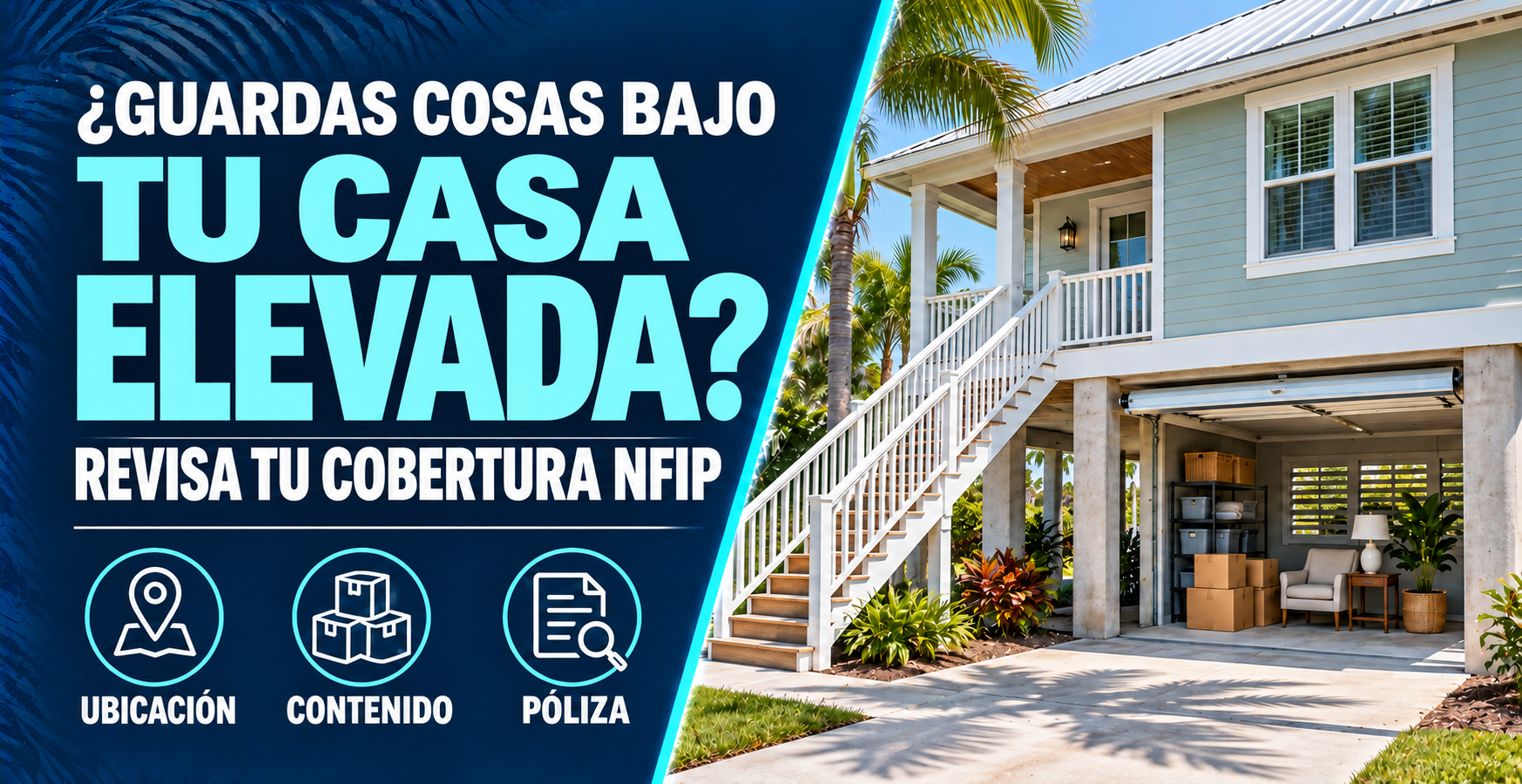
NFIP Bajo una Casa Elevada: Qué Revisar en Florida
¿Guardas pertenencias bajo una casa elevada en Florida? Revisa restricciones del NFIP, cobertura de contenido y documentos antes de depender de tu seguro.
Read More →
Revisa tu Umbrella Antes de Cambiar el Seguro de Casa o Auto
¿Cambias el seguro de casa o auto en Florida? Revisa límites básicos, requisitos de la aseguradora y fechas de vigencia de tu umbrella antes del cambio.
Read More →
Umbrella Review Before Switching Home or Auto Insurance
Switching home or auto insurance in Florida? Review your umbrella policy’s underlying limits, insurer requirements and effective dates before making the change.
Read More →