The HOA Surprise Bill: Why Home Insurance Pays Only $1,000 for Loss Assessments (2026)
The HOA Surprise Bill: Why Your Standard Home Insurance Pays Only $1,000 for Neighborhood Loss Assessments
The Direct Answer
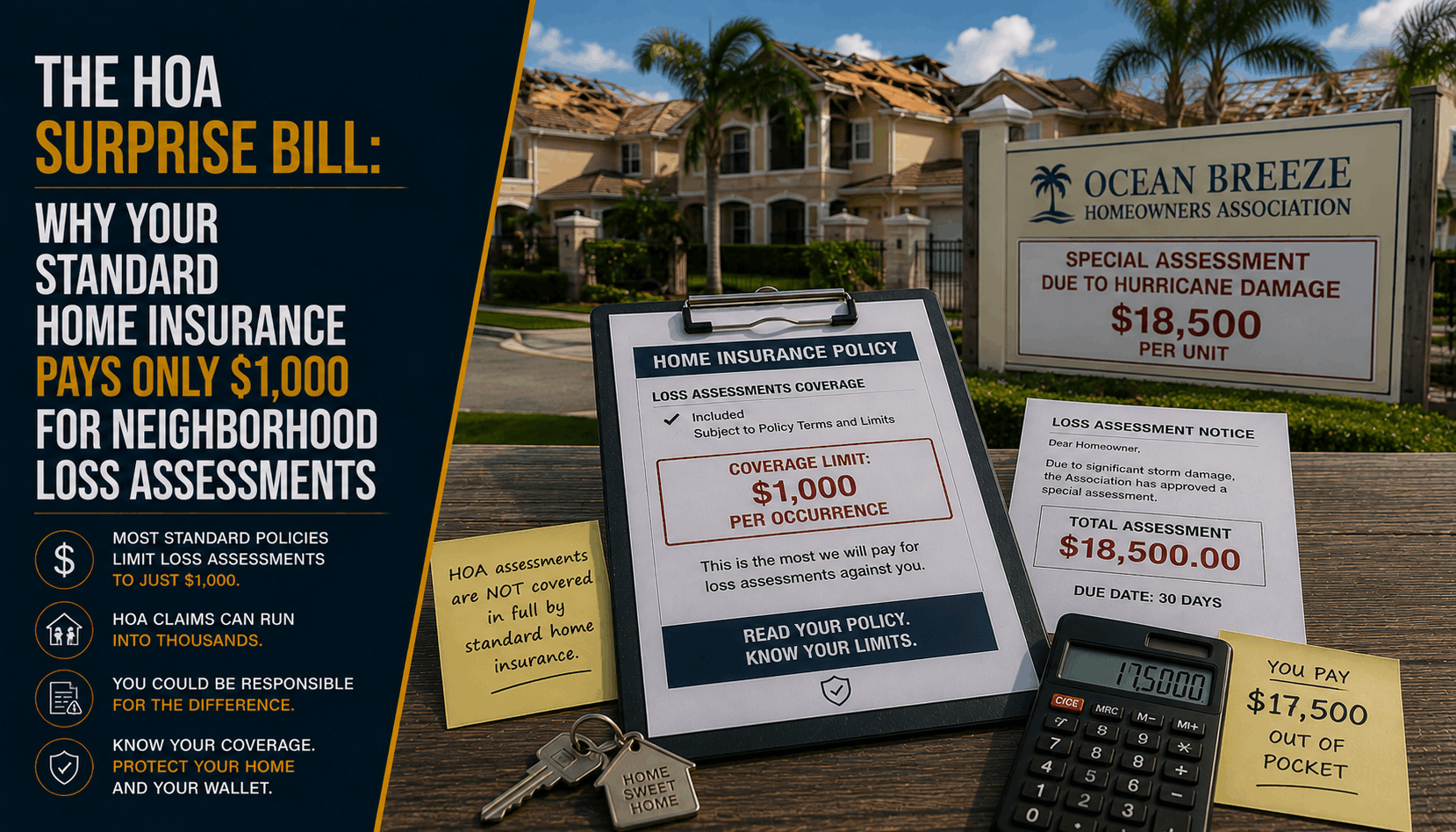
The short answer is yes, standard homeowners insurance (HO-3 and HO-6 policies) almost always caps Loss Assessment coverage at a baseline of just $1,000. If you live in a Homeowners Association (HOA), condo community, or planned development, your HOA master policy covers shared spaces like roofs, clubhouses, elevators, and swimming pools. However, when catastrophic storm damage, severe fire, or a massive liability lawsuit exceeds the HOA master policy’s coverage limits—or when the master policy deductible reaches tens of thousands of dollars—the HOA board issues a special loss assessment. This divides the remaining bill equally among all property owners. While your individual home or condo insurance includes Loss Assessment Coverage, the default sub-limit hidden in standard policy contracts is usually capped at just $1,000. In 2026, with skyrocketing commercial property master deductibles and inflated repair costs, individual loss assessments frequently range from $5,000 to over $20,000 per homeowner—leaving you personally responsible for the thousands of dollars your standard policy refuses to cover.
Opening your mail to find an unexpected multi-thousand-dollar bill from your HOA board is a nightmare scenario for any property owner. Understanding how loss assessment caps function—and how to expand your protection for just a few dollars a year—is vital for anyone living in a managed community.
1. What Is an HOA Loss Assessment and How Does It Happen?
Living in a condo or HOA community means sharing ownership of common elements. When major losses occur in these shared spaces, the financial responsibility is passed down to individual owners under three main scenarios:
- Catastrophic Property Damage Exceeding Master Limits: If a severe storm, hail event, or fire destroys a shared clubhouse, parking garage, or condo roof system, and the repair cost exceeds the HOA master policy’s total coverage limit, the remaining balance is assessed to all unit owners.
- Massive Master Policy Deductibles: In response to modern insurance market shifts, many HOAs carry high percentage deductibles on their master policies (such as 2% to 5% of building value for storm or hurricane damage). A $100,000 master deductible split among 20 owners results in a mandatory $5,000 loss assessment per homeowner.
- Liability Claims & Personal Injury Lawsuits: If a major accident occurs on common property—such as a catastrophic injury at the community pool or a severe trip-and-fall on unmaintained walkways—and the court settlement exceeds the HOA’s master liability limits, every homeowner is legally assessed to pay the difference.
2. Why the Standard $1,000 Insurance Limit Is a Dangerous Trap in 2026
Standard HO-3 (single-family HOA) and HO-6 (condo) insurance policies include Loss Assessment coverage as a built-in baseline, but that default limit has remained unchanged for decades while property repair costs have surged:
Most homeowners mistakenly assume that having "Loss Assessment" listed on their declarations page means they are fully covered. In reality, when an HOA board issues a $12,000 assessment per owner to cover a master deductible or property gap, a standard policy with a default limit pays its maximum of $1,000, leaving the homeowner to pay the remaining $11,000 out of pocket.
Furthermore, HOA master insurance policies in 2026 carry significantly higher deductibles and stricter exclusions than ever before. As HOA boards face tightening budgets and underfunded reserve funds, special assessments are increasingly used as the primary financial mechanism to bridge massive coverage gaps.
Crucial Rule: Insurance policies will only cover a loss assessment if the underlying damage was caused by a covered peril under your personal policy (such as fire, windstorm, or lightning). Assessments issued for routine deferred maintenance or standard operational shortfalls are strictly excluded from insurance coverage.
3. How to Protect Yourself from Surprise HOA Assessments
Protecting your personal savings from unexpected community bills requires a proactive check of both your personal policy and your HOA’s financial health:
- Step 1: Endorse Your Policy for Higher Limits. Ask your insurance agent to increase your Loss Assessment coverage endorsement. Raising your limit from the standard $1,000 up to $10,000, $25,000, or $50,000 typically costs only $15 to $40 per year in total premium.
- Step 2: Review Your HOA’s Master Policy Declarations. Request a copy of your association’s insurance summary annually. Pay close attention to the master policy deductible amount and common area property limits so you know your potential exposure.
- Step 3: Check for Special Deductible Endorsements. Ensure your personal Loss Assessment endorsement includes coverage for master policy deductible assessments. Some basic policies restrict how much they will pay toward an HOA's master deductible unless specific endorsement language is included.
Why Working with an Independent Agency Is Vital
Navigating complex HOA bylaws, master policy overlaps, and personal insurance endorsements requires specialized professional advice. At Walker Insurance Agency, we help condo owners and HOA homeowners align their personal policies with community coverage structures to eliminate surprise financial gaps.
The Walker Advantage:
- Master Policy vs. Personal Policy Audits: We evaluate your HOA master policy terms alongside your personal HO-3 or HO-6 policy to ensure your Loss Assessment limits match your true exposure.
- Affordable Endorsement Options: We structure high-limit Loss Assessment endorsements (up to $50,000) into your personal policy at minimal annual cost.
- Dedicated Local Advocacy: When unexpected community losses occur, our team provides step-by-step guidance to ensure assessments are submitted correctly to your carrier for maximum payout.
FAQ
1. Does Loss Assessment coverage pay for monthly HOA dues increases?
No. Loss Assessment coverage only applies to special one-time assessments caused by a sudden, accidental covered loss (like fire or storm damage). It does not cover routine dues increases or assessments for delayed building maintenance and cosmetic upgrades.
2. What happens if I can't pay a special HOA loss assessment?
If an owner fails to pay a valid special loss assessment, the HOA board can place a legal lien against the property, charge interest and late fees, and potentially initiate foreclosure proceedings according to the association's CC&Rs (Covenants, Conditions, and Restrictions).
3. Can I buy Loss Assessment coverage if an assessment has already been announced?
No. Insurance cannot be purchased to cover a known or already-announced assessment. The higher coverage limits must be active on your policy before the physical loss occurs or the association formally votes to approve the assessment.
Shield Your Savings from Unexpected HOA Bills Today
Living in an HOA or condo community offers great amenities, but a shared community asset can quickly turn into a massive personal bill if catastrophic damage occurs. Upgrading your default $1,000 limit is one of the most cost-effective protections in personal insurance.
Take control of your home coverage today. Contact Walker Insurance Agency for a comprehensive loss assessment review. We provide the expertise you need to close policy gaps, optimize endorsement limits, and protect your hard-earned savings.
[GET A FREE QUOTE TODAY]
Call our personal lines division at +1-407-977-7100 or visit our office in Stuart, FL. Let us safeguard your property boundaries today.
Related Articles
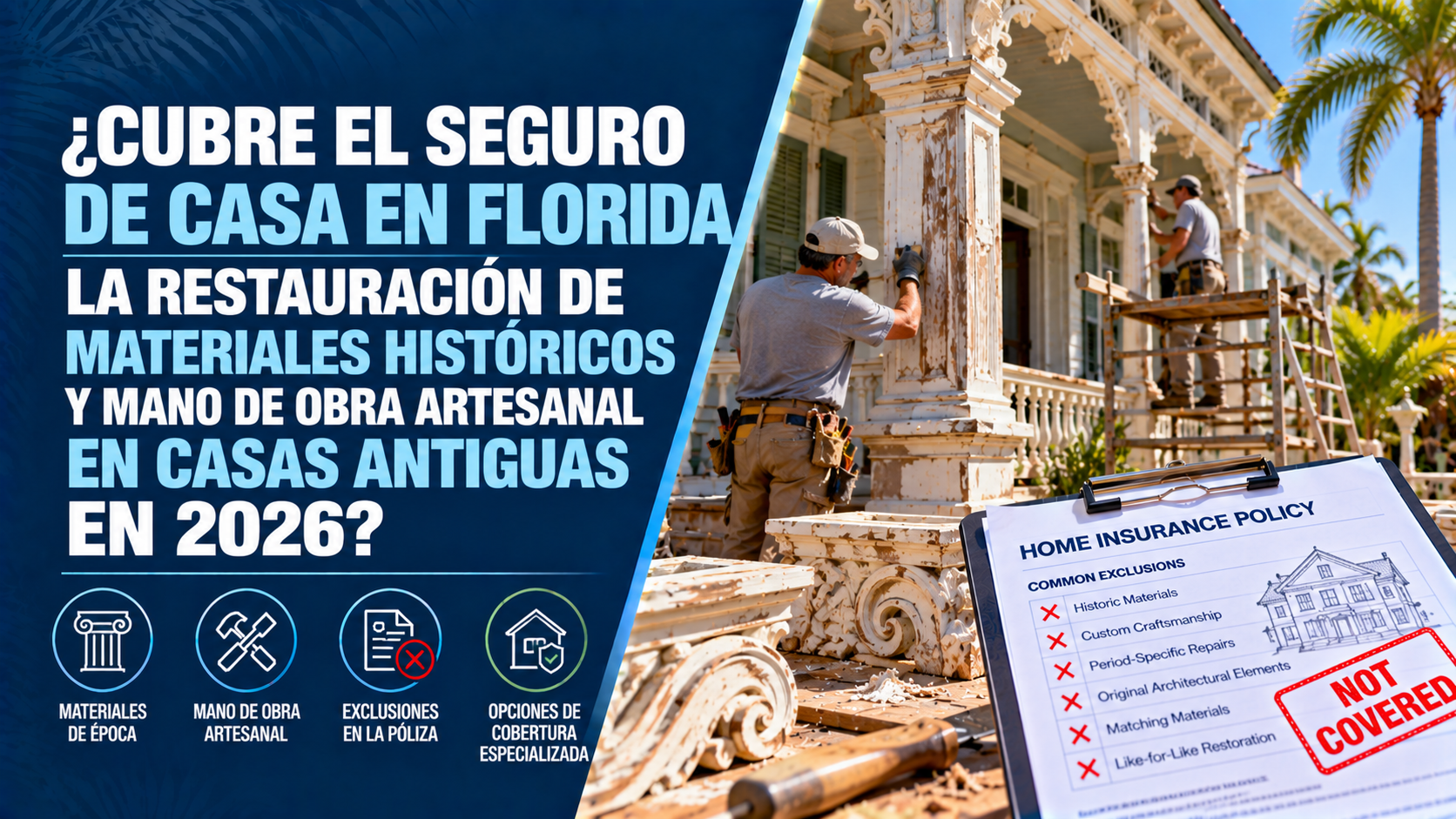
Seguro para Casas Históricas en Florida: Materiales y Mano de Obra (2026)
¿Tienes una casa antigua o histórica en Florida? Descubre por qué el seguro básico deniega la restauración artesanal y cómo proteger tu patrimonio en 2026.
Read More →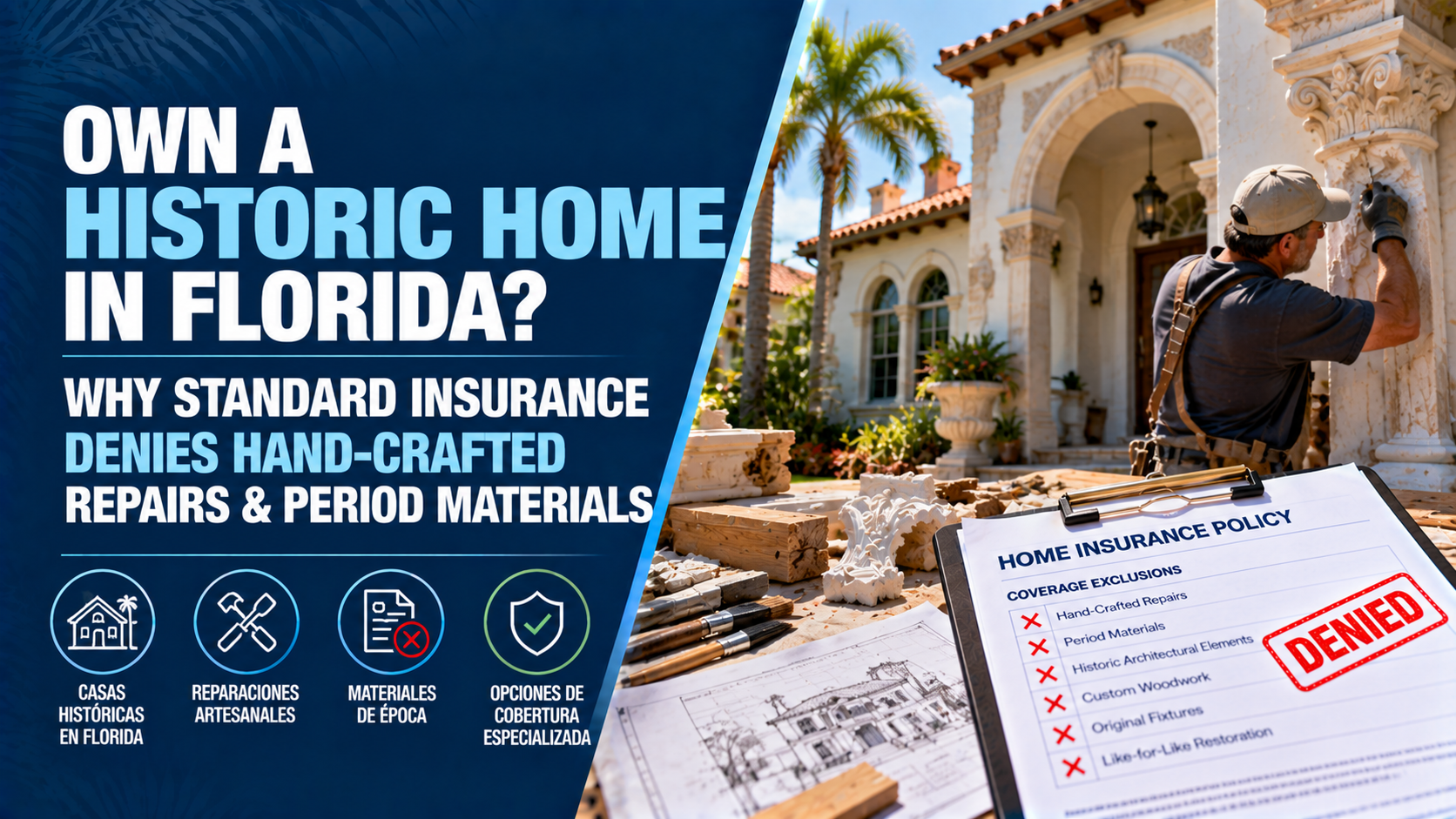
Historic Home Insurance Florida: Hand-Crafted Repairs & Materials
Own a historic home in Florida? Learn why standard insurance denies hand-crafted repairs, period materials, and code upgrades, and how to protect your property.
Read More →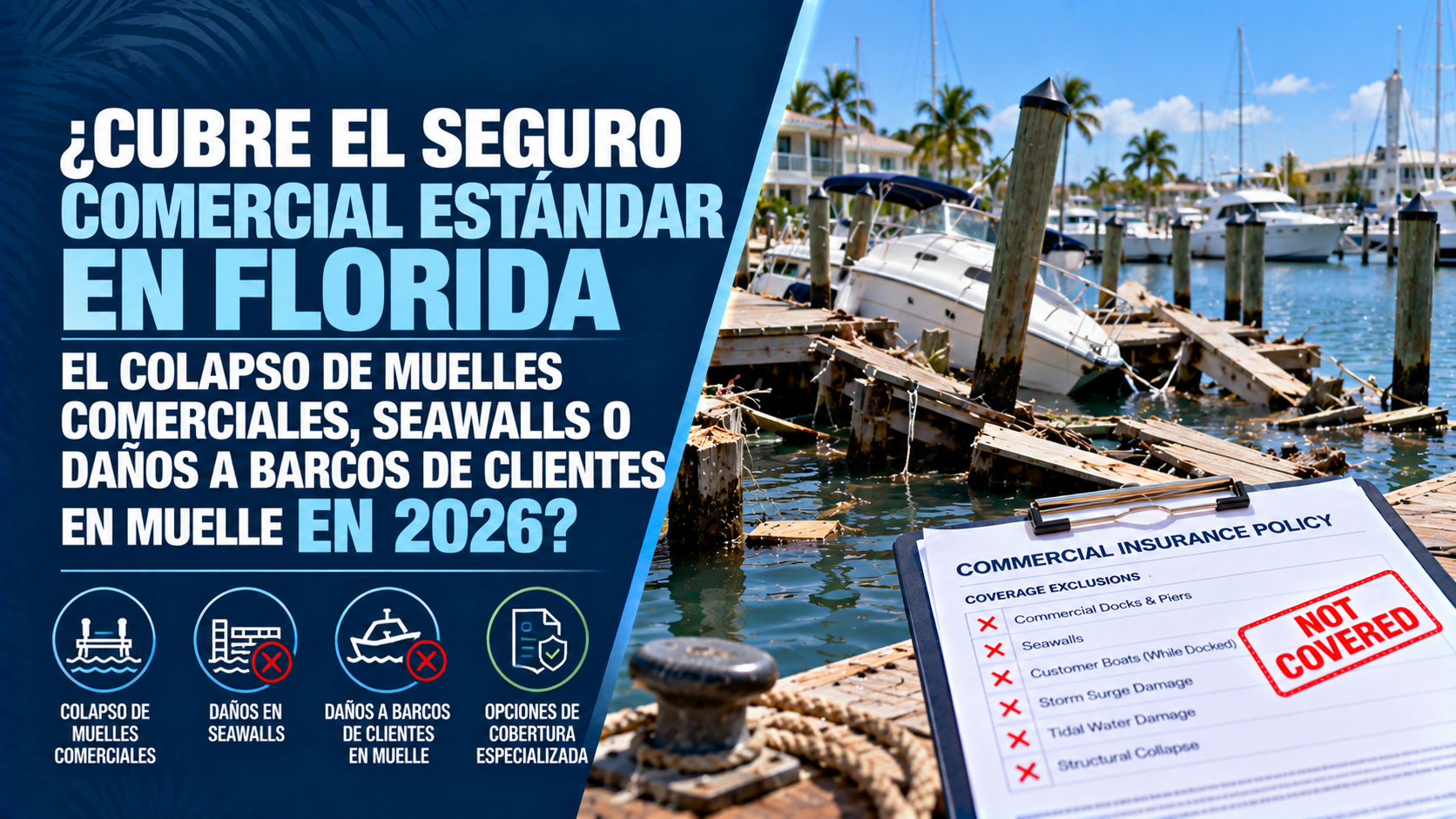
Seguro Comercial en Florida: Colapso de Muelles y Seawalls (2026)
¿Tienes una marina o negocio costero en Florida? Descubre por qué el seguro comercial estándar excluye muelles, seawalls y barcos de clientes en 2026.
Read More →