Does Collision Insurance Cover Hail & Tree Damage in 2026?
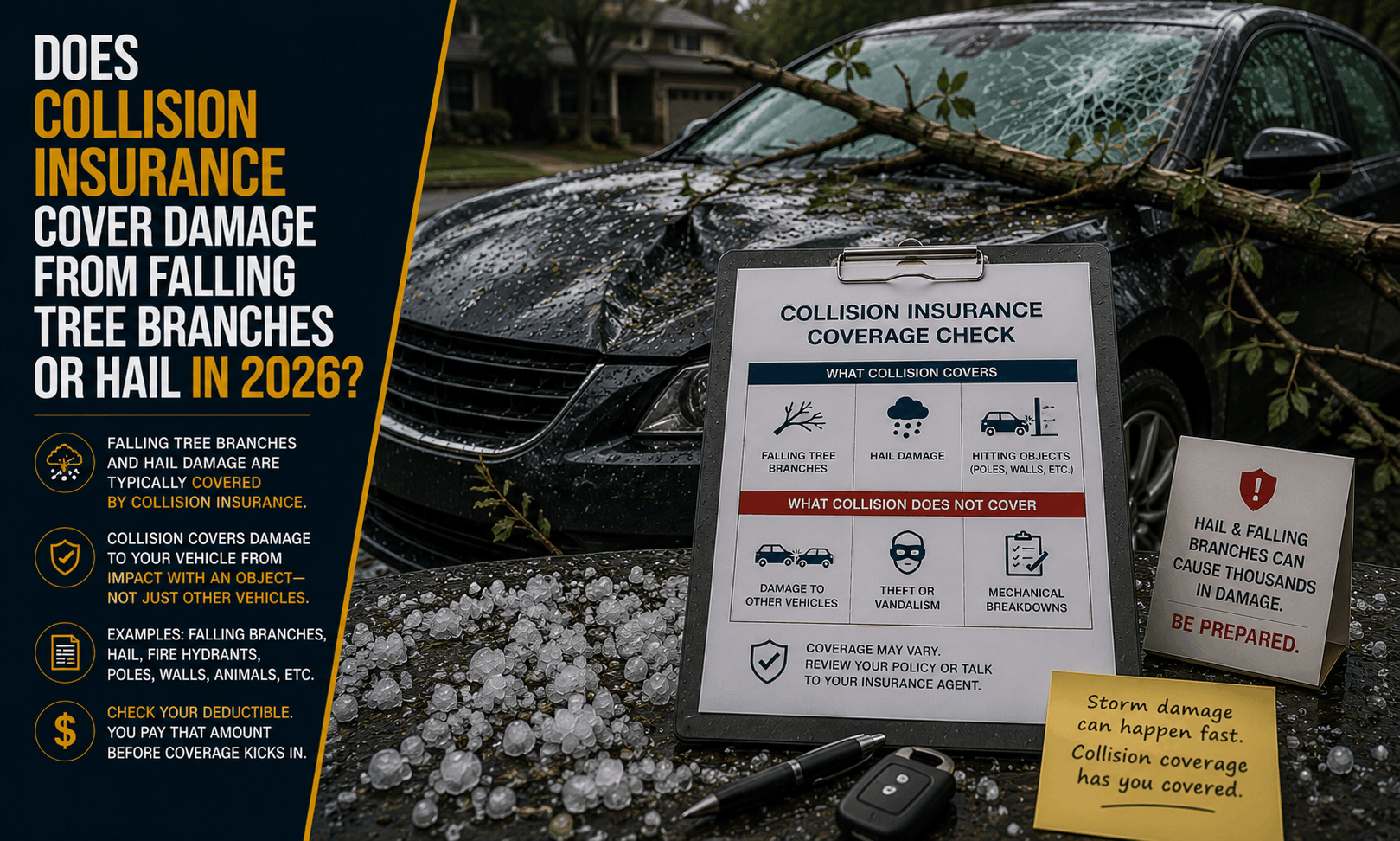
Does Collision Insurance Cover Damage from Falling Tree Branches or Hail in 2026?
The Direct Answer
The short answer is absolutely not—your auto collision insurance will not pay a single dollar to repair your vehicle if it is damaged by a falling tree branch or severe hail. A common and financially frustrating misconception among drivers is that having collision coverage or a "full physical damage" policy means any physical harm to their car is automatically covered. In reality, insurance contracts strictly divide physical vehicle damage into two distinct legal categories: Collision Coverage and Comprehensive Coverage. Collision insurance applies strictly when your car impacts another vehicle or a fixed stationary object while driving. If a storm snaps a heavy branch onto your roof or hail severely dents your body panels while parked or driving, a collision claim will be denied instantly, leaving you with a $0 payout and out-of-pocket repair bills.
Policygenius+ 2
Relying on collision coverage alone during severe weather season leaves your vehicle completely vulnerable to environmental hazards. Understanding how auto insurance contracts categorize physical damage is critical to avoiding sudden financial losses.
1. The Legal Divide: Collision vs. Comprehensive Definitions
To understand why an insurance adjuster will deny a collision claim for storm or falling debris damage, you must examine how policy contracts define perils:
- Collision Insurance (Impacts You Control): Collision coverage is designed to cover damage resulting from the physical act of colliding. This includes driving into another car, backing into a pole, flipping your vehicle, or hitting a stationary object on the road.
Policygenius+ 1 - Comprehensive Coverage (Other-Than-Collision Events): Comprehensive insurance (often labeled "Other Than Collision") protects against sudden, non-impact events beyond the driver's control. This includes falling objects (tree limbs, acorns), severe weather (hail, windstorms, floodwaters), fire, theft, vandalism, and animal strikes.
Policygenius+ 1
The critical distinction often comes down to physics and motion:
If you are driving down a street and a tree branch snaps off and falls onto your moving car, that is classified as a "falling object"—a Comprehensive claim. However, if that same tree branch fell onto the road earlier and you drive your car into it, the insurance carrier classifies it as hitting a stationary obstacle—triggering a Collision claim instead.
Experian
2. Common Environmental Perils Excluded from Collision Coverage
Severe weather—ranging from violent thunderstorms to sudden hail—frequently damages vehicles. If your policy lacks comprehensive coverage, these routine environmental events result in zero insurance compensation:
- Hail Damage: Hail denting your hood, trunk, and aluminum trim is strictly a weather peril. Collision coverage pays $0 for hail damage. Paintless dent repair (PDR) for severe hail can easily run between $2,500 and $6,000.
- Falling Tree Limbs: Severe storms frequently break weakened or heavy tree branches. Whether your car is parked in your driveway or moving down a street, damage caused by falling timber is excluded under collision policies.
Policygenius+ 1 - Wind-Blown Debris: High wind gusts that propel construction materials, roof tiles, or flying gravel into your body panels or glass fall squarely under comprehensive claims.
3. How to Fully Protect Your Vehicle Against Storm Damage
You do not have to leave your car exposed to unpredictable seasonal weather. Securing complete physical damage protection requires structuring your auto policy correctly:
- Step 1: Pair Collision with Comprehensive Coverage. If you own your vehicle outright and dropped comprehensive coverage to reduce premiums, you carry 100% of the financial risk for storm and environmental damage. Adding comprehensive coverage is generally inexpensive and bridges the physical damage gap completely.
- Step 2: Select an Appropriate Comprehensive Deductible. Comprehensive deductibles operate independently from collision deductibles. Because comprehensive claims are typically non-fault environmental events, setting a lower deductible (such as $250 or $500) ensures quick glass replacement or body repairs without heavy out-of-pocket stress.
Policygenius+ 1 - Step 3: Maintain Property and Document Risks. If a neighbor’s dead tree threatens your parked vehicle, document it in writing. While your own comprehensive auto coverage pays initial repairs if the branch falls, proving prior neglect allows your insurance company to seek subrogation reimbursement from the neighbor's carrier.
Policygenius
Why Working with an Independent Agency is Vital
Navigating auto policy definitions and insuring physical assets against complex weather risks requires specialized insurance expertise. At Walker Insurance Agency, we ensure your auto portfolio carries no hidden coverage gaps when severe storms hit.
The Walker Advantage:
- Physical Damage Audits: We evaluate your declarations page to verify that both Collision and Comprehensive coverages are active and properly balanced.
- Deductible Optimization: We analyze your vehicle's current market value and recommend tailored deductible structures that maximize your claim payouts.
- Proactive Claims Support: If severe weather hits your community, our local team guides you through the claim filing process, assisting with glass repair routing and adjuster evaluations.
FAQ
1. Does my homeowners insurance cover my car if a tree falls on it in my driveway?
No. Homeowners insurance strictly covers real property (your house, garage, and personal belongings), not motor vehicles. Damage to a car from a fallen tree on your property must be claimed through the Comprehensive section of your auto insurance policy.
iA Groupe financier+ 1
2. If gravel flies off a dump truck and cracks my windshield, is that collision or comprehensive?
If the gravel or stone is airborne when it strikes your windshield, it is considered a flying object and is covered under Comprehensive insurance. If the rock bounces along the road first and you run over it, some adjusters may categorize it as a road hazard collision.
3. Will filing a comprehensive claim for hail or tree branch damage cause my auto insurance rates to spike?
Generally, no. Because comprehensive claims are triggered by "acts of nature" or non-fault environmental events beyond driver control, insurance regulations in most states prevent carriers from raising your primary premium rates solely for filing a single comprehensive weather claim.
Protect Your Vehicle from Storm Risks Today
A sudden storm can transform minor tree branches and hail into thousands of dollars in body shop bills in seconds. Discovering that your collision coverage pays $0 for non-crash environmental damage creates an unnecessary financial crisis.
Take control of your auto protection today. Contact Walker Insurance Agency for a comprehensive policy audit. We provide the technical expertise you need to eliminate physical damage exclusions, secure comprehensive storm protection, and keep your vehicle fully covered year-round.
[GET A FREE QUOTE TODAY]
Call our personal lines division at +1-407-977-7100 or visit our office in Stuart, FL. Let us safeguard your property boundaries today.
Related Articles
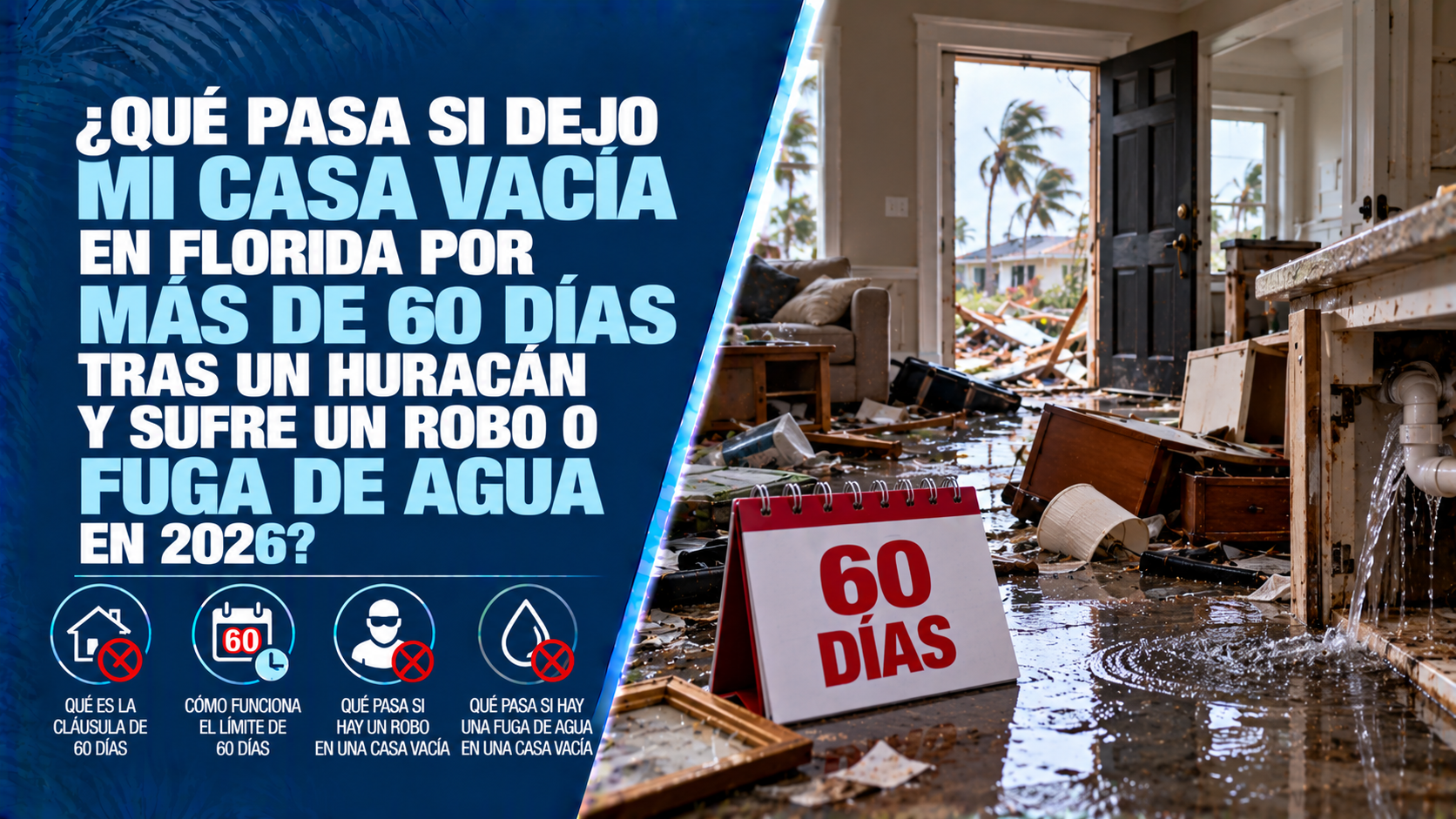
Seguro de Casa en Florida: Cláusula de Desocupación de 60 Días
¿Casa vacía en Florida por más de 60 días tras un huracán? Descubre por qué el seguro puede denegar reclamos por robo o fugas de agua en 2026.
Read More →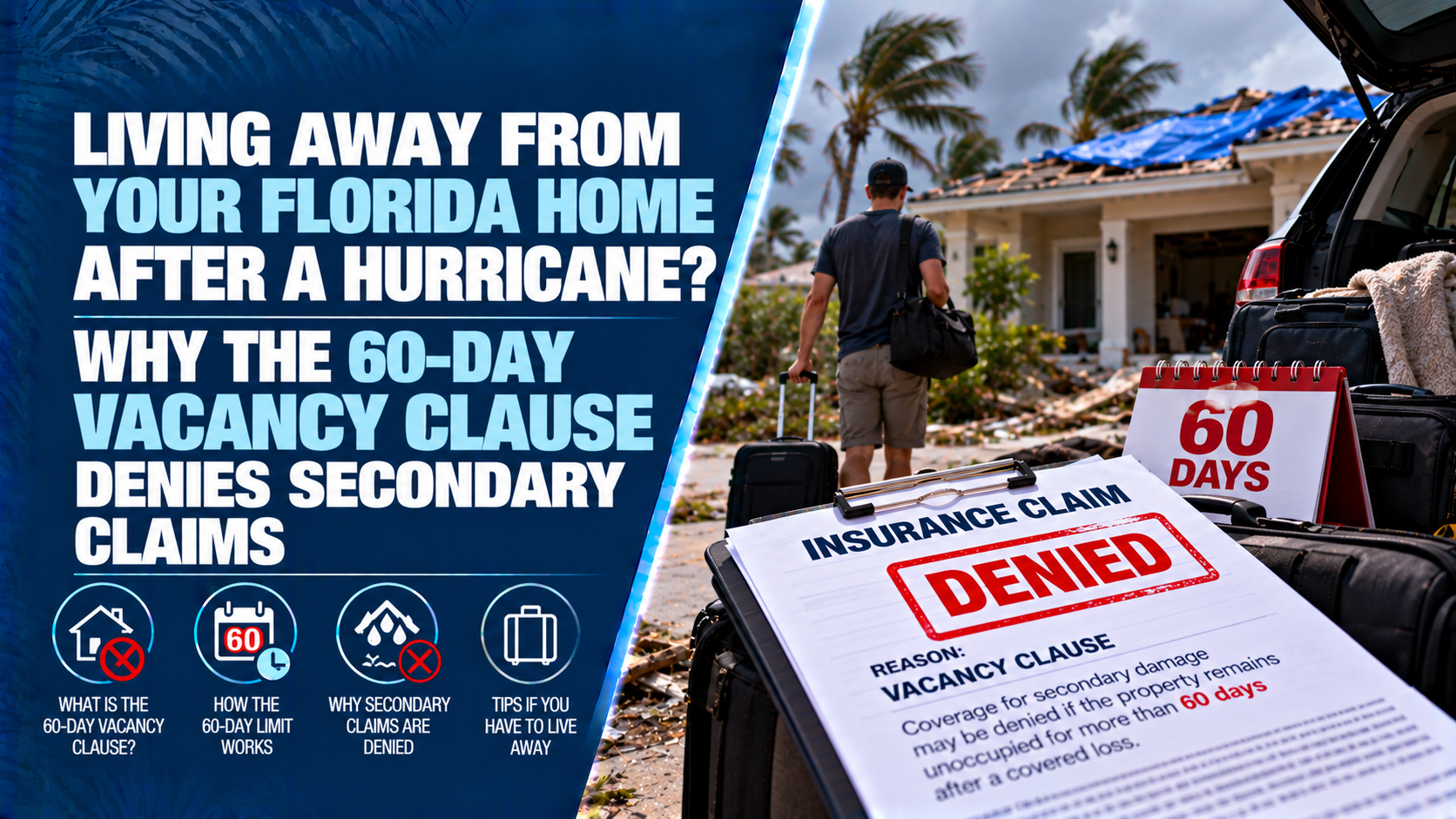
Florida Home Insurance: 60-Day Vacancy Clause & Hurricanes
Living away from your Florida home or second property after a hurricane? Learn how the 60-day vacancy clause can lead to denied insurance claims.
Read More →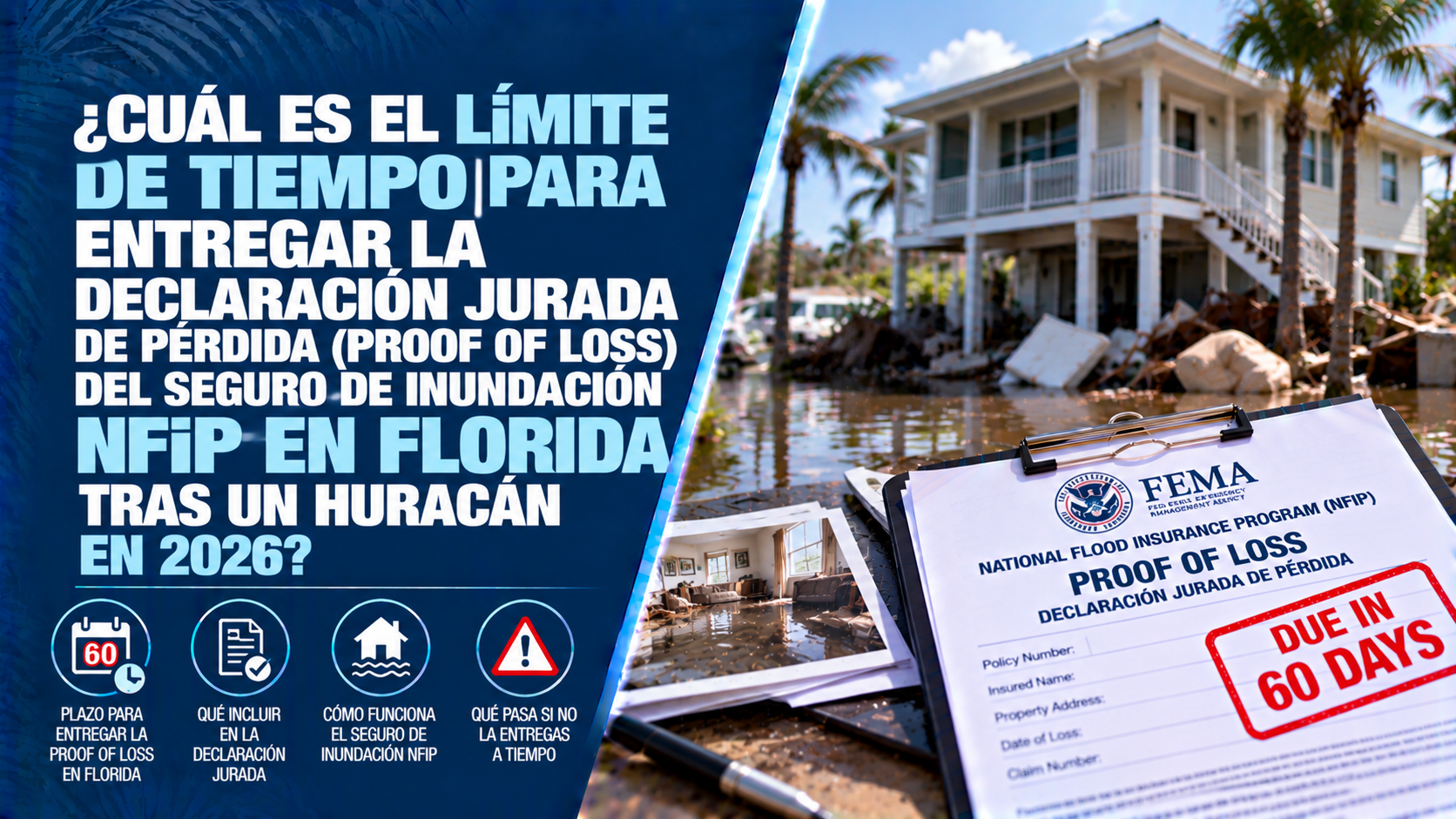
Plazo de Prueba de Pérdida (Proof of Loss) NFIP en Florida (2026)
¿Cuál es el límite para entregar la Declaración Jurada de Pérdida (Proof of Loss) del seguro de inundación NFIP en Florida tras un huracán en 2026? Descubre los 60 días clave.
Read More →