Does Full Coverage Pay Off Your Full Auto Loan If Totaled? (2026)
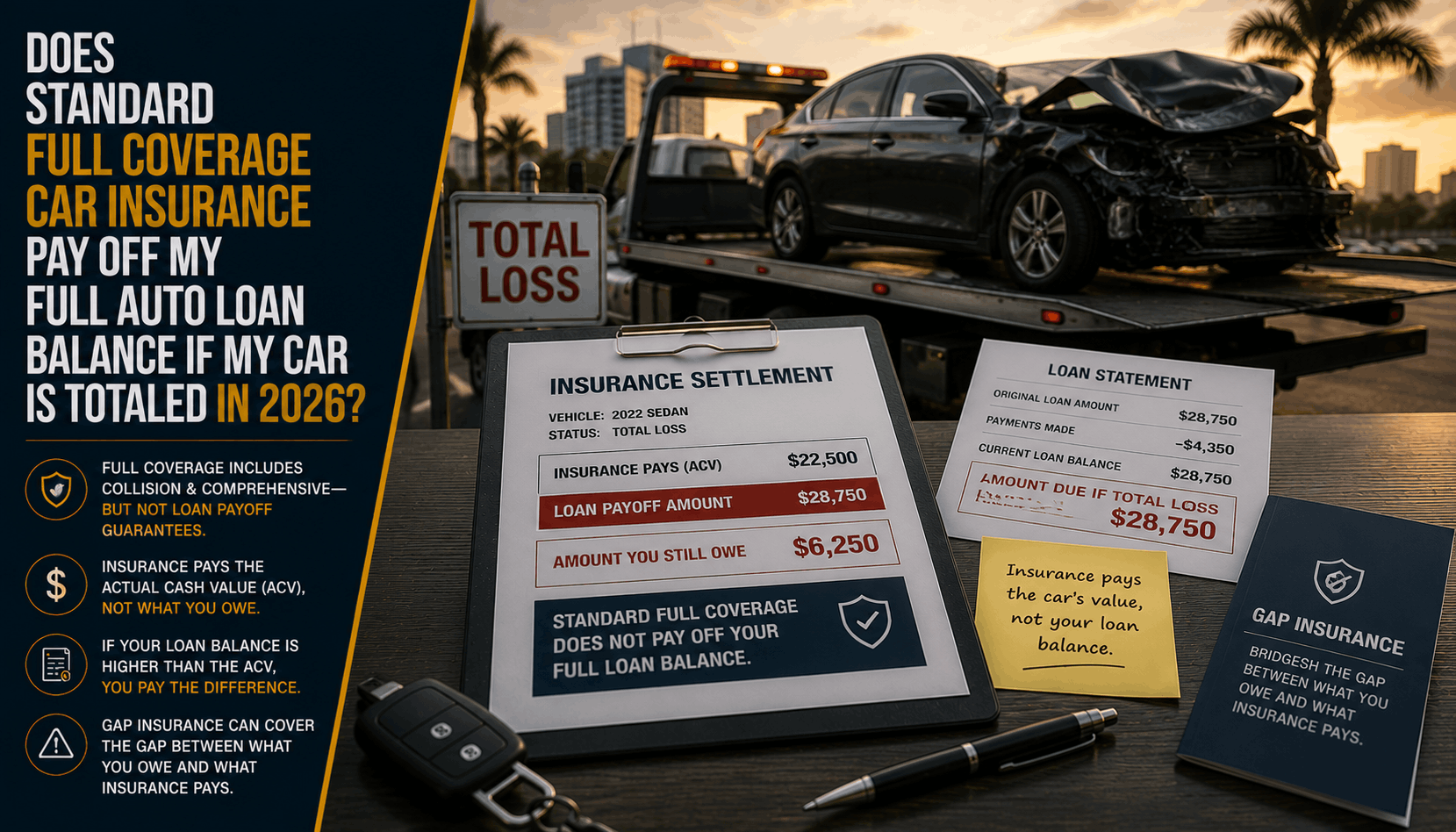
Does Standard Full Coverage Car Insurance Pay Off My Full Auto Loan Balance If My Car Is Totaled in 2026?
The Direct Answer
The short answer is absolutely not—carrying standard "full coverage" auto insurance does not mean your insurance company will pay off your total loan balance if your car is written off as a total loss. "Full coverage" is a informal term used by dealerships and drivers to describe a policy that includes Comprehensive and Collision protection alongside mandatory state liability limits. However, standard physical damage coverage is legally bound to pay only the Actual Cash Value (ACV) of the vehicle at the exact moment of the loss—minus your policy deductible. Because cars depreciate far faster than bank loans amortize, your insurance settlement check is almost always lower than the remaining balance on your auto finance contract. If you owe $30,000 on a car that the insurance company values at $22,000, standard full coverage will pay the lender $22,000 (less your deductible), leaving you legally obligated to pay the remaining $8,000+ balance out of pocket for a car you can no longer drive.
Relying on the myth of "full coverage" during a major loss can wreck your personal savings. Understanding how standard claims settlements work against bank financing is crucial to ensuring you are never caught off guard.
1. The Math Behind Total Loss Payouts vs. Loan Balances
When an insurance adjuster inspects a severely damaged vehicle and determines that repair costs exceed a specific percentage of its value (typically 70% to 80%), the vehicle is declared a total loss. Here is how your policy processes the financial settlement:
- Actual Cash Value (ACV): The insurance company determines what your car was worth on the open market seconds before the crash. This takes into account local market trends, mileage, wear and tear, and year/make/model depreciation.
- The Deductible Deduction: Your selected collision or comprehensive deductible (e.g., $500 or $1,000) is subtracted directly from the ACV calculation.
- Lender Lienholder Priority: Because your financing institution holds the vehicle title as collateral, the insurance company issues the settlement check directly to your lender—not to you.
Example Breakdown:
- Remaining Bank Loan Balance: $27,000
- Assessed Vehicle Actual Cash Value (ACV): $21,000
- Your Collision Policy Deductible: $1,000
- Insurance Settlement Payout to Lender: $20,000 ($21,000 ACV − $1,000 Deductible)
- Remaining Debt You Must Pay Lender Out of Pocket: $7,000
2. Why the Loan Balance Deficit Happens So Quickly
A coverage deficit is rarely the fault of a bad driver; rather, it is a structural reality of modern car buying and vehicle depreciation curves:
- Immediate Drive-Off Depreciation: Brand-new vehicles can lose up to 20% of their market value within the first 12 months of driving.
- Financed Fees and Taxes: Rolling state sales tax, registration fees, dealer documentation fees, or extended service warranties into your monthly vehicle financing increases your starting loan principal far above the car's actual market price.
- Long-Term Financing Contracts: Loan terms extending 60, 72, or 84 months feature slow principal reductions in the early years. The loan balance decreases slower than the vehicle depreciates on the open market.
- Rolled-Over Negative Equity: Carrying over unpaid debt from a previous trade-in vehicle inflates your new loan balance, creating a massive coverage gap from day one.
3. How to Eliminate the Total Loss Gap Completely
To protect your bank account from paying thousands of dollars on a totaled car loan, you must bridge the gap between Actual Cash Value and your financing balance:
- Step 1: Add Guaranteed Asset Protection (GAP) Coverage. GAP insurance is a specialized endorsement or policy designed specifically to cover the difference between your vehicle’s Actual Cash Value and the remaining balance on your auto loan or lease following a total loss.
- Step 2: Obtain GAP Protection Through Your Independent Agent. While car dealerships offer GAP at signing, they often roll it into your vehicle loan at inflated prices (charging $800 to $1,200+ with added interest). Adding GAP directly to your auto insurance policy typically costs only a few dollars per month.
- Step 3: Consider New Car Replacement Protection. If you buy or lease a brand-new vehicle, ask your agent about New Car Replacement coverage, which pays for a brand-new vehicle of the same make and model rather than a depreciated market value payout.
Why Working with an Independent Agency Is Vital
Navigating total loss clauses, depreciation schedules, and policy endorsements requires expert guidance. At Walker Insurance Agency, we ensure your auto insurance portfolio is properly structured so a total loss crash never ruins your financial peace of mind.
The Walker Advantage:
- Loan-to-Value Audits: We evaluate your loan parameters, down payment structure, and vehicle values to identify dangerous coverage gaps.
- Affordable GAP Solutions: We offer cost-effective policy endorsements that provide complete financial protection at a fraction of dealership prices.
- Dedicated Claims Advocacy: If a severe accident occurs, our local team coordinates directly with adjusters and lenders to manage payouts efficiently and protect your credit score.
FAQ
1. Does my lender require me to carry GAP insurance?
Most lenders require "full coverage" (Comprehensive and Collision), but they rarely require GAP insurance unless you are entering a lease agreement. However, just because a lender doesn't require GAP doesn't mean you shouldn't carry it to protect your personal savings.
2. Can I add GAP coverage to my existing auto policy at any time?
In most cases, yes—as long as your car is within specific age and mileage parameters and you maintain comprehensive and collision coverage. Contacting your agent early in your loan term ensures you are protected before an unexpected total loss occurs.
3. What happens to my policy deductible if my car is totaled and I have GAP?
It depends on how your GAP coverage is structured. Many insurance-provided GAP endorsements cover up to $500 or $1,000 of your auto insurance deductible as part of the total settlement, eliminating out-of-pocket stress during a claim.
Secure Your Financial Future Today
A violent crash or severe weather event can turn your car into a total loss in seconds. Finding out after the fact that standard full coverage leaves you with an $8,000 debt to your bank creates a severe financial hardship when you need to buy a replacement vehicle.
Take control of your auto insurance strategy today. Contact Walker Insurance Agency for a comprehensive policy review. We provide the expertise you need to close hidden policy gaps, secure affordable GAP protection, and keep your hard-earned savings safe.
[GET A FREE QUOTE TODAY]
Call our personal lines division at +1-407-977-7100 or visit our office in Stuart, FL. Let us safeguard your property boundaries today.
Related Articles

Seguro Comercial en Florida: Paneles Solares y Pérdida de Energía (2026)
¿Instalaste paneles solares en tu edificio en Florida? Descubre por qué el seguro comercial estándar deniega la carga en techo, ráfagas y pérdida de energía en 2026.
Read More →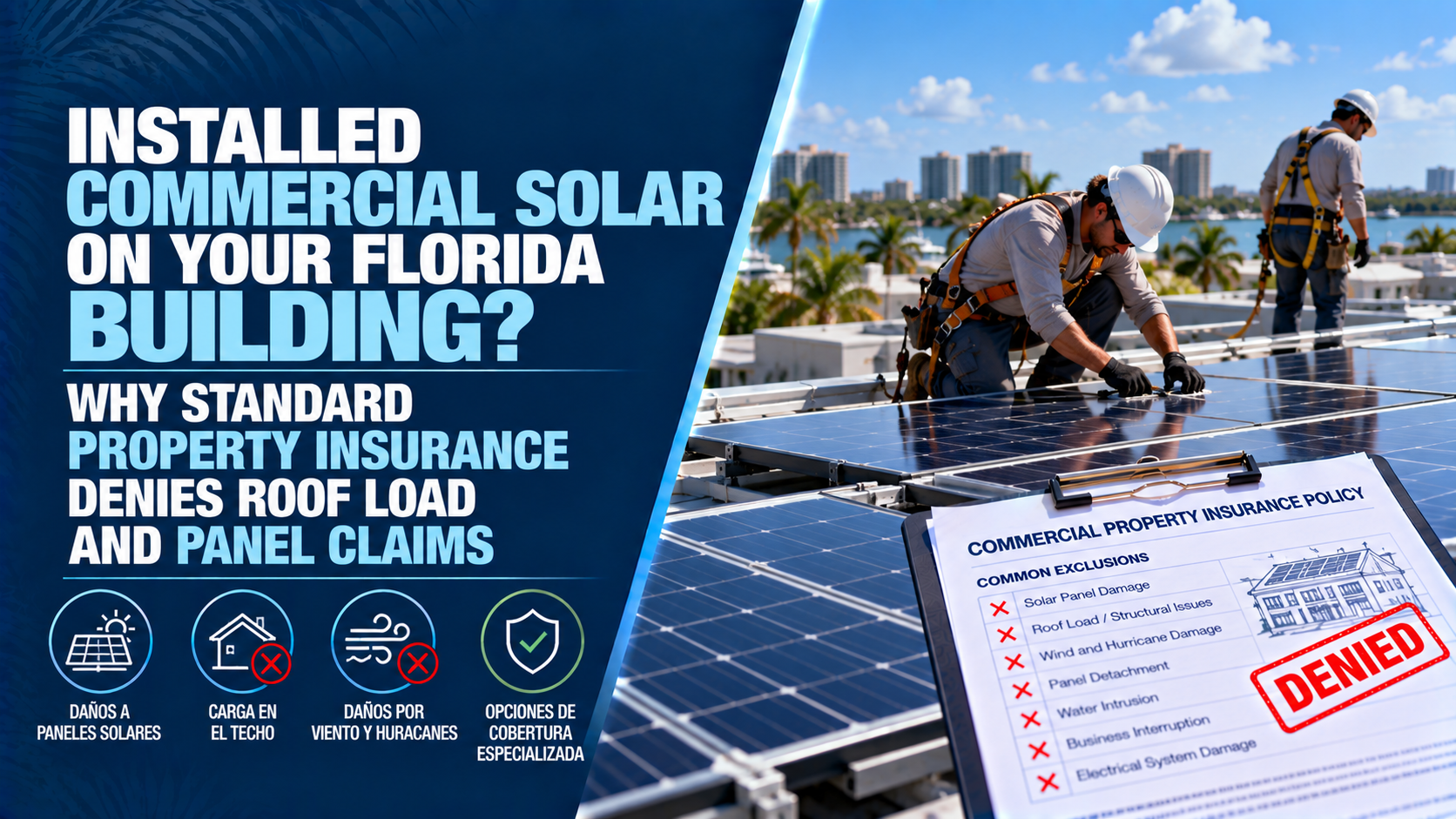
Florida Commercial Solar Insurance: Roof Load & Panel Claims
Installed commercial solar in Florida? Learn why standard property insurance denies roof load, wind uplift, and panel claims, and how to stay protected.
Read More →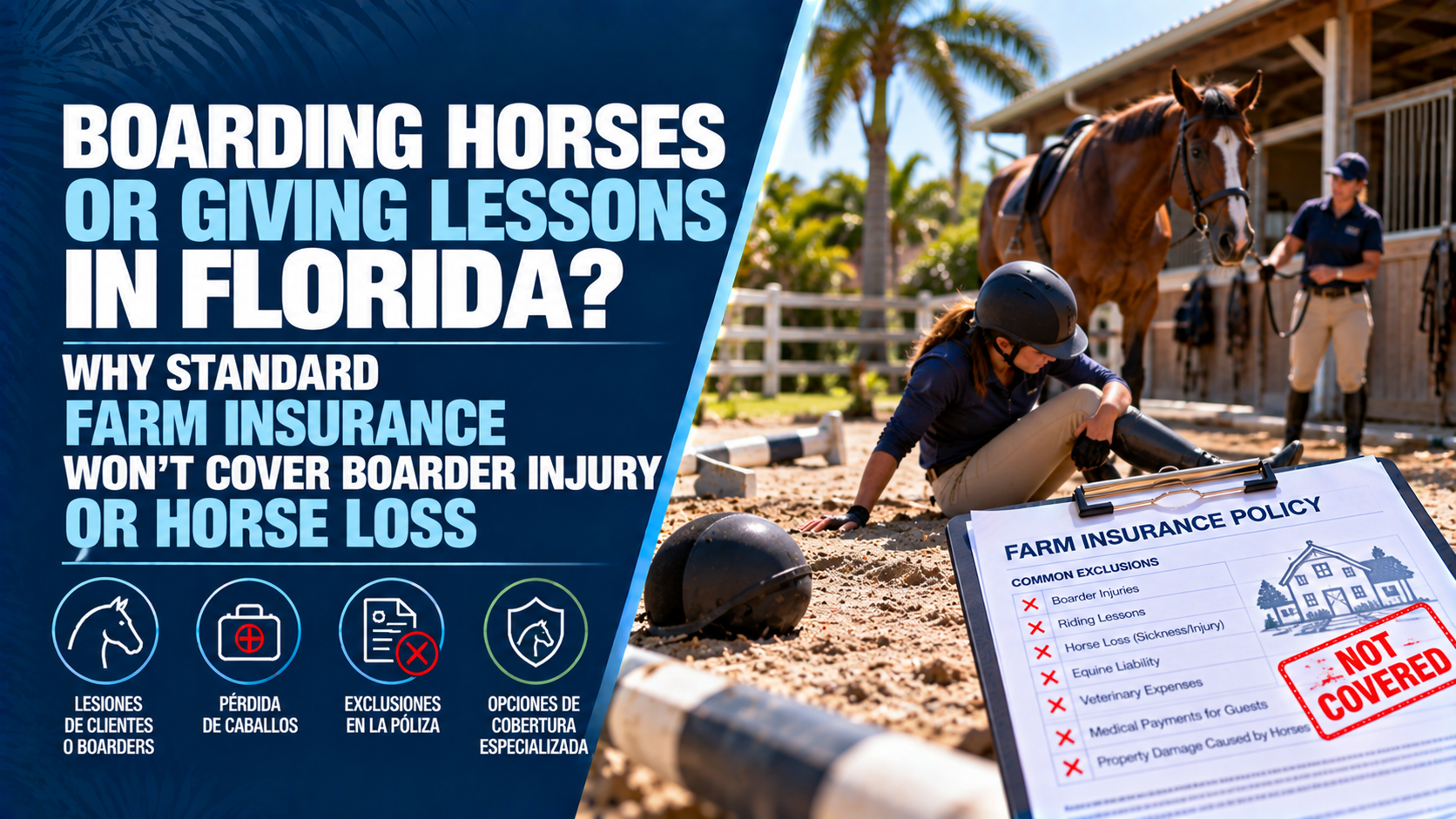
Horse Boarding Insurance in Florida: Boarder Injury & Horse Loss
Boarding horses or giving riding lessons in Florida? Learn why standard farm insurance may not cover boarder injuries, horse losses, or equine liability.
Read More →