Locked Out of Your Smart Home? Does Insurance Cover Ransomware? (2026)
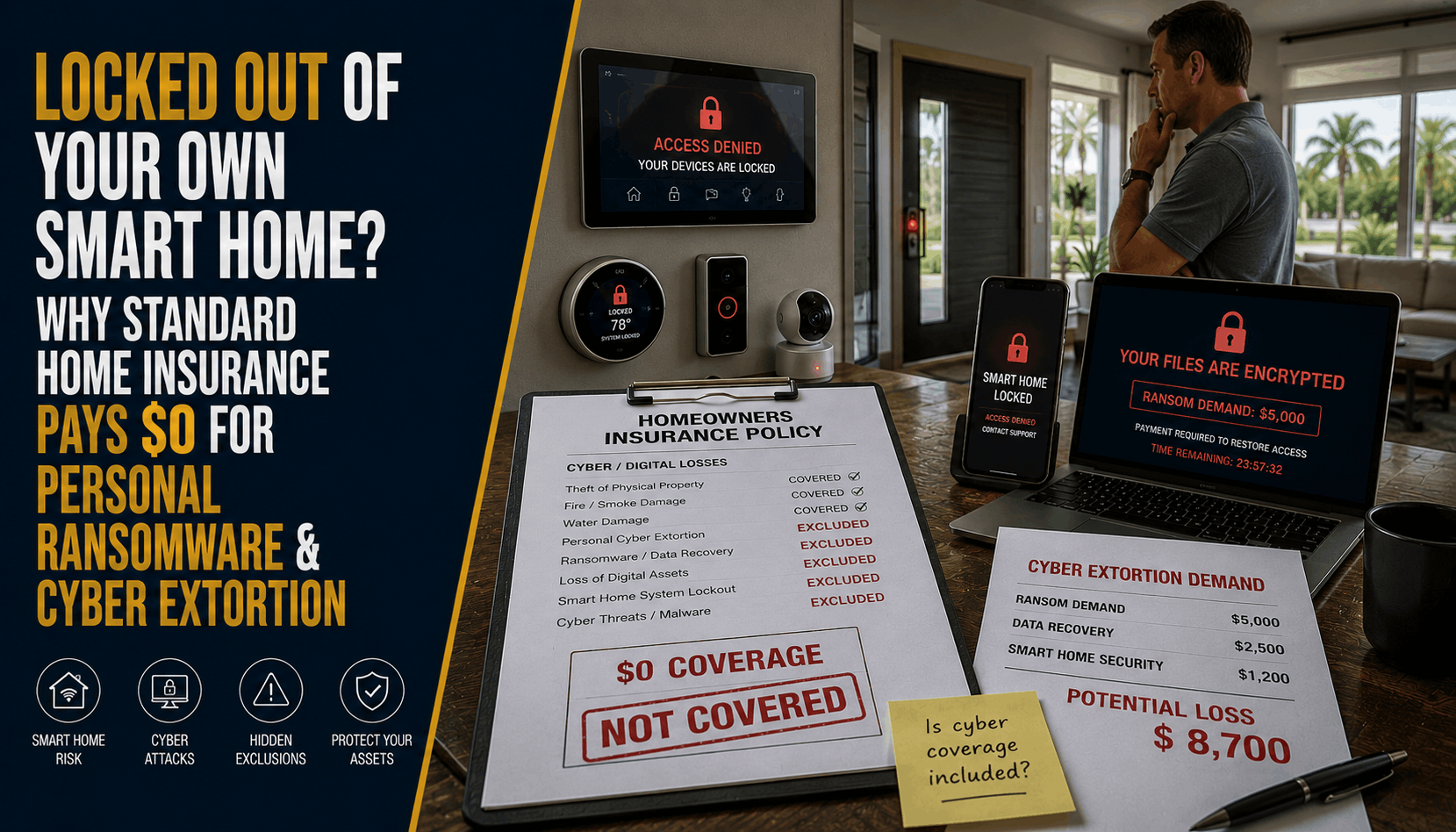
Locked Out of Your Own Smart Home? Why Standard Home Insurance Pays $0 for Personal Ransomware & Cyber Extortion
The Direct Answer
Here is the harsh reality facing modern homeowners: if a hacker hijacks your smart locks, security cameras, HVAC system, or personal devices and demands a bitcoin ransom to give you control back, your standard home insurance policy won't pay a single dime.
Standard home insurance policies (HO-3 or HO-6) were designed in an era of physical locks, brick chimneys, and physical burglars. They require "direct physical loss or damage" to trigger property coverage. When a cybercriminal remotely encrypts your smart home hub, locks you out of your digital front door, or threatens to release private indoor camera footage, no physical walls were broken and no roof collapsed. Unless you have added an optional Personal Cyber & Ransomware Endorsement to your policy, your insurer will refuse to cover ransom payments, system restoration fees, or data recovery costs—leaving you completely stranded and out of pocket.
Smart homes offer incredible convenience—until someone else takes control of the app. From smart thermostats frozen at 95 degrees to hijacked security feeds and encrypted family drives, cyber extortion has officially moved from corporate boardrooms into residential living rooms. Finding out your home has been digitally hijacked is terrifying; finding out your home insurance treats it like it never happened makes the nightmare far worse.
1. Physical Damage vs. Digital Extortion: The Policy Gap
Homeowners insurance policy contracts draw a strict line between physical property and digital infrastructure:
- The "Physical Loss" Requirement: Standard policies cover tangible property damaged by covered perils like fire, wind, or physical vandalism. A hacker locking your smart hub, disabling your security grid, or wiping your family cloud storage causes immense disruption, but causes zero physical destruction to the house structure.
- Zero Coverage for Ransom Payments: Standard policies explicitly exclude extortion payments, cryptocurrency transfers, and blackmail demands. If you pay $2,000 in Bitcoin to unlock your smart home ecosystem, that money comes 100% out of your personal bank account.
- The Cyber Sub-Limit Trap: Some basic policies offer minor identity theft add-ons, but these almost always exclude cyber extortion, ransomware cleanup, and smart home hardware restoration.
2. Real Smart Home Scenarios That Standard Policies Deny
You don't need to be a high-profile celebrity to be targeted by automated cyber extortion tools. Everyday smart home setups create immediate vulnerabilities:
- Smart Lock & Security Grid Hijacking: Hackers breach your IoT (Internet of Things) hub via a weak Wi-Fi password, change all master credentials, and lock you out of your own house. They demand $1,500 to restore access to your front door and garage. Standard Home Insurance Payout: $0.
- Indoor Camera & Video Blackmail: Cybercriminals gain access to unencrypted indoor smart cameras, record private family interactions, and threaten to release the video online unless a ransom is paid within 24 hours. Standard Home Insurance Payout: $0.
- HVAC & Appliance Sabotage: Scammers compromise smart thermostats during extreme winter or summer months, cranking temperatures up or down to dangerous levels and locking the controls until a payment is made. Standard Home Insurance Payout: $0.
The Big Takeaway: Your physical home insurance protects the brick and mortar. It offers zero protection for the digital brain that runs your modern household.
3. How to Properly Secure Personal Cyber Protection
Protecting your connected home against smart home ransomware and digital extortion doesn't require a costly complete policy rewrite. You can secure real protection by taking three proactive steps:
- Add a Personal Cyber & Home Extortion Endorsement: Ask your insurance agent to attach a specialized Personal Cyber rider to your homeowners or renters policy. These riders typically provide $25,000 to $50,000 in dedicated coverage for extortion payments, system restoration, and professional data recovery.
- Secure Professional Incident Response: The best personal cyber endorsements give you access to IT security experts who can negotiate with extortionists, safely scrub malware from your smart devices, and restore your smart hub without compromising your family's data.
- Lock Down Your IoT Network: Separate your smart home devices (cameras, locks, thermostats) onto a dedicated guest Wi-Fi network, enable two-factor authentication (2FA) on all smart apps, and update router firmware regularly.
Why Working with an Independent Agency Is Vital
Navigating modern digital risks, IoT vulnerabilities, and specialized policy endorsements requires up-to-date insurance expertise. At Walker Insurance Agency, we translate complex cyber exclusions into clear, actionable protection for your family.
- Comprehensive Smart Home Audits: We analyze your current homeowners coverage, highlight hidden cyber exclusions, and show you exactly how to bridge the gap.
- Shopping Top Cyber Carriers: As an independent shop, we compare options across top insurance carriers to find robust personal cyber and extortion endorsements at competitive rates.
- Local, Dedicated Service: Based right here in Stuart, Florida, we understand the evolving risks facing modern households and provide the personal guidance you need to keep your home safe.
FAQ
1. Does my standard home insurance cover cyber extortion or ransomware?
No. Standard HO-3 and HO-6 homeowners policies require direct physical loss or damage to property. Cyber extortion, ransomware demands, and smart home lockouts are classified as non-physical events and are explicitly excluded unless you have added a Personal Cyber Endorsement.
2. How much does a Personal Cyber Endorsement cost?
Adding a comprehensive Personal Cyber and Ransomware rider to your home or renters policy is surprisingly affordable—usually costing between $30 and $70 per year for up to $50,000 in protection against cyber extortion, identity theft, and online fraud.
3. What should I do immediately if my smart home is hijacked by hackers?
First, disconnect your main Internet router to cut off remote hacker access. Second, do not immediately pay the ransom demand—contact your insurance agent right away to open a cyber claim and get connected with professional incident response experts who can evaluate your options.
Don't Wait for a Lockdown to Secure Your Smart Home
You shouldn't have to wait for a hacker to compromise your smart locks or security cameras to find out where your home insurance policy ends. Taking ten minutes to check your policy endorsements today lets you enjoy smart home technology with complete peace of mind.
Reach out to Walker Insurance Agency today for a quick, zero-pressure coverage checkup. We'll help you lock down the right cyber protection so your smart home stays safe, secure, and under your control.
[GET A FREE QUOTE TODAY]
Give our personal lines team a call at +1-407-977-7100 or drop by our office at 789 SW Federal Hwy, Ste 201, Stuart, FL 34994. We're here to help keep your family and finances safe.
Related Articles
Seguro Comercial en Florida: Paneles Solares y Pérdida de Energía (2026)
¿Instalaste paneles solares en tu edificio en Florida? Descubre por qué el seguro comercial estándar deniega la carga en techo, ráfagas y pérdida de energía en 2026.
Read More →
Florida Commercial Solar Insurance: Roof Load & Panel Claims
Installed commercial solar in Florida? Learn why standard property insurance denies roof load, wind uplift, and panel claims, and how to stay protected.
Read More →
Horse Boarding Insurance in Florida: Boarder Injury & Horse Loss
Boarding horses or giving riding lessons in Florida? Learn why standard farm insurance may not cover boarder injuries, horse losses, or equine liability.
Read More →