The Hit-and-Run Deductible Trap: Why Paying Out of Pocket is a Mistake
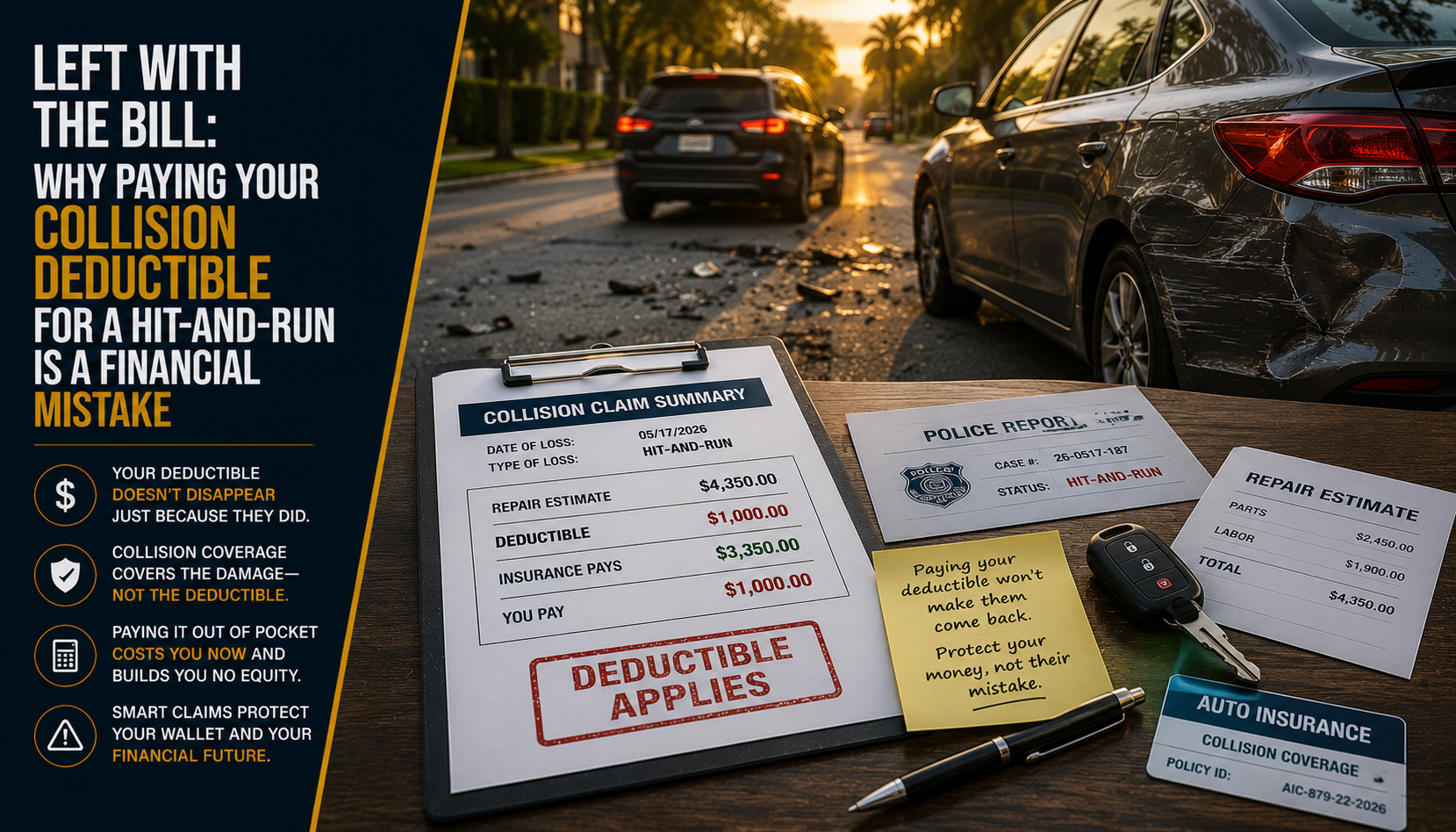
Left with the Bill: Why Paying Your Collision Deductible for a Hit-and-Run Is a Financial Mistake
The Direct Answer
The short answer is absolutely yes—relying solely on standard collision coverage and blindly paying a high deductible after a hit-and-run is one of the most common and costly financial mistakes a driver can make. When an unidentified or uninsured driver smashes into your vehicle and flees, standard auto insurance protocols default to filing under your Collision Coverage, requiring you to pay your standard $500 to $1,000+ deductible out of pocket before repairs begin. However, absorbing that entire cost yourself—or filing an unvetted collision claim for minor body damage—can drain your personal savings, trigger hidden policy surcharges, and cause you to forfeit valuable "claim-free" discounts. Without proper policy structuring like Uninsured Motorist Property Damage (UMPD) or a Collision Deductible Waiver (CDW), you are essentially paying a heavy financial penalty for a crime you didn't commit.
Getting stuck with repair bills after a hit-and-run feels entirely unjust. Understanding how insurance contracts treat phantom drivers—and learning how to structure your policy correctly—prevents you from throwing hard-earned money away.
1. The Collision Trap: Why the Default Insurance Route Hurts Your Wallet
When you report a hit-and-run to your insurance carrier, the immediate reaction of most policyholders is to file a standard collision claim. However, relying on default collision terms creates several immediate financial pitfalls:
- No At-Fault Party to Subrogate: In a typical two-car accident where another driver is at fault, your insurance company pays for your repairs, files a subrogation claim against the other driver’s insurer, and eventually recovers and reimburses your out-of-pocket deductible. In a hit-and-run, because the driver fled, there is no third-party carrier to collect from—leaving your deductible permanently lost.
- The Loss of Discretionary Discounts: Filing a collision claim—even a non-fault hit-and-run—enters a claim record into the comprehensive loss underwriting exchange (CLEX) database. Over time, multiple claims can erase valuable claims-free status, vanishing discounts that often total hundreds of dollars per year.
- Paying More Than the Damage is Worth: If your collision deductible is $1,000 and body shop estimates come in at $1,300, filing a formal insurance claim to save a net $300 is often a bad financial move due to the potential long-term impact on your policy profile.
2. Better Alternatives: How to Avoid Paying a Massive Collision Deductible
You do not have to settle for paying standard collision deductibles when a hit-and-run driver damages your car. Smart policy planning introduces alternative protections designed explicitly for these scenarios:
- Uninsured Motorist Property Damage (UMPD): In states where available, UMPD provides a separate bucket of coverage specifically for damage caused by uninsured or hit-and-run drivers. UMPD often comes with a capped, drastically reduced statutory deductible (frequently $250) or no deductible at all.
- Collision Deductible Waivers (CDW): Adding an inexpensive CDW endorsement to your policy mandates that your insurer waive your collision deductible entirely if your vehicle is struck by an uninsured or hit-and-run driver, provided you meet basic police reporting requirements.
- Out-of-Pocket Repair Threshold Evaluation: For minor cosmetic scrapes or parking lot hits, securing independent quotes from certified local body shops before filing an official claim allows you to evaluate whether paying out-of-pocket or leveraging dedicated endorsements makes the most financial sense.
3. Essential Protocol: What to Do Immediately After a Hit-and-Run
To protect your right to use deductible waivers or UMPD coverage—and avoid claim denials—you must follow strict reporting protocols:
- Step 1: File an Immediate Police Report. Most auto policies strictly require an official police report within 24 to 48 hours of a hit-and-run incident. This establishes legal proof that an unidentified third party caused the damage and protects against fraud.
- Step 2: Capture Evidence at the Scene. Photograph all physical damage, paint transfers from the fleeing vehicle, glass fragments, and surrounding street signs or parking lot markers.
- Step 3: Check for Surveillance & Witness Detail. Look for nearby business security cameras, doorbell cameras, or bystanders who may have spotted the make, model, or license plate of the fleeing driver.
Why Working with an Independent Agency is Vital
Navigating auto insurance endorsements, state deductible regulations, and claim thresholds requires professional risk management. At Walker Insurance Agency, we help you structure your policy so a hit-and-run driver never jeopardizes your personal financial stability.
The Walker Advantage:
- Policy Structure Audits: We review your policy declarations to ensure you carry essential protections like Collision Deductible Waivers or Uninsured Motorist Property Damage endorsements.
- Cost-Benefit Analysis: If an accident occurs, our local team helps you evaluate repair costs against your policy terms before you formally log a claim.
- Proactive Claims Advocacy: We guide you through police reporting standards and assist in working directly with claims adjusters to maximize your benefits and minimize out-of-pocket expenses.
FAQ
1. Can I file a hit-and-run claim under Comprehensive coverage to get a lower deductible?
No. Even if your car was legally parked, turned off, and unattended when struck, an impact from another vehicle is legally classified as a collision. Comprehensive coverage is reserved for non-collision hazards like theft, storm damage, fallen tree branches, or animal strikes.
2. What happens if the police identify the hit-and-run driver later?
If law enforcement tracks down the fleeing driver and confirms their insurance policy, your insurance carrier will file a subrogation claim against them. Once successfully collected, your insurer will fully reimburse any out-of-pocket collision deductible you previously paid.
3. Does Uninsured Motorist Property Damage (UMPD) cover hit-and-run accidents in all states?
No. Insurance laws vary significantly by state. Some states allow UMPD to cover hit-and-run property damage, while others require physical contact or positive identification of the driver. Working with an independent agent ensures you know exactly how your state handles UMPD claims.
Don't Let a Hit-and-Run Driver Wreck Your Savings
Discovering that your parked or moving car was struck by a fleeing driver is frustrating, but paying a huge collision deductible out of pocket only adds insult to injury. Structuring your policy with smart endorsements ensures you aren't left holding the bill for someone else's negligence.
Take control of your auto insurance today. Contact Walker Insurance Agency for a comprehensive coverage review. We provide the expertise you need to close policy gaps, add vital deductible waivers, and keep your personal savings fully protected.
[GET A FREE QUOTE TODAY]
Call our personal lines division at +1-407-977-7100 or visit our office in Stuart, FL. Let us safeguard your property boundaries today.
Related Articles

Seguro Comercial en Florida: Paneles Solares y Pérdida de Energía (2026)
¿Instalaste paneles solares en tu edificio en Florida? Descubre por qué el seguro comercial estándar deniega la carga en techo, ráfagas y pérdida de energía en 2026.
Read More →
Florida Commercial Solar Insurance: Roof Load & Panel Claims
Installed commercial solar in Florida? Learn why standard property insurance denies roof load, wind uplift, and panel claims, and how to stay protected.
Read More →
Horse Boarding Insurance in Florida: Boarder Injury & Horse Loss
Boarding horses or giving riding lessons in Florida? Learn why standard farm insurance may not cover boarder injuries, horse losses, or equine liability.
Read More →